

Download the WIN Reality SwingConnect app to analyze your own swing using SwingAI!
Sho-Time Swing Science: The Mechanics Behind Ohtani’s Power
Shohei Ohtani is one of the most electrifying players in baseball, excelling both on the mound and at the plate. His swing mechanics are a key factor in his ability to hit for both power and average. Using WIN Reality’s SwingAI data, we can look at the key elements of Shohei Ohtani’s swing breakdown and compare it to other premier hitters like Aaron Judge, Juan Soto, Mookie Betts, and Freddie Freeman.
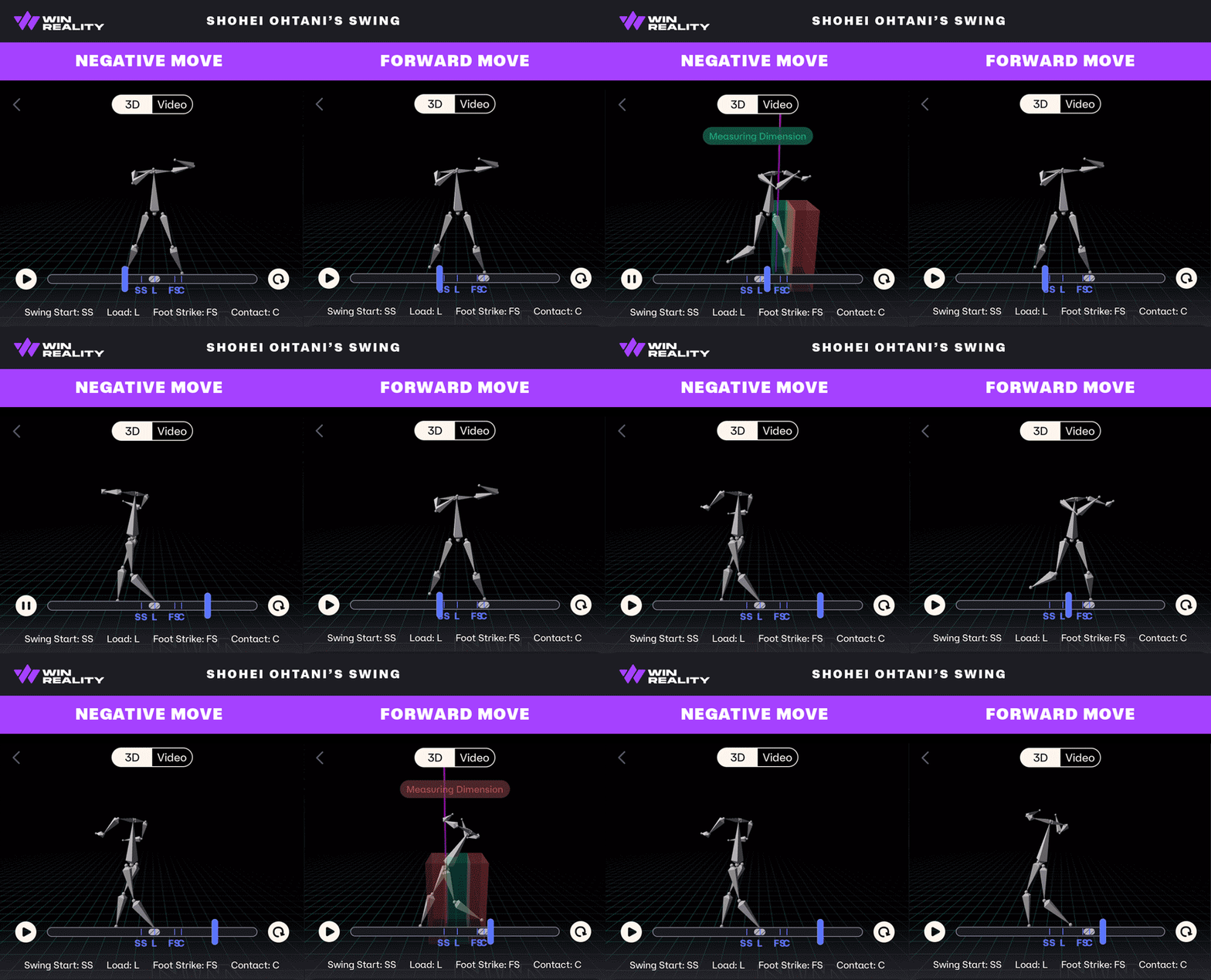
The Power Coil: Ohtani’s Negative Move
Ohtani’s negative move—his initial movement back before striding forward—is a masterclass in balance and efficiency. He keeps his weight inside his back foot, allowing for an explosive launch forward. This controlled load is similar to Juan Soto’s ability to stay centered while generating elite power. Compared to Aaron Judge, whose negative move is more exaggerated, Ohtani’s move is efficient, ensuring he doesn’t get stuck on his back leg. This balance is a crucial component of the Shohei Ohtani swing, allowing him to tap into maximum power without sacrificing control.
Stride with Precision: Ohtani’s Forward Move
Ohtani’s forward move is the perfect blend of aggression and control, giving him one of the most adaptable swings in the game. His stride length measures around 51.8% of his height, putting him in the ideal range between generating power and maintaining adjustability. In contrast, Freddie Freeman’s longer stride helps him cover the plate but sometimes limits his ability to react to inside heat. Ohtani’s stride enables him to stay explosive while adjusting mid-swing—a major reason the Shohei Ohtani swing is both deadly and consistent.
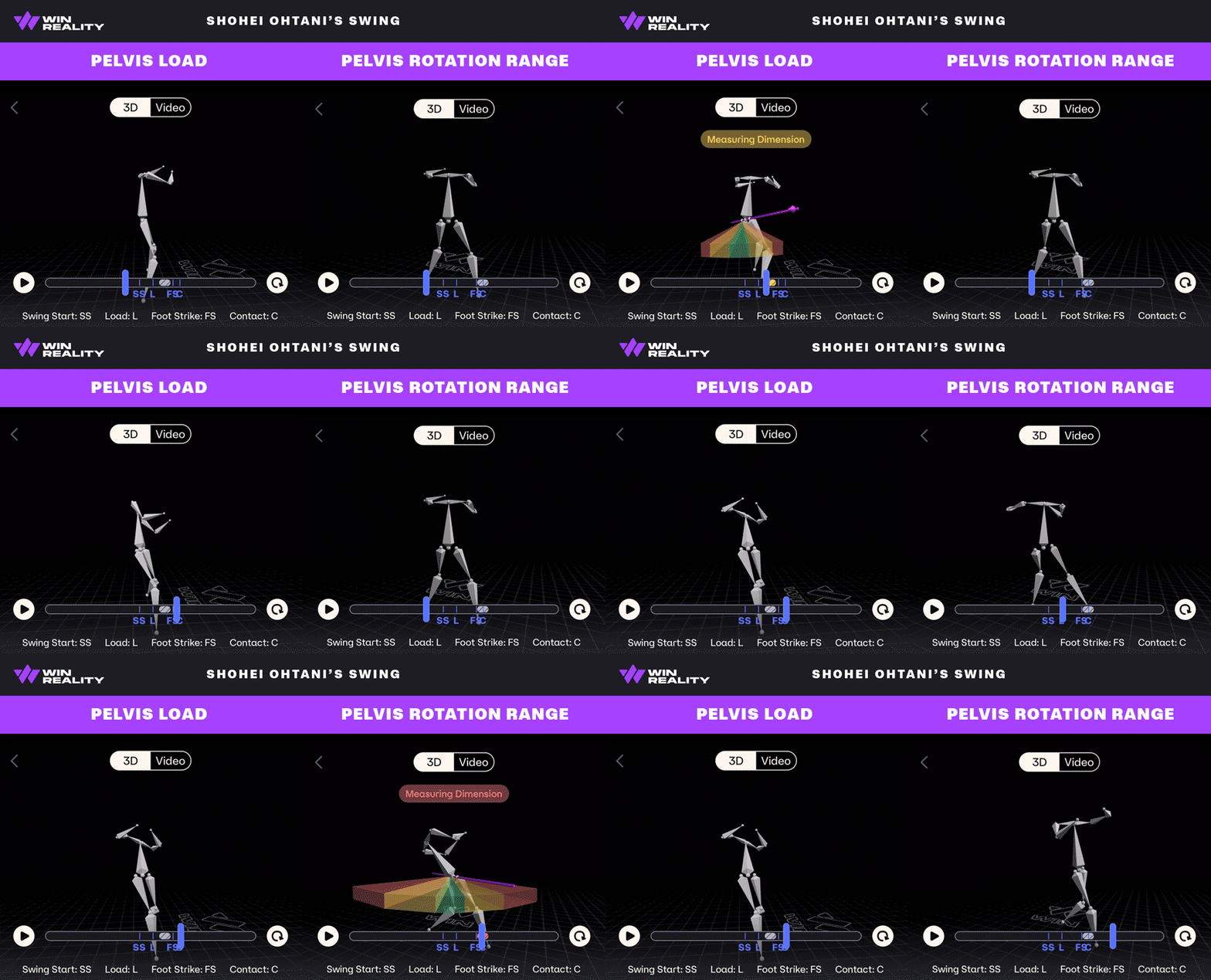
The Torque Engine: Pelvis Load and Rotation
Power hitters know that the hips are the engine of the swing, and Ohtani maximizes his pelvis load to create elite bat speed. He coils efficiently into his back hip, building tension before unleashing forward. His pelvis total rotation range is slightly lower than Mookie Betts, who relies on extreme hip rotation, but Ohtani’s smoother transition keeps him balanced and adaptable. At contact, his pelvis remains engaged, ensuring he transfers energy seamlessly from his lower half to his hands. His pelvis direction at contact (-46.8°) closely resembles Juan Soto’s (-44.9°), proving that efficient lower-body torque is a shared trait among baseball’s best hitters.
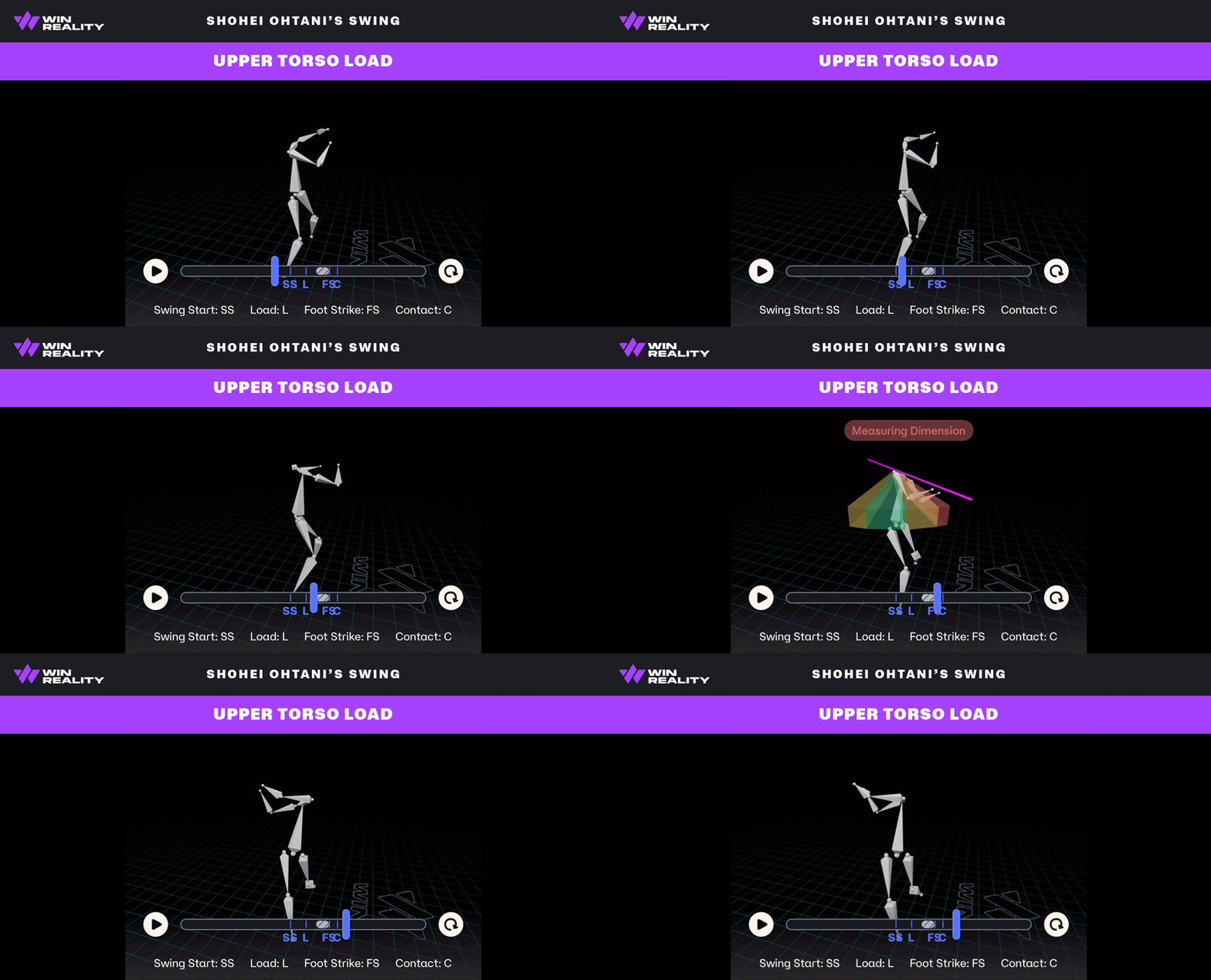
Unlocking Power: Upper Torso Load and Rotation
Ohtani’s upper torso load is another key to his unique swing mechanics. He generates a deep coil, storing energy like a compressed spring before releasing it into the ball. His upper torso direction at contact remains slightly more closed than Aaron Judge’s, helping him stay on breaking balls longer and drive them to all fields. Compared to Mookie Betts, who has a more compact upper torso rotation, Ohtani’s swing maximizes bat speed while still allowing him to track pitches deep into the zone. The ability to maintain control while generating force is a hallmark of the Shohei Ohtani swing.
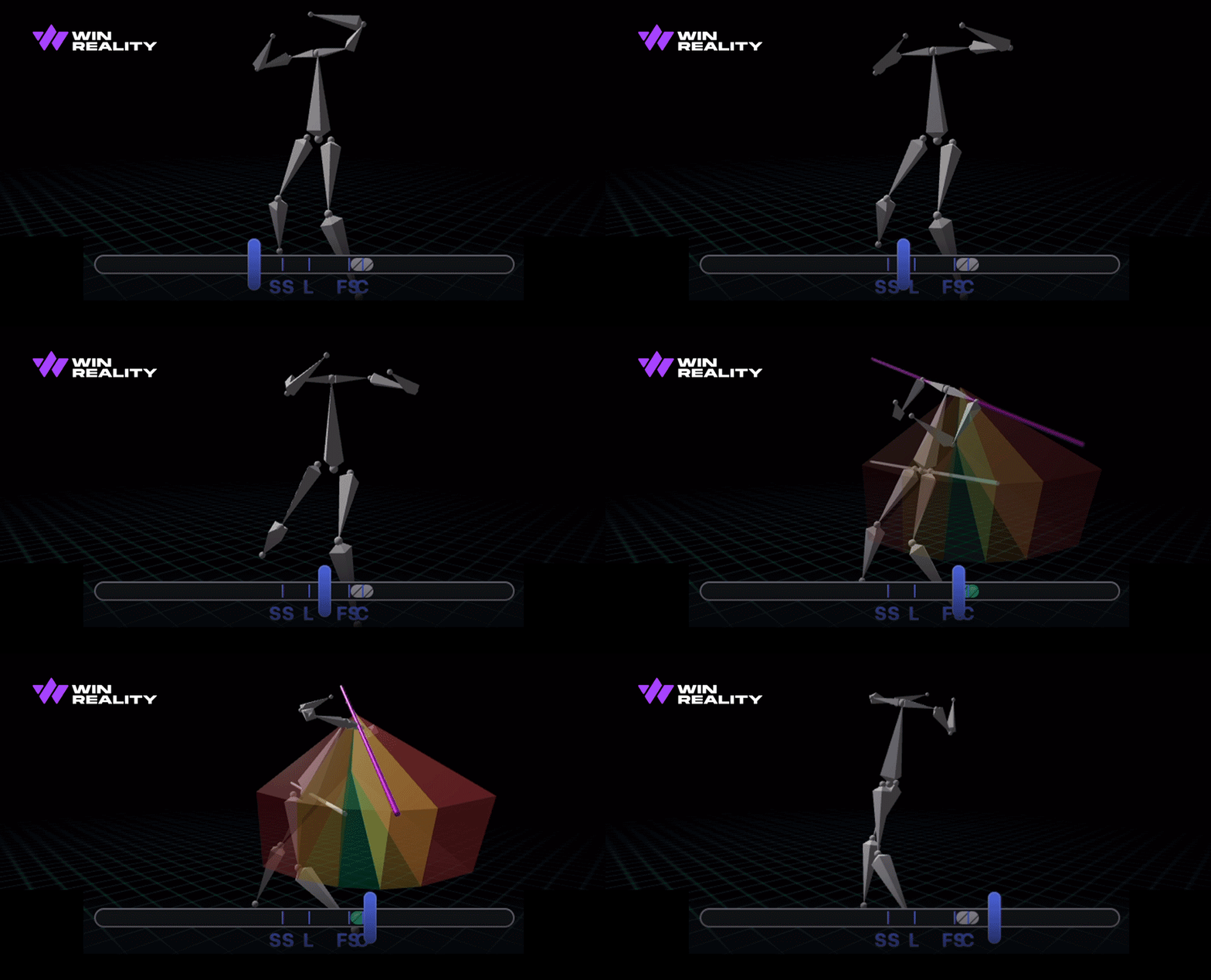
The Separation Factor: Hip-Shoulder Torque
Great hitters create torque between their upper and lower halves, and Ohtani’s hip-shoulder separation is among the best in the game. His maximum hip-shoulder separation allows him to store and unleash power like a coiled whip. At foot down, he maintains this separation, setting up a violent but controlled rotation through the ball. Freddie Freeman also excels in this area, using a smooth transition to deliver power without excess movement. At contact, Ohtani’s bat is still accelerating through the zone, a key reason he can launch balls to all parts of the field with authority.
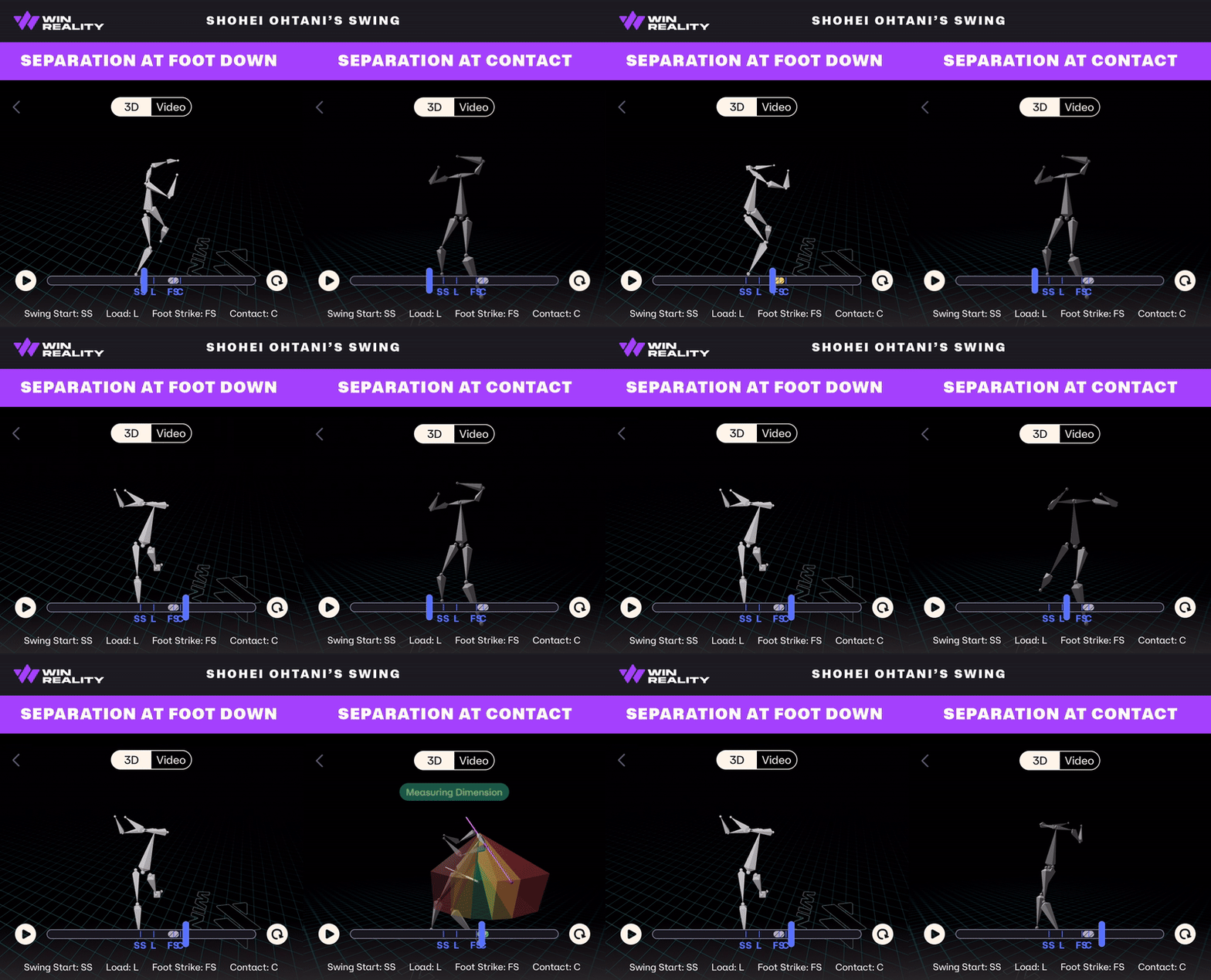
Comparison Chart of Key Swing Dimensions
Below is a comparison of key swing dimensions across Ohtani and other elite hitters:
| Swing Dimension | Shohei Ohtani | Aaron Judge | Juan Soto | Mookie Betts | Freddie Freeman |
|---|---|---|---|---|---|
| Stride Length (% of height) | 51.8% | 47.9% | 66.3% | 57.4% | 57.3% |
| Pelvis Direction at Contact | -46.8° | -27.7° | -44.9° | -32.2° | -49.2° |
| Upper Torso Rotation Range | Extensive | Moderate | Extensive | Compact | Smooth |
| Max Hip-Shoulder Separation | High | Very High | High | Moderate | High |
| Hip-Shoulder Separation at Foot Down | Well-Maintained | Strong | Strong | Compact | Strong |
Conclusion: The Swing of a Superstar
Shohei Ohtani’s swing is a blueprint for power, efficiency, and adjustability. His balance, stride length, and rotational mechanics allow him to generate elite bat speed while remaining flexible enough to adjust mid-pitch. Compared to other premier hitters, Ohtani blends Juan Soto’s controlled load, Aaron Judge’s explosive power, and Freddie Freeman’s smooth hip-shoulder separation. The Shohei Ohtani swing is a lethal combination of precision and force—one that makes him one of the most feared hitters in the game.
Want to analyze and improve your own swing mechanics?
Download the WIN Reality SwingConnect app to analyze your own swing using SwingAI!