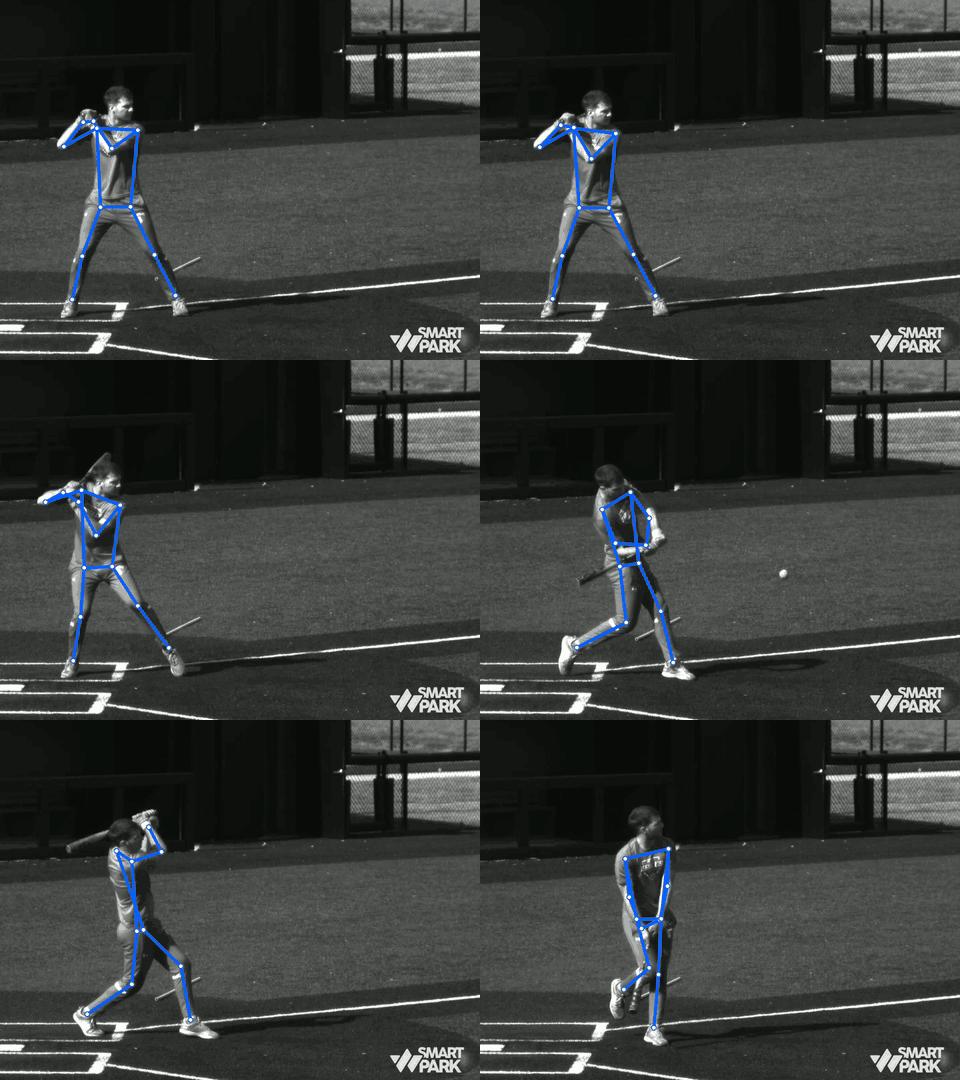
“Slow starts aren’t a mindset problem. They’re a preparation problem.”
When a hitter starts slow, everybody reaches for the same word: nerves.
That’s not what I see.
He’s mentally unprepared and he’s visually unprepared. His eyes haven’t seen a pitch yet. His timing hasn’t been tested. By the time he’s dialed in, he’s already given away two at-bats.
The best hitters I’ve been around don’t leave that to chance. They treat their eyes the way a pitcher treats his arm: they warm them up before they need them. By the time the game starts, they’re not hunting for their timing. They already have it.
That is why we built the Pregame Tune-Up: a focused four-round baseball pregame routine inside WIN Reality designed to get your timing, your eyes, and your approach dialed in before you ever step into the batter’s box. By the time you finish, you should feel like you have already seen a hundred pitches. Because you have.
Why Most Hitters Are Unprepared at First Pitch
Think about what a pitcher does before a game.
He throws a bullpen. He warms up progressively. He is not throwing max-effort on pitch one of the game, he has already been throwing. His arm is ready.
Now think about what most hitters do.
They take a few dry swings. Maybe some soft toss. Then they go stand in the box and try to hit a live fastball from a guy who has already been warmed up.
The pitcher is ready. The hitter is not.
That gap is real, and it shows up in early at-bats, swings that miss badly because of timing and taking great pitches to hit because the hitter isn’t prepared.
Vision and timing are perishable in the short term. They need reps to activate. And the best time to give yourself those reps is before the game starts, not during it.
The pitcher is ready to compete before the first pitch. You should be too.
What the Pregame Tune-Up Is Built to Do
The Pregame Tune-Up is a calibration tool. Four rounds. Progressively focused. Each one building on the last.
It is built to train:
- Getting on time
- Locking in your eyes at release point
- Dialing in your two-strike approach so you are ready to compete and battle
- Feeling confident in hitters counts (the 2-0 pitch) so when get there in the game, you attack
By the end of Round 4, your eyes should feel sharp, your timing should feel natural, and your approach should be bulletproof.
How the Tune-Up Develops Across Age Groups
Pregame preparation looks different at every stage of development, but the goal is the same. Get your timing, eyes, and your approach ready before the game starts.
Young Hitters (8U to 10U)
See It Before You Swing At It
At this age, the most important pregame skill is simple: get the eyes working. A lot of young hitters jump into a game cold — they see a pitch and react before they’ve actually tracked anything. We’re not trying to make them passive. We’re trying to get them seeing the ball early enough to turn it loose with confidence.
The two recognition rounds put every location in front of them with one job: track it from his hand to the mitt and pick up the trajectory early. Then they hit.
What it trains:
- Picking the ball up right out of the hand
- Reading trajectory early
- Seeing the pitch before deciding to swing, while maintaining aggressiveness
- Handling fastballs all over the plate — up, in, and away
The two swing rounds are fastball only on purpose — that’s the pitch they’ll see most, and we want them aggressive on it. First they learn to stay calm and let it get deep with two strikes, then they hunt it 2-0 and let it eat. See it, then go get it.
Developing Hitters (11U to 14U)
Train Your Eyes, Then Make Decisions
As hitters face better pitching and more pitch types, pregame prep has to go deeper.
At this level, the Tune-Up adds a Disappearing Pitch round. Hitters only see the first half of the ball flight. The job is to identify pitch type and shape early and trust the read before the pitch even finishes. This is the skill that separates hitters who look comfortable against offspeed from hitters who are always late and passive.
Training focuses on:
- Picking up pitch type out of the hand
- Reading spin and shape in the first half of flight
- Differentiating fastballs from curveballs and changeups in real time
- Staying disciplined with two-strikes and attacking 2-0 pitches in the zone
Offspeed enters the pitch mix – curveballs and changeups mixed in with fastballs. Hitters learn to sit fastball, adjust to offspeed, and stay calm in both counts.
Advanced Hitters (15U to 18U)
Narrow the Window, Raise the Standard
For high school hitters, pregame preparation is about sharpening decision-making against quality stuff, not just getting loose. So the recognition rounds raise the bar. Round 1 sets your baseline: is it a strike or not? Round 2 tightens it to one question — is it a fastball in the zone? Not every strike is a pitch you should swing at. This is where you build a filter and know your pitch before it’s thrown.
Training focuses on:
- Identifying fastballs in the zone specifically, not just strikes
- Building a pre-at bat plan
- Handling a four-pitch mix including the slider under pressure
- Committing to the two-strike approach without panic
- Converting 2-0 counts into real damage
At this level, preparation is a competitive edge. The hitters who show up with their eyes already locked in are the ones who take advantage early.
What Players Do Inside the Pregame Tune-Up
The Pregame Tune-Up is four rounds, and each one builds on the last.
- Round 1 — Warm Up Recognition (age-adjusted). Get your eyes ready. Track every pitch from the pitcher’s release all the way to the mitt — every pitch type, every location. The youngest hitters are just learning to see it: pick the ball up out of his hand and read it. Older hitters take it a step further and start calling strikes — is this one I’d swing at or not? Either way, this round wakes your eyes up and sets your baseline for everything that follows.
- Round 2 — Active Recognition (age-adjusted). This is where the age groups split. The youngest keep building their baseline — more tracking, picking up spin and shape earlier. Developing hitters move to Pick It Out Of The Tunnel: the pitch disappears partway to the plate, so you have to read the type early out of the hand and trust what you saw. Advanced hitters tighten the filter — not just “is it a strike,” but “is it a fastball in the zone” — so you’re already hunting the pitch you can do damage with.
- Round 3 — Let It Get Deep, Don’t Be Afraid To Get Beat. Two-strike mode. Fastballs come at you up, in, and over the plate — and as you move up in age, offspeed mixes in down and away, the chase pitch they’ll try to fool you with. Your job is to see the fastball deep without chasing the junk out of the zone. Don’t panic about getting beat, especially up and in. Stay calm, trust your eyes, and don’t cheat. Two-strike hitting starts with composure, and this round builds it rep by rep.
- Round 4 — 2-0, Let It Eat. Green light. You’re ahead, so hunt the fastball and drive it out front — up, in, and over the plate. For older hitters, offspeed works off that same tunnel, breaking down and away, so you learn to spit on it and stay on your pitch. No fear of swinging and missing here — get a good pitch to hit and put your best swing on it. This is the count where damage gets done, and this round trains you to cash it in.
Every round reinforces one idea. Be ready before the game starts.
Why Pregame Preparation Changes Everything
Most hitters leave their first few at-bats to chance.
Prepared hitters do not.
When your eyes are already warm, your timing is already calibrated, and your approach is already clear, you do not need the first inning to find your rhythm. You show up ready to compete.
Pitchers who are unprepared get hit. Hitters who are unprepared get exposed. Preparation is not optional at the highest levels of the game, it is the baseline expectation.
Vision helps you see it. Timing helps you be ready for it. Approach enables you to execute. The Pregame Tune-Up makes sure both you are ready before the first pitch matters.
Start Every Game Day Already Ahead
The Pregame Tune-Up is available now only inside WIN Reality. If your goal is to stop starting slow and start making pitchers pay from the first at-bat, this is how you do it.
Warm up your eyes. Lock in your approach. Show up ready.
New to WIN?