“You can take a lot of swings and still struggle to do damage if you are not training contact quality with purpose.”
When hitters say they want more power, most of them mean one thing.
More homers.
What I see over and over again is this: hitters do not lack strength. They lack intent and the ability to square the ball up consistently. They get into good counts, see a pitch they can handle, and then miss it or make weak contact.
Great hitters separate themselves by what they do with their opportunities. When they get a pitch they can handle, they do not just put it in play. They drive it.That is why we built the Power Training Track, a focused five-week VR training program designed to help hitters swing with intent, create quality contact, and turn good decisions into extra bases.
Why Power Is About More Than Strength
Power is not about swinging harder.
It is about:
- Swinging at YOUR pitch
- Controlled aggression
- Beating the ball to the spot
- Matching the plane of the pitch with your path
When vision and timing are in place, power becomes the next step. Early recognition and good timing put you in position. Intent and squaring it up determine what happens next.
Hitters who are on time can be on plane, stay inside the ball, through the ball, create backspin, and drive it to all fields. Hitters who swing without intent and are only briefly on plane often settle for weak contact, even on good pitches.
Power is not random. It is trained. And it has to be trained with intent.
“Good hitters put the ball in play.
Dangerous hitters can change the game with one swing.”
What the Power Training Track Is Built to Do
You can take a lot of swings and still struggle to do damage if you are not training contact quality with purpose.
The Power Training Track is built to train:
- Barrel control and the ability to manipulate contact point
- Swinging with intent in hitters counts
- Driving the ball to all fields
- Turning hittable pitches into hard contact
Hitters train these skills inside the box, at game speed, against realistic pitch sequences. The goal is not to overswing. The goal is to swing with conviction and control.
Power Drills Built for Every Age and Level
Power looks different at every stage of development, but the foundation is the same. Deliver the barrel with intent and control.
Young Hitters (8U to 11U)
Balance
At younger ages, power training focuses on clean contact and learning how to hit the ball hard without losing balance.
Drills help hitters:
- Square it up consistently
- Control their contact point
- Hit it on a line
- Build confidence hitting the ball hard
- Swing with aggression, not just to make contact.
The goal at this stage is simple. Swing with intent, square it up, and let the ball fly.
Developing Hitters (12U to 15U)
Attack the Whole Field
As hitters grow stronger and face better pitching, power becomes about manipulating contact points and understanding how to use the whole field.
Drills emphasize:
- Attacking fastballs in advantage counts
- Driving pitches in different zones
- Staying through the middle of the field
- Maintaining barrel control as velocity increases
This is where hitters learn that power is not about selling out for pull-side home runs. It is about squaring the ball up and using the whole field. This sets a good foundation for success.
Advanced Hitters (16U through College)
Game Power
For advanced hitters, power training mirrors game competition.
Training focuses on:
- Driving off-speed pitches when recognized early
- Staying inside the ball and creating quality ball flight
- Adjusting effort level with two strikes while still competing
- Converting mistakes into extra-base damage
At this level, power becomes a separator. Hitters who combine early recognition, good timing, and controlled aggression become dangerous in every count.
The drills evolve. The velocity increases. The expectations rise. The standard stays the same. Do damage when you get your pitch.
What Players Do Inside the Power Training Track
Inside the Power Training Track, hitters train to do damage the way it shows up in games. They face game-speed velocity and focus on quality contact and intent
Core training modes include:
- Batting Practice Attack hittable pitches and focus on driving the ball with authority.
- Pitch Recognition and Advantage Counts Recognize pitches you can handle and commit with conviction.
- Disappearing Pitch Train to pick up pitch types off early ball flight.
- Ghost Pitch Train to recognize it early and make swing decisions, so you can beat the ball to the spot out front..
- Exhibition Mode A 2-0 fastball. A 3-1 green light. A mistake in the zone. These reps teach hitters to convert opportunity into damage.
Every rep reinforces one idea. When you get your pitch, do not miss it.
Why Power Changes Everything
Good hitters put the ball in play.
Dangerous hitters can change the game with one swing.
Power training teaches hitters to stop surviving at-bats and start winning them. When contact quality improves, confidence grows. When hitters know they can do damage, pitchers feel it.
Vision helps you see it.
Timing helps you be ready for it.
Power helps you be dangerous.
Start Training Power at Game Speed
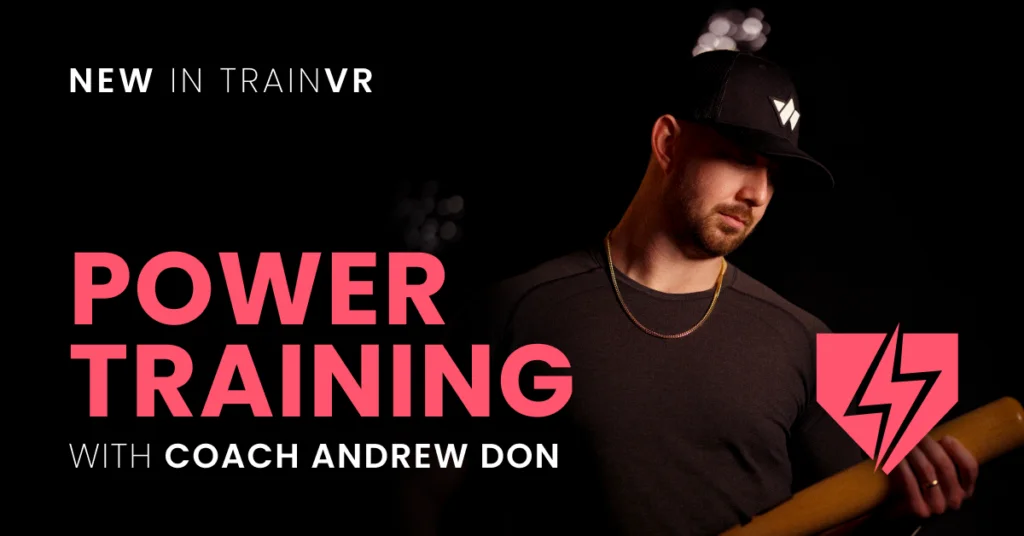
The Power Training Track is now available inside WIN Reality. If your goal is to turn good swings into hard contact and hard contact into extra bases, this is where you train it.
Swing with intent. Square it up. Do damage.