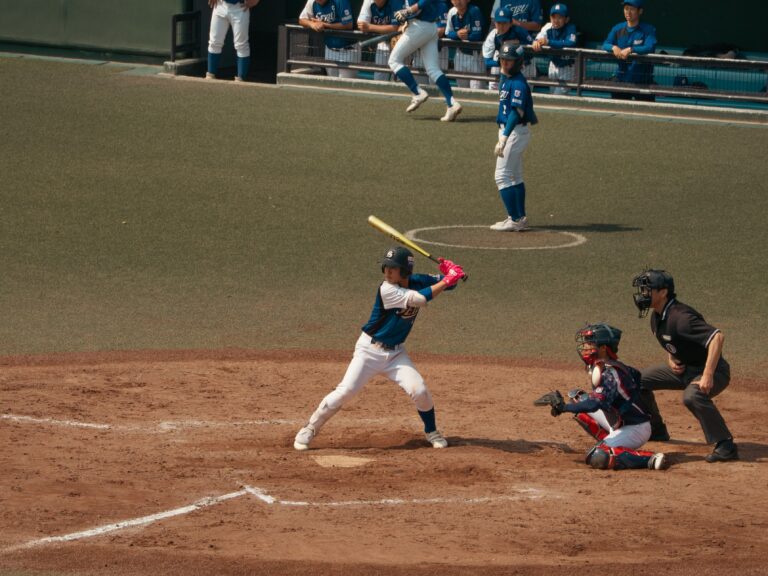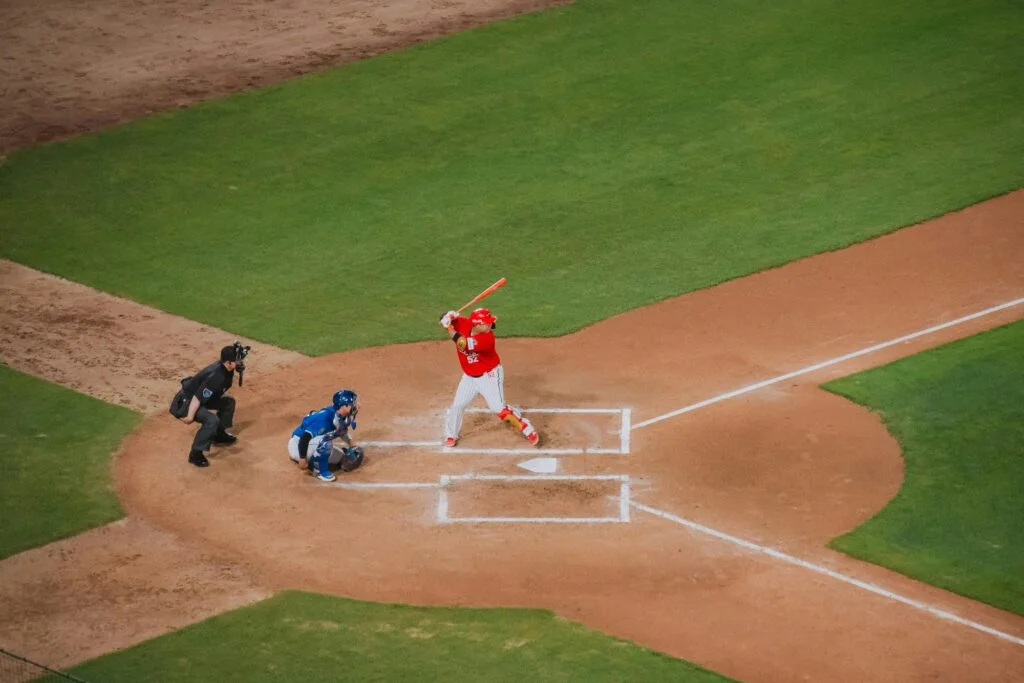
MLB opened its 2026 season with cameras ready to overturn missed pitch calls. Each team gets 2 challenges per game under the automated ball-strike challenge system. So how does automated officiating work in baseball at the travel, high school, and tournament fields your program plays on?
The Short Answer
Fixed cameras track every pitch and batted ball. Software compares the ball’s position to a defined strike zone or the foul lines, then delivers the call. On a SmartPark field, Automatic Balls & Strikes runs alongside 125+ live metrics captured on the same pitch.
Automated officiating is measurement first. The call comes from where the ball actually traveled.
Why Automated Officiating in Baseball Matters Right Now
Your 14U hitters watched big leaguers tap their helmets this spring. Now they want to know why their league can’t do the same. Here is what they saw:
- A player taps the cap or helmet within about 2 seconds to challenge, per Britannica’s ABS explainer.
- A team keeps its challenge when it wins the review.
- During 2026 spring training, 53% of 1,844 challenges were successful, according to ESPN.
- Each review takes about 15 seconds, Forbes reports.
Some leagues go further. Since 2024, Korea’s KBO has let cameras and pitch-tracking technology decide every ball and strike, with the plate umpire announcing the call. SmartPark puts MLB-grade tracking technology on amateur diamonds today.
Your players already expect automated calls. The technology exists at your level now.
The Problem Everyone Experiences at Youth Fields
It’s the bottom of the sixth in a 12U pool-play game, runners on second and third. A volunteer umpire working his third game of the day calls strike three on a pitch at the knees. The dugout erupts, and parents line the fence.
Even MLB umpires call pitches correctly about 94% of the time. At that rate, a 200-pitch game still carries roughly 12 missed calls. Amateur fields stack three more pressures on top:
- Zones shift between fields, umpires, and even innings.
- Volunteer umpires work long tournament days with limited training.
- Parent disputes delay games and push umpires out of the job.
Missed calls are a math problem. A consistent zone removes the variable that starts most arguments.
How It Actually Works on a Baseball Field
A SmartPark field captures data before anyone touches a scorebook. Three steps turn a pitch into a call.
A. Ball Tracking With Fixed Optical Cameras
SmartPark uses an Optical Camera System with fixed optical cameras and MLB-grade tracking technology. Fixed mounts give the system the same view of your field every game.
From that view, SmartPark captures 88 Ball Metrics.
Fixed cameras hold the same angle every game, so every pitch gets measured the same way.
B. Defining the Strike Zone
MLB defines the zone as a 2D box at the middle of the plate. Per the Boston Globe’s ABS explainer, the top sits at 53.5% of batter height and the bottom at 27%. Apply that formula to a 5-foot 12U hitter and the zone runs 16.2 to 32.1 inches off the ground.
The system checks where the ball crosses that box. SmartPark’s Automatic Balls & Strikes applies one consistent zone, pitch after pitch, umpire after umpire.
A defined box replaces judgment with geometry. Every hitter gets the same zone all game.
C. Fair-Foul Calls and Delivering the Result
Camera tracking judges fair or foul by locating the ball against the foul lines. The key moment is where the ball sits relative to the line, so camera coverage of both lines matters. Ask how your field layout and camera placement handle line calls when you plan your install.
Then the call goes public. The LED Display shows it to both dugouts. The WIN Gameday App and Fan In-Game App carry live game data to phones in the stands.
Tracking produces the call. The display and apps make sure everyone sees it at once.
Common Misconceptions About Automated Umpires
A board member at your next league meeting might raise one of these 3 objections. Here is how to answer each.
Myth: Umpires Get Replaced
Umpires are one of 5 SmartPark user roles. They still rule on plays at the bases, interference, and game management. Even MLB keeps a plate umpire behind every pitch.
Myth: It Only Works for Pros
SmartPark runs on amateur diamonds. Parents and Players are user roles, so families see the same data the dugout sees.
Myth: It Slows the Game
An MLB challenge takes about 15 seconds. Automatic Balls & Strikes skips the challenge pause, and the Pace of Play Clock keeps innings moving.
Automation supports your umpires and keeps games tight at every level.
What Changes in Practice on Game Day
Picture a Saturday tournament with 4 games stacked on one field. Every delay pushes the 6 p.m. game later, so here is what SmartPark changes:
- The Pace of Play Clock keeps the time between pitches and innings visible to everyone.
- Game Scoring records the game as it happens.
- SmartPark Ops gives scorekeepers and field operators one place to run the day.
- Playbook365 integration pulls in rosters and schedules before first pitch.
Fewer disputed pitches mean fewer stoppages. Umpires focus on the game, and operators focus on the schedule.
Automated calls plus a visible clock keep your field running on time.
Beyond Automatic Balls & Strikes: 125+ Live Metrics
The pitch that ended Saturday’s game also produced data your hitting coach can use Monday. SmartPark captures 125+ live metrics across 4 categories:
- 35 Game Metrics
- 88 Ball Metrics
- 12 Bat Sensor Metrics
- 12 Biomechanic Metrics
That data travels. SmartPark connects to scoring systems, Playbook365 for rosters and schedules, and live streaming through an open API. After the final out, data hands off to SwingAI, Blast Motion, and TrainVR so players train on what happened in the game.
The Fan In-Game App keeps families in the game with live data. See the full system on the SmartPark product page.
FAQ: How Does Automated Officiating Work in Baseball at Your Level?
Coaches and parents ask these 5 questions most often.
Will Automated Umpires Come to Little League?
Automated calls already run on amateur fields with SmartPark. Adoption by a specific league depends on that league’s own rules.
How Is the Strike Zone Set for Kids of Different Heights?
MLB scales its zone to each batter, with the zone between 27% and 53.5% of height. Confirm your league’s zone definition during setup.
Does the Umpire Still Matter?
Yes. Umpires remain a core user role and run every part of the game beyond the zone.
Can It Call Fair or Foul?
Camera tracking can locate a batted ball against the foul lines. Review fair-foul handling for your field configuration on the SmartPark product page.
What Happens if the Camera Misses?
Write a backup into your local rules before the season. Name the plate umpire as the fallback for any pitch the system can’t track.
Bring Automated Officiating to Your Field
Your next tournament can run on a consistent zone, a visible clock, and 125+ live metrics. Start with one field and build from there.