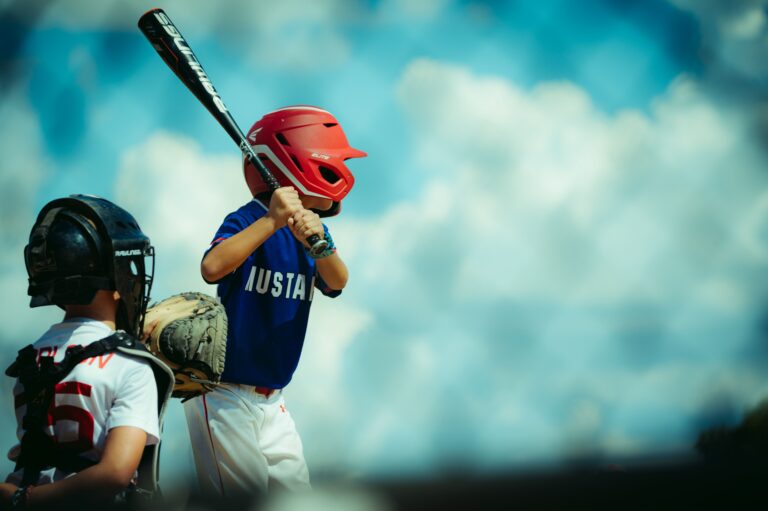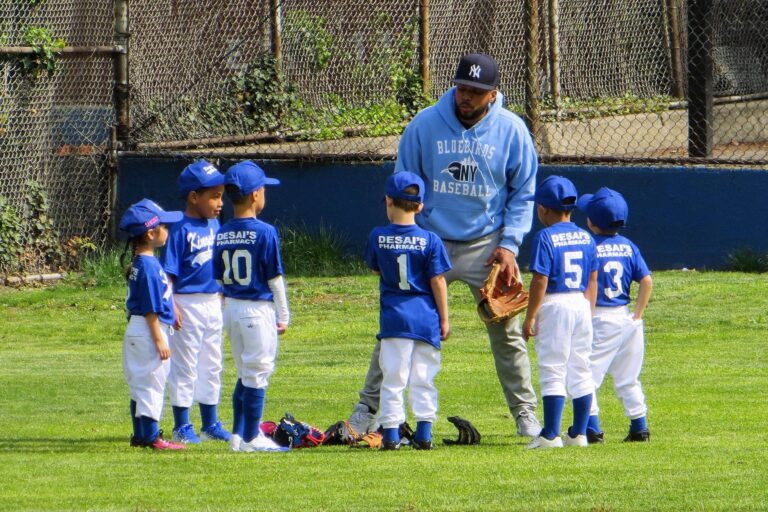
One of the most critical stages in a hitter’s development happens at 7-8 years old. At this age, players start building the athleticism, hand-eye coordination, and baseball instincts that carry them through every level of the game. Most kids in this range don’t need detailed mechanical coaching, they need consistent reps, the right environments, and the freedom to problem-solve and self-correct on their own.
This guide covers our top hitting, fielding, and throwing baseball drills for 7-8 year olds, plus a ready-to-use practice plan coaches and parents can run today.
Our favorite drills for 7-8 year olds are:
- High Tee Drill
- Deep Tee Drill
- Three Plate Drill
- Inside/Outside Drill
- Hitting with a Skinny or Wiffle Ball Bat
- Foot Strike Drill
Hitting Skills for 7-8 Year Olds To Focus On
At ages 7-8, youth baseball players are building a foundation that supports long-term growth. The focus should be on developing essential hand-eye coordination, timing, and hitting fundamentals, while keeping every practice session fun and engaging.
Kids in this age group naturally organize their bodies in efficient, powerful ways when given the chance. Over-coaching can disrupt this natural process, stiffening movements and slowing development. The best approach: set up the right environment and let them figure it out.
Being On Time Consistently
Timing is the single most important aspect of hitting, and it goes hand-in-hand with balance. Without good timing, a hitter struggles to make quality contact. At 7-8, let kids find their own timing mechanisms and rhythm at the plate. Don’t force a specific load or stride pattern.
Bat-to-Ball Skills
Making consistent contact builds confidence fast. The primary goal at this stage is putting the ball in play, not perfect mechanics or power. The more often young hitters make contact, the more success and fun they’ll have at the plate.
How To Load Up
Building the foundation for power and adjustability starts with loading properly. This means hinging at the hips, shifting weight into the back leg, and coiling into the back hip. It should feel natural and allow the hitter to gain control and create power from the lower half.
Swinging With Intent
Even at 7-8, train hitters to swing with purpose, driving the ball with every swing, not just making contact. This aggressive approach teaches them to move the bat and body fast, which is vital for growth.
What To Look For
- The hitter uses natural timing mechanisms
- They get into their back hip without swaying back
- There’s visible coil, the rear leg back pocket turns toward the pitcher as they load
- Every swing has intent to drive the ball
- They’re swinging at hittable pitches (train aggressiveness, not selectivity at this age)
What Not To Be Concerned By
- Misses or poor contact, usually a coordination issue that goes away with reps
- Lack of power, it comes with growth and more reps
- The barrel dropping at contact due to strength
- On-time but inconsistent quality contact, the hitter just needs more reps
The Best Hitting Drills for 7-8 Year Olds
The best drills at this age let hitters use their athleticism to solve problems. Competitions, game-like scenarios, and varied environments keep practice productive and fun.
Drill 1: High Tee Drill
Helps hitters improve their ability to hit high pitches. Especially beneficial for players with a steep path that prevents consistent squaring up. Hitters develop quicker, tighter entry into the zone.
Drill 2: Deep Tee Drill
Builds confidence catching the ball deeper in the hitting zone. Establishes a bat path that enters the zone early, allowing for cleaner, more consistent contact. Great for hitters who struggle with getting on plane early.
Drill 3: Three Plate Drill
Improves timing and builds adjustability. Teaches hitters to stay inside the ball — short to and long through. Ideal for players who drift forward or struggle with controlling their load.
Drill 4: Inside/Outside Drill
Develops the ability to adjust to pitch sequences that move in-to-out or out-to-in. Hitters improve the depth and direction of their swing.
Drill 5: Hitting With a Skinny or Wiffle Ball Bat
Using a thinner barrel forces hitters to be more precise with ball-striking. A simple way to sharpen bat-to-ball skills during any tee or toss session.
Drill 6: Foot Strike Drill
Ideal for hitters who struggle with loading and getting into position on time. Teaches proper swing sequencing by emphasizing firing from the center of the body first. Also reinforces maintaining posture over the plate.
Fielding and Throwing Drills for 7-8 Year Olds
Hitting drills get the most attention, but fielding and throwing are just as important at this age. Here are three age-appropriate drills:
Ground Ball Alligator Drill
- Roll ground balls to the player from 15-20 feet away
- Player fields with two hands. Top hand closes over the ball like an alligator mouth
- After fielding, the player sets their feet and throws to a target
Why it works: Builds proper fielding fundamentals and two-hand technique. Develops the habit of securing the ball before throwing.
Relay Race Throwing
- Split players into two lines about 30 feet apart
- The first player in each line throws to their partner, who catches and throws back
- The team that completes 10 clean throws first wins
Why it works: Adds competitive energy to throwing practice. Kids naturally focus on accuracy when winning is on the line.
Pop Fly Tracking
- The coach tosses easy pop flies 10-15 feet in the air
- Players call the ball (“I got it!”) and track it into their glove
- Progress to higher tosses as they get comfortable
Why it works: Builds confidence tracking the ball in the air, which many 7-8 year olds haven’t practiced enough.
Equipment Guide for 7-8 Year Olds
Getting the right gear makes a real difference in development:
- Bat length: 25-28 inches, depending on height. A simple test: stand the bat next to the player. It should reach between mid-thigh and hip
- Bat weight: -10 to -12 drop weight is standard for this age group
- Helmet: NOCSAE-certified batting helmet with face guard (recommended for 8U)
- Glove: 10.5-11.5 inches for infielders, 11.5-12 inches for outfielders
- Cleats: Rubber molded cleats (metal cleats are not allowed at this age level)
Sample 60-Minute Practice Plan
| Time | Activity | Focus |
|---|---|---|
| 0-10 min | Dynamic warm-up + catch | Arm preparation, throwing accuracy |
| 10-20 min | Tee work (High Tee + Deep Tee) | Bat path, contact points |
| 20-30 min | Front toss (Inside/Outside Drill) | Adjustability, timing |
| 30-40 min | Ground Ball Alligator Drill | Fielding fundamentals |
| 40-50 min | Skinny bat or wiffle bat hitting | Bat-to-ball precision |
| 50-60 min | Relay race or line drive competition | Fun, competitive finish |
Run this plan 2-3 times per week for consistent development. Keep each station moving. Short attention spans at this age mean high-energy transitions matter.
Frequently Asked Questions
How long should practice be for 7-8 year olds?
45-60 minutes is the sweet spot. Any longer and attention drops off. Keep drills rotating every 10 minutes.
How often should my 7-8 year old practice?
2-3 structured sessions per week, with unstructured play encouraged on other days. Rest days matter. Avoid training 5+ days per week at this age.
What’s a good exit velocity for 7-8 year olds?
Most 7-8 year olds hit between 35-50 mph off the tee. Don’t worry about chasing numbers, focus on consistent contact and intent.
What pitch speeds do 7-8 year olds face?
In coach pitch, expect 25-35 mph. In kid pitch (8U), speeds range from 30-45 mph. The key is getting enough reps against moving pitches to develop timing.
How WIN Reality Can Help
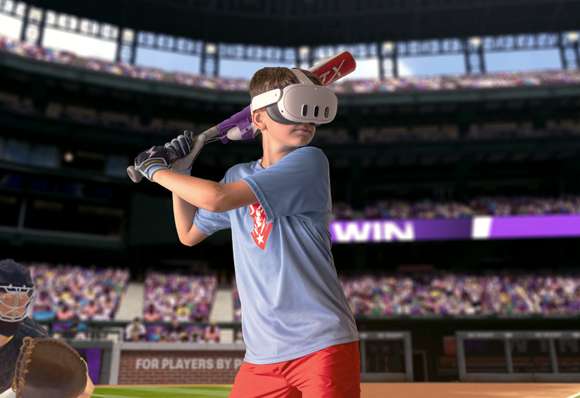
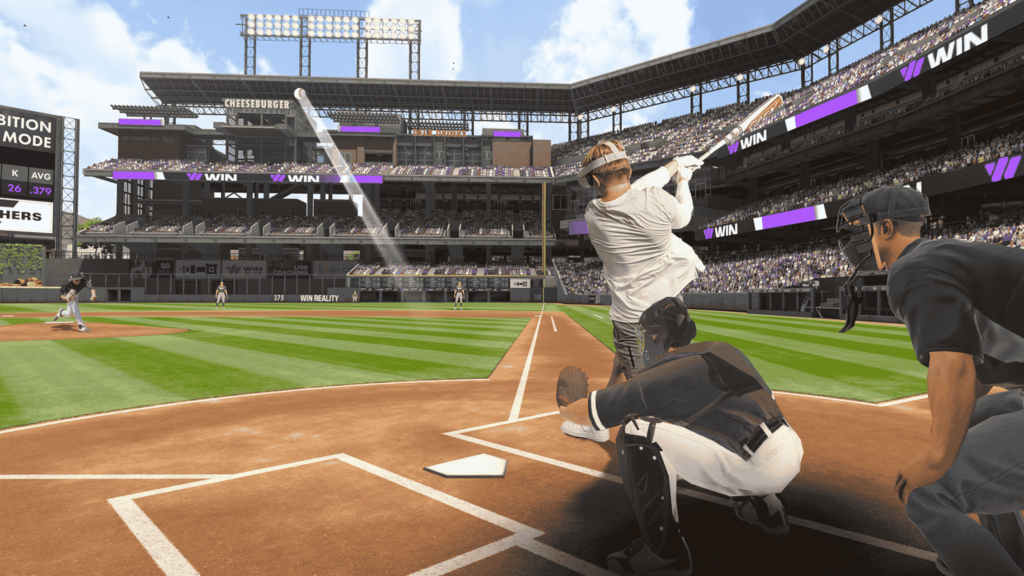
Building these foundational skills takes reps, lots of them. WIN Reality’s VR training platform lets players see pitches and take swings in a virtual environment, simulating real game scenarios from anywhere. For 7-8 year olds, this means:
- More pitch exposure: See 50-100+ pitches per session at game-realistic speeds (30-50 mph)
- Timing development: Build timing against moving pitches without needing a pitcher, cage, or field
- Pitch recognition: Start recognizing different pitch types and speeds early
Paired with the SwingAI mobile app, you can review swing mechanics, track progress, and get personalized recommendations on what to work on next.
For parents and coaches looking to supplement their drill work, check out WIN Reality’s age-by-age curriculum for a structured development path. Explore pricing options to find the right fit for your player.