Bat speed is one of the most important numbers in a hitter’s development. It measures how fast the barrel moves through the zone at contact and it directly determines how hard and how far you can hit the ball. Whether you are a 10-year-old just learning to drive the ball or a college hitter chasing a roster spot, knowing where your bat speed stands relative to your age group gives you a clear target and a training roadmap.
This guide breaks down bat speed benchmarks by age, explains the relationship between bat speed and exit velocity, covers softball-specific numbers, and gives you the drills, tools, and tracking methods to improve at every stage.
The Short Answer: Bat Speed Benchmarks by Age
Here are the target bat speed ranges for each level, compiled from Blast Motion, Rapsodo hitting data, and MLB Statcast averages. Every hitter develops at their own pace. Use these as guideposts, not hard cutoffs.
| Level | Age Range | Bat Speed (mph) |
|---|---|---|
| Youth | 8–10 | 40–50 |
| Youth (Advanced) | 11–12 | 48–56 |
| Middle School | 13–14 | 46–62 |
| High School JV | 14–15 | 53–62 |
| High School Varsity | 15–18 | 57–71 |
| College | 18–22 | 61–73 |
| Professional | 22+ | 63–80 |
At the MLB level, Statcast data shows the league average bat speed sits around 71–75 mph, with elite power hitters reaching 78–80+ mph. These numbers have climbed steadily as strength and training science have improved.
Bat Speed vs. Exit Velocity: Why Both Numbers Matter
Bat speed and exit velocity are closely connected but measure different things. Bat speed is the speed of the barrel at contact. Exit velocity is the speed of the ball off the bat. The relationship is roughly linear: for every 1 mph increase in bat speed, exit velocity increases by approximately 1.2–1.5 mph, depending on the quality of contact and the pitch speed.
Here is a general guide to the correlation:
| Bat Speed (mph) | Well Struck Expected Exit Velocity Range (mph) |
|---|---|
| 45 | 55-68 |
| 55 | 68-83 |
| 65 | 80-98 |
| 70 | 86-105 |
| 75 | 92-112 |
| 80+ | 100-120+ |
The key takeaway: bat speed sets the ceiling. You cannot consistently hit 90+ mph exit velocity with a 60 mph bat speed. But bat speed alone does not guarantee results. Contact quality, attack angle, timing, and pitch selection all affect whether that barrel speed converts into hard contact.
This is why a complete approach, training bat speed alongside decision-making and timing, produces better results than chasing one number in isolation.
The Different Stages: Bat Speed by Age
As players grow, bat speed evolves alongside physical development, training, and experience. Here is what to expect and how to train at each level.
Youth Players (8–12 Years Old)
Target range: 40–56 mph
At this stage, the focus should be on hand-eye coordination, timing, and bat-to-ball skills, not raw bat speed. Natural physical development and cleaning up swing inefficiencies will bring higher speeds. The most important instruction at this age: swing hard and try to hit the ball as far as you can. Intent matters.
Drills for youth players:
- Tee Work (Line Drive Focus): Hit off a tee with the goal of driving hard line drives. Focus on clean contact and bat path, not distance.
- Line Drive Competitions: Set up friendly competitions. Who can hit the most line drives in a row? This builds focus and consistent contact.
- Distance Competitions: Who can hit the ball the farthest? This builds intent and encourages aggressive swings without overthinking mechanics.
- Overhand Flip Drill: A coach or parent flips the ball overhand from a short distance, teaching timing and tracking in a low-pressure setting.
Middle School (13–14 Years Old)
Target range: 46–62 mph
As hitters develop more strength and coordination, bat speed begins to climb. At this age, training should focus on intent, teaching the body to move fast, and building rhythm in the swing.
Drills for middle school hitters:
- Shuffle Ups: Helps hitters generate momentum, move fast, and build bat speed. Great for stiff swingers who struggle to create rhythm.
- Knob to Knee Drill: Teaches hands and lower body to work together in rhythm. Develops a proper pelvis and torso load, separation, and momentum into the swing. Swing with high intent.
- Max Effort Swings: Swing with full intent off a tee or front toss. Maintain a low line drive focus at a 10–20 degree launch angle. Builds bat speed through aggressive effort.
- Torque Drill: Builds hip-shoulder separation for hitters who tend to push with their hands instead of sequencing from the hips. Creates more bat speed, good direction, and power.
- Hitters Count Drill: Simulate at-bats starting from a 2-0 or 3-0 count. This builds confidence and teaches hitters to do damage in favorable counts.
High School (15–18 Years Old)
Target range: 53–71 mph (JV: 53–62 | Varsity: 57–71)
This is where bat speed becomes a separator. Hitters at this level need to match the physical demands of the competition. Step one is the weight room — physicality has to match the level before bat speed training will have its full effect. Once strength targets are in place, add bat speed-specific work.
Drills for high school hitters:
- PVC Madman Swings: Builds intent, bat speed, and the ability to accelerate and decelerate through the kinetic chain. Great for learning to move the body fast.
- Recoil Swings: Keeps hitters tight through the zone. Forces the body to turn from the center and accelerate then decelerate the swing quickly. Fixes drag and direction issues.
- Med Ball Scoop Toss and Med Ball Shot Put: Teaches hitters to move their body fast, maintain posture, and create power from the core. Develops proper load and unload sequencing.
- Hitting Plyo Balls: Improves contact quality, ability to brace at impact, and getting through the ball. Aim for 12 to 2 o’clock shape (RH) or 12 to 10 o’clock (LH).
- Weighted Bat Program: Alternate between overweight, underweight, and game-weight bats. Sample rotation:
| Bat | Reps |
|---|---|
| Heavy Bat | 2 swings |
| Light Bat | 2 swings |
| Game Bat | 2 swings |
Perform 4 sets of this rotation with a short break between rounds.
College and Professional (18+ Years Old)
Target range: College: 61–73 mph | Professional: 63–80 mph
At these levels, bat speed gains come from refining mechanics, maximizing physical capacity, and training intent under game-like conditions. Data tracking becomes essential. Hitters need to know their bat speed, attack angle, and time to contact with precision.
Training priorities:
- Strength and Power: Deadlifts, trap bar pulls, and split squats for raw strength. Rotational med ball throws and broad jumps for power transfer to the swing.
- Overload/Underload Bat Training: Structured programs alternating heavy and light bats with game-weight reps drive neuromuscular adaptation.
- Game-Speed Reps: Practice swing decisions against realistic velocity and pitch mix. This is where VR training delivers an edge with more game-speed at-bats per session than any cage or live BP session can offer.
- Data Review: Track bat speed trends over time with swing sensors (Blast Motion, Rapsodo) or video analysis tools.
Softball Bat Speed Benchmarks
Softball hitters follow a different development curve than baseball players, largely due to differences in bat length, weight, and the pitch-to-contact distance. Here are general bat speed benchmarks for fastpitch softball:
| Level | Age Range | Bat Speed (mph) |
|---|---|---|
| Youth (10U) | 9–10 | 35–45 |
| Youth (12U) | 11–12 | 42–52 |
| Middle School (14U) | 13–14 | 48–58 |
| High School | 14–18 | 55–68 |
| College | 18–22 | 60–75 |
| Professional | 22+ | 65–78 |
The same development principles apply: youth hitters should focus on timing, coordination, and intent. As players mature, strength training, weighted bat programs, and swing analysis accelerate bat speed gains. Softball hitters also benefit from the same overload/underload protocols and VR pitch recognition training as baseball hitters.
How To Test Your Bat Speed
You cannot improve what you do not measure. Here are the most reliable ways to test bat speed.
At-Home Methods
- Swing Sensor (Blast Motion, Diamond Kinetics): A small sensor attached to the bat knob captures bat speed, attack angle, time to contact, and more on every swing. The most accessible option for consistent tracking.
- SwingAI Video Analysis: Upload a swing video from your phone and receive instant AI-powered feedback on swing mechanics, including speed indicators and improvement cues. No extra hardware required.
- Radar Gun (Pocket Radar): Position a partner with a radar gun near the contact point. Less precise for bat speed than a dedicated sensor, but useful for exit velocity measurements off a tee.
Facility and Team Methods
- Rapsodo Hitting: Captures bat speed, exit velocity, launch angle, and spray direction in a single system. Common in college and high school programs.
- HitTrax: A full batting cage system that tracks bat speed, exit velocity, distance, and simulates game at-bats. Found in training facilities and college programs.
- Statcast (MLB/MiLB): The gold standard for professional hitters. Tracks bat speed, sweet-spot percentage, squared-up rate, and swing length via Hawk-Eye cameras.
Tracking Protocol
For meaningful results, follow a consistent testing protocol:
- Warm up fully: 15–20 dry swings, then tee work at increasing intensity
- Take 10 max-effort swings off a tee with your game bat
- Record the top 3 and the average of all 10
- Test every 4–6 weeks to track progress
- Log results with the date, bat model, and any notes on how you felt
The Bat Weight Factor: How Bat Selection Affects Speed
Bat weight and bat speed have an inverse relationship — heavier bats move slower, lighter bats move faster. But the goal is not just maximum bat speed. It is maximum energy transfer at contact, which depends on both speed and mass.
Key principles:
- Heavier bats generate more momentum at the same swing speed, but most hitters cannot maintain their top speed with a bat that is too heavy. The result: slower bat speed and worse timing.
- Lighter bats allow faster swing speeds, which improves timing and contact rate. But if the bat is too light, it loses the mass needed to drive the ball with authority.
- The sweet spot is the heaviest bat a hitter can swing at or near their max bat speed. For most competitive hitters, this means swinging a bat within the standard weight range for their age group and adjusting based on individual strength.
Youth hitters should use the lightest bat that feels comfortable. Bat speed and contact quality matter more than bat mass at this stage. High school and college hitters should experiment with bat weight during practice (not games) to find the model that maximizes their barrel speed without sacrificing timing.
The Right Tools for Improvement
Building bat speed requires a combination of strength, skill, and feedback. Here are the three pillars.
Strength Training
Medicine balls, resistance bands, and plyometric exercises build the core strength and explosiveness that power a faster swing. Deadlifts and split squats build a foundation. Rotational med ball throws and jump training develop the explosive power that transfers directly to the swing.
Weighted Bat Training
Overload/underload programs are one of the most proven methods for building bat speed. Heavy bats build strength and efficiency in the swing path. Light bats teach the body to move fast. Alternating between heavy, light, and game-weight bats in a structured program accelerates gains. See the weighted bat rotation table in the high school section above for a sample protocol.
Swing Analysis Tools
Blast Motion, Rapsodo, and HitTrax provide precise measurements of bat speed, exit velocity, and bat path. Regular analysis tracks progress, validates that training is working, and identifies mechanical areas for improvement. Pair sensor data with video review for the most complete picture.
Bat Speed Training With WIN Reality
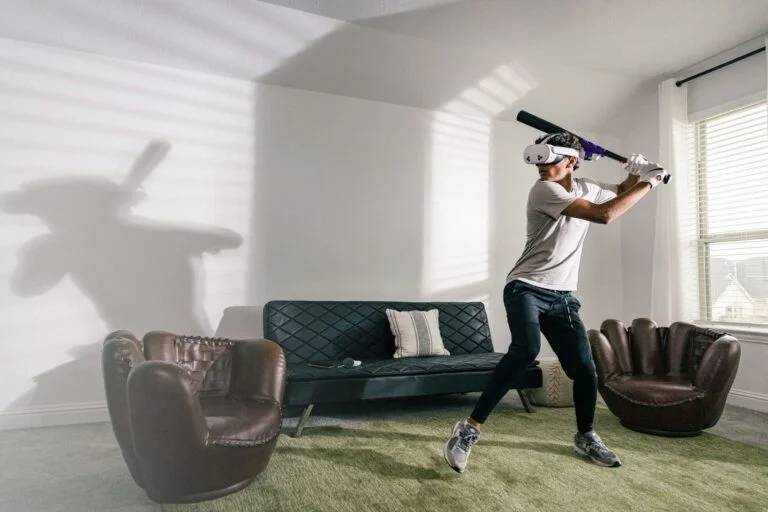
WIN Reality lets hitters apply new swing speed to game-like situations, such as reading pitches, making decisions, and timing their swing against real velocity.
TrainVR: Game-Speed Reps From Anywhere
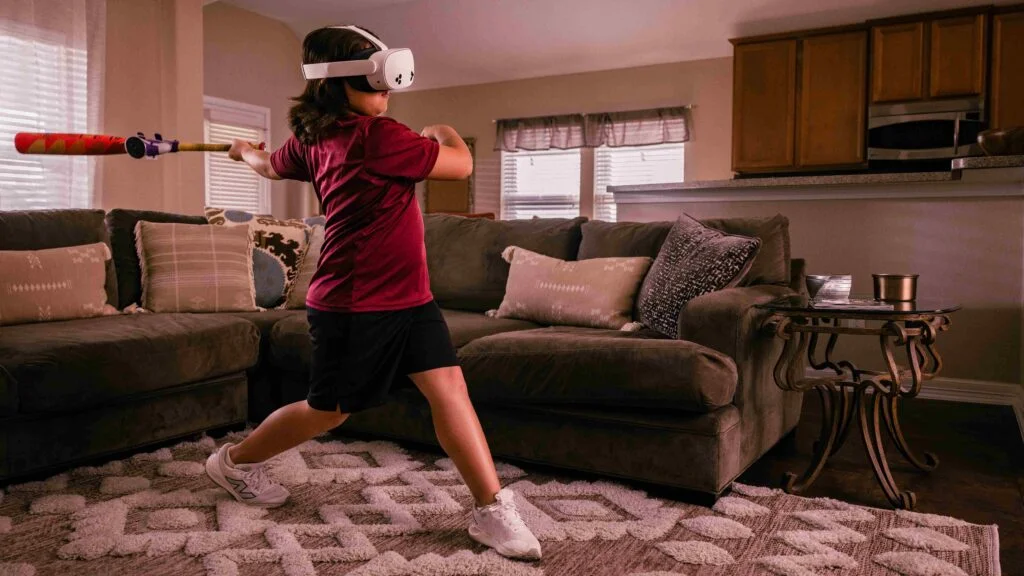
TrainVR puts hitters in front of game-speed pitches on a Meta Quest headset. Players see realistic pitch trajectories, make live swing decisions, and train pitch recognition, timing, and visual processing, no field, cage, or live pitcher required.
For bat speed training specifically, TrainVR helps hitters:
- Apply new bat speed to live pitch speeds — not just tee work or soft toss
- Train decision-making under pressure — recognizing pitch type and location at game speed
- Build confidence in fastball timing — seeing 80+ mph velocity consistently in VR translates to better timing in live at-bats
- Follow structured Training Tracks — multi-week progressions built by expert coaches for specific goals like fastball timing, breaking ball recognition, and two-strike approach
SwingAI: Your Personal Swing Coach
SwingAI turns a smartphone into a professional swing analysis tool. Upload a swing video and receive instant AI-driven feedback on what is working, what needs adjustment, and specific cues to improve.
For bat speed development, SwingAI:
- Identifies mechanical inefficiencies that limit barrel speed
- Provides personalized drills targeting your specific areas for improvement
- Tracks swing metrics over time so you can see bat speed trends across weeks and months
- Alerts you when key swing components fall out of range, catching slumps before they develop
Together, TrainVR and SwingAI create a complete bat speed development system: build speed with drills and strength work, apply it to game-speed VR reps, and analyze every swing with AI feedback.
How To Track Your Bat Speed Progress
Improvement happens over weeks and months, not single sessions. Here is a simple framework for tracking bat speed development:
- Test every 4–6 weeks using a consistent protocol (see the testing section above)
- Log your numbers: date, bat model, top speed, average speed, and how you felt
- Compare against benchmarks for your age group, use the tables in this article as your target
- Review SwingAI trends to spot mechanical changes that correlate with speed gains or dips
- Set short-term goals: 1–2 mph improvement per testing cycle is realistic for most developing hitters
Progress is not always linear. A hitter who gains 3 mph over a season is making meaningful improvement. Stay consistent with training and trust the process.
Frequently Asked Questions
What Is a Good Bat Speed for a 12 Year Old?
A good bat speed for a 12-year-old is typically between 48–56 mph, based on Blast Motion data. At this age, focus on swing intent and coordination rather than chasing a specific number. Bat speed will increase naturally as the hitter grows and trains.
Does Bat Speed Matter More Than Exit Velocity?
They work together. Bat speed sets the ceiling for how hard you can hit the ball, while exit velocity measures the actual result at contact. A hitter with high bat speed but poor contact quality will not consistently produce high exit velocity. Train both: bat speed through drills and strength, and contact quality through tee work and pitch recognition.
How Much Can You Improve Bat Speed in One Off-Season?
With consistent training (strength work 3 times per week, bat speed drills 2–3 times per week, and regular swing analysis) most developing hitters can gain 3–6 mph of bat speed over a 12–16 week off-season. Results depend on the hitter’s starting point, age, and physical maturity.
Can VR Training Actually Improve Bat Speed?
VR training improves the skills that let hitters use their bat speed in games, like pitch recognition, timing, and swing decisions. TrainVR gives hitters hundreds of game-speed reps per session, building the confidence and timing to let their bat speed play in competition. Pair VR reps with physical bat speed training for the best results.
What Bat Speed Do You Need To Play College Baseball?
Most college hitters swing between 61–73 mph. Competitive D1 programs typically expect bat speeds of 67+ mph. However, bat speed is just one metric. Exit velocity, hit quality, plate discipline, and defensive ability all factor into college recruiting decisions.