You’re a high school hitter with two years of varsity ahead of you. Your exit velocity is climbing, your coach says you have D1 potential, and now you’re searching for a college baseball recruiting timeline, only to find every guide you land on was written before the rules changed.
On June 6, 2025, the NCAA formally adopted the House v. NCAA settlement terms. For baseball specifically, those changes are dramatic enough that most pre-2025 recruiting advice is now partially wrong. If you’re working toward a college roster spot, you need a roadmap built around current rules.
This guide breaks it down grade by grade. It’s written for players. The decisions you make starting in 9th grade determine which programs notice you and which ones never see your name.
When Should Baseball Players Start the College Recruiting Process?
Start your freshman year.
College coaches can’t call you yet. The NCAA prohibits any communication between D1 coaches and potential recruits before August 1 of their junior year. But the work you do before then determines whether coaches respond when the window opens.
Families who start an outreach process before sophomore year are more likely to land roster spots. Families who wait to be discovered do not.
The landscape shifted hard in 2025. Effective July 1, 2025, D1 programs that have opted into the House Settlement operate under a 34-man roster cap and can fully fund every roster spot. The old 11.7 scholarship equivalency limit is gone. Walk-on spots have mostly disappeared at opted-in D1 programs, rosters are tighter, and every scholarship dollar is being negotiated.
Every seat on a D1 roster is now a funded, evaluated, competitive decision. You need verified measurables, game-speed reps on film, and a track record of development, not just raw stats from one summer showcase.
Build proof early. Start outreach on time. Know your division fit.
Grade-by-Grade College Baseball Recruiting Timeline for 2026 Players
A. Freshman Year and 14U–15U: Build the Foundation Before Chasing Exposure
You’re a freshman. No D1 coach is watching your film yet. That’s okay, because right now your only job is to become the player worth watching.
Most 14-year-olds chase exposure before they have anything worth exposing. Coaches at most showcases are evaluating juniors and seniors, not freshmen. Spend that energy on development.
Hitter development baselines to establish freshman year:
- Exit velocity target: 75–82 mph off a tee or soft toss
- 60-yard dash: track where you are (target 7.2 or below by sophomore spring)
- Pitch recognition: can you identify pitch type and location before the ball crosses 30 feet?
- Swing decisions: track your chase rate in BP sessions
Freshman year action items:
- Register with the NCAA Eligibility Center and confirm your core course plan — you need 16 NCAA-approved core courses and a qualifying GPA
- Start a simple training log: exit velo, sprint times, swing sessions, pitch-recognition work
- Take a realistic skills inventory with your high school or travel ball coach
- Attend 1–2 low-pressure instructional camps at programs you’re curious about
- Research 10–15 schools across D1, D2, and D3 — compare academic programs, roster sizes, and conference level
Academics are now the currency that unlocks opportunity. With coaches able to spread scholarship dollars further, student-athletes with strong grades rise to the top. A 3.5 GPA gives coaches flexibility in how they package your offer. A 2.8 GPA limits your options before your bat speed ever enters the conversation.
Your freshman year goal: know your measurables, protect your GPA, and build the training habits that produce proof by sophomore spring.
B. Sophomore Year and Summer Before Junior Year: Create Proof Coaches Can Evaluate
You’re entering the window where D1 coaches can start to learn your name — even if they can’t contact you yet. While coaches can’t reach out to you directly, you can reach out to them at any time. Use that.
Create your recruiting profile and start sending coach emails. Keep them short: your grad year, position, measurables, a link to video, and your schedule. Three sentences and a link.
Build your recruiting profile and first film package:
- Game footage: 3–5 at-bats from both the first-base side and behind the batter’s box
- Swing clips: front and side angle, full speed and slowed to 50%
- Measurables: exit velocity, 60-yard dash, height, weight, GPA, SAT/ACT scores
- Upcoming event schedule with tournament names and dates
Showcase strategy for sophomore year:
- Attend 1–2 targeted showcases run by organizations the produce searchable profiles with verifiable metrics
- Choose events that match your realistic division level
- Prioritize events where target schools send evaluators
Hitter-specific proof to build beyond stats:
Stats alone don’t recruit you. A .360 average from a weak conference tells a D1 coach almost nothing. What coaches want to see from hitters:
- Bat speed: target 65–72 mph for D2 consideration, 70+ mph for D1 interest
- Exit velocity: 85–90 mph range puts you in D1 conversations
- Approach evidence: quality at-bats, two-strike management, pitch selection on film
NCAA baseball recruiting rules restrict when and how a coach can respond to your outreach, but you can contact them anytime. Use that freedom. Email coaches directly, attend their camps, and follow up with updated film in the fall.
Your sophomore year goal: recruiting profile live, 2–3 showcases with verified metrics on record, and initial emails sent to 10–20 target programs.
C. Junior and Senior Year: Contact Windows, Visits, Offers, Late-Bloomer Paths, and Backup Plans
Junior year is when the phone can finally ring if you’ve done the work.
On August 1st of your junior year, college coaches can engage in recruiting-related conversations with you. Have personalized emails ready to send to every target school that day. Reference the specific coach, their program’s style, and why you fit their roster. Attach your updated hitter packet: current video, measurables, schedule, and GPA.
Key junior-year dates:
- August 1: D1 coaches can initiate recruiting conversations, so have your emails queued
- September 1: D1 coaches can extend verbal offers, and you can begin taking official and unofficial campus visits
- Fall: Visit 2–4 programs on your short list; unofficial visits cost nothing except travel
Keep your GPA above a 3.0 minimum and ideally above 3.5. Strong academics increase your chances for athletic aid and position you for merit-based scholarships that help coaches maximize limited budgets, which is a critical edge in today’s competitive transfer portal era.
When offers come, compare the full package: scholarship percentage, academic fit, coaching staff stability, roster opportunity, and conference level. Ask each coach how roster management is changing at their school specifically, because each school’s House Settlement participation choice matters.
Senior year and late-bloomer paths:
If you enter senior year uncommitted, you’re not out of options. Your strategy just shifts.
- Increase your outreach to more divisions and programs, which may have more open roster spots and more flexible contact rules
- D2 coach communication and official visits can begin June 15 after sophomore year, meaning D2 coaches have been watching longer than you think
- The NAIA does not regulate contact between a coach and a high school athlete, nor campus visits and tryouts. NAIA programs are a legitimate and often overlooked path
- JUCO is a strategic option, not a fallback: many D1 programs actively recruit from JUCO rosters, and two years of college-level development can change your ceiling entirely
As of October 2024, the NCAA eliminated the traditional National Letter of Intent. D1 and D2 recruits now sign a Written Offer of Athletics Aid during signing windows.
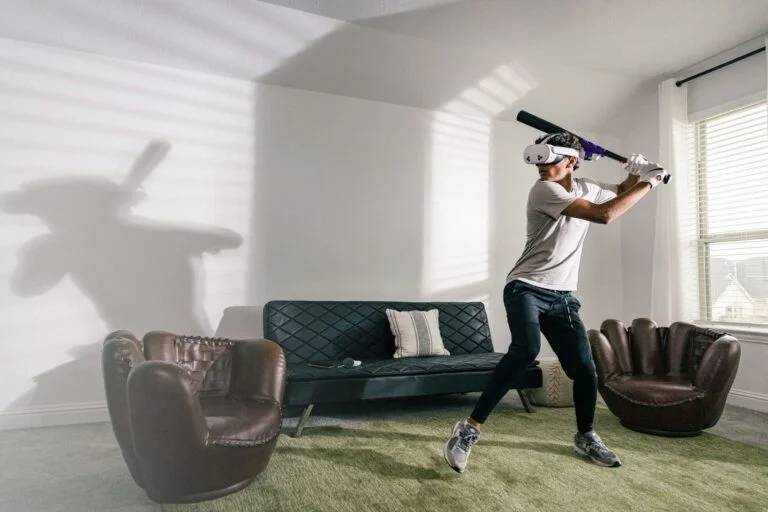
Keep training while you’re recruiting. The recruiting process eats time — campus visits, emails, film editing, showcase weekends. The hitters who land the best offers are the ones who never stop developing their approach at the plate. WIN Reality’s TrainVR gives you game-speed pitch recognition reps at home on a Meta Quest headset, so you stay sharp on breaking balls, tunneling, and pitch recognition even when you’re not in the cage. Keep your bat hot while you work the phones.
Tools and Methods: How to Make the Timeline Actually Work
Knowing the dates matters. Executing on them every week is what separates committed players from hopefuls. Here are three methods that turn this timeline into real results.
Method 1: Build a Coach-Ready Hitter Packet
Coaches receive dozens of emails during the contact period. Yours needs to be actionable in 90 seconds. A coach-ready hitter packet answers four questions every coach is asking: Can this player hit? What do their numbers say? When can I see them? Are they academically eligible?
What belongs in your hitter packet:
- Intro video (60–90 seconds): your name, grad year, position, school, and why you’re interested in their program specifically
- Swing clips: front and side angle, full speed — 4–6 swings minimum, game or bullpen quality
- In-game at-bats: 3–5 complete at-bats on film, including your plate approach before the pitch
- Verified metrics: exit velocity, bat speed if available, 60-yard dash, arm velocity if applicable
- Academic snapshot: GPA, class rank, SAT/ACT score, intended major
- Event schedule: next 60–90 days of showcases and tournaments with dates and locations
- Contact info: your email, your cell, your travel ball coach’s name and cell
Update this packet every 8–10 weeks. One sentence noting a new exit velocity or a quality weekend at a tournament is enough to stay on a coach’s radar. Keep it brief, keep it measurable.
Method 2: Use Events Strategically, Not Randomly
Showcases are not all equal, and attending the wrong ones for your level is one of the most expensive mistakes in recruiting.
Showcase vs. camp vs. direct outreach:
| Format | Best Use | Timing |
|---|---|---|
| Showcase | Get metrics on record, be seen by multiple programs | Sophomore spring, junior summer |
| College camp | Direct evaluation by your target school’s staff | Any contact-legal period |
| Direct outreach | Control the conversation, stay on coaches’ radar | Year-round |
Before you commit to a showcase, ask yourself: Are any of my 15 target schools sending evaluators? If the answer is no, you’re getting a profile line, not an evaluation.
How to prepare before an event:
- Know your exit velocity target going in. Build toward it with 4–6 weeks of specific load work before a timed event
- Have your pitch recognition sharp. Don’t show up unable to lay off a curveball at 3–2
- Bring printed copies of your contact card with a QR code linking to your film
Two high-quality events with preparation beat six random showcases every time.
Method 3: Track Development Proof All Year
Recruiting is a comparison process. The player who shows a documented improvement trend is far more compelling than the player with a single good number.
Build a development log that tracks:
- Exit velocity every 2–3 weeks (off tee, front toss, and live arm — separately)
- Pitch recognition accuracy: correct pitch type and zone identification before the ball crosses 40 feet
- Chase rate and contact quality broken down by pitch type
- Two-strike at-bats, situational approach, and quality of contact on breaking balls
When a coach asks how you’ve improved, you give a real answer: “I’ve added 6 mph of exit velocity since January, and my curveball recognition is measurably sharper — I’ve been tracking it weekly.” That’s a different conversation than “I’ve been working hard.”
Every 4–6 weeks, pull 2–3 quality at-bat clips from practice or games. Label them with the pitch type and count. This is the proof that separates hitters who train from hitters who just play.
How WIN Reality Helps: TrainVR for Hitting Development
You can do everything right on the recruiting timeline and still lose roster spots to hitters who are simply better at the plate. The margin at the D1 level is pitch recognition and swing decision — the two things hardest to train with traditional batting practice.
WIN Reality’s TrainVR runs on a standalone Meta Quest headset and gives you access to 600+ virtual pitchers throwing game-speed reps in your living room, garage, or facility. You’re training pitch recognition and release-point reads every day — not just the three days a week you get in the cage.
TrainVR drills directly tied to recruitable hitter traits:
- Pitch Recognition and Release Point drills — identify pitch type out of the hand, the same split-second read you make in a live at-bat
- Disappearing Pitch and Recognition Window — force your brain to commit to a read faster and stop chasing borderline breaking balls
- 3–2 Count, 0–2 Approach, and 2-Strike Approach scenarios — the situational discipline coaches evaluate on your game film
- Breaking Ball Recognition and Fastball/Curveball Tunneling — the pitch types that expose every hitter who hasn’t done this work
- Multi-week Training Tracks — structure your development across a full offseason so improvement is measurable and progressive
Pair TrainVR with SwingAI for instant AI biomechanic analysis and personalized swing cues. Or get both tools in the Ultimate Hitter Pack, which bundles TrainVR, SwingAI, and the WIN bat attachment.
Every measurable gain you log — better pitch recognition, tighter swing decisions, faster release-point reads — becomes content for your coach update emails. You’re not just training. You’re building the proof that gets you recruited.
The college baseball recruiting timeline has changed. The coaches evaluating you in 2026 are working with tighter rosters, more scholarship flexibility, and higher standards for who earns a spot. Start your development log now, send your first coach email at the right time, and get game-speed reps in every week.