Your best 11U hitter crushes the ball in June, then shows up in March having not swung a bat since the last tournament. That gap is the problem a year round plan solves. A real year round youth baseball development plan cycles your roster through four phases so players build skills 12 months a year without piling on 12 months of games, throws, and travel mileage.
Here is the direct answer: a year round plan is not year round competition. It is a calendar that stacks a postseason reset, an offseason build, a preseason ramp, and in-season maintenance, with clear checkpoints so you know each player is progressing.
What a Year Round Youth Baseball Development Plan Actually Includes
Think of the baseball year in four blocks, not one endless season.
- Postseason reset (2 to 4 weeks): rest, review workload, set skill baselines.
- Offseason build (8 to 16 weeks): athleticism, swing work, pitch recognition, low-impact reps.
- Preseason ramp (4 to 6 weeks): gradual throwing, team systems, game-speed timing.
- In-season maintenance: hold gains, manage pitch counts, deload around tournaments.
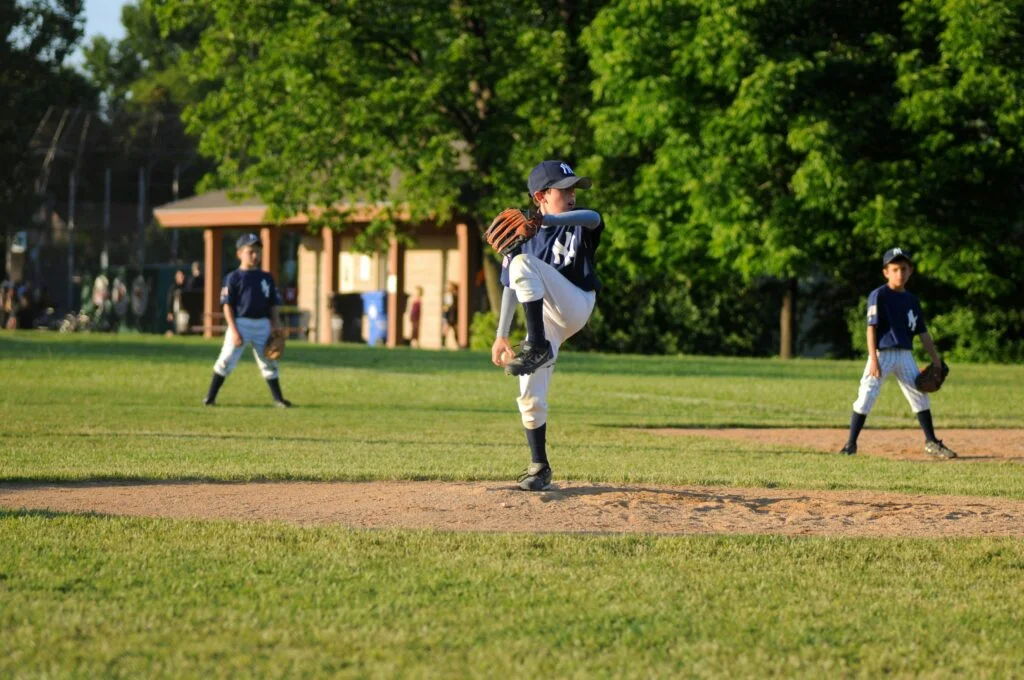
The medical guidance backs this rhythm. The AAP recommends one day of rest per week and two to three months off per year in any one sport. For arms specifically, Pitch Smart advises players ages 9 to 12 not exceed 80 combined innings pitched in any 12 month period and take at least 4 months off from throwing every year, with at least 2 to 3 of those months being continuous.
Your job as coach is to fill those rest months with development that does not tax the arm. That is where the plan earns its keep.
The 12-Month Youth Baseball Development Calendar
Map your calendar backward from your first competitive game, then assign each block a job.
A. Postseason Reset: Recovery, Reflection, and Baselines
The week after your last tournament is the most wasted 7 days in youth baseball. Players either grind straight into fall ball or vanish entirely. Neither builds anything.
Give the arm and mind a break first. The updated AAP clinical report says athletes should take at least one to two days off a week from competition and sport-specific training, plus two to three months a year away from a specific sport, to recover physically and psychologically. A 2 to 4 week shutdown from throwing fits cleanly here.
Use the reset to set your foundation:
- Rest and communicate: send parents the plan for the next 3 months so nobody freelances into another team.
- Baseline every hitter: capture one SwingAI analysis per player so you have a starting score on all 12 biomechanical dimensions.
- Confidence check: ask each player what felt good and what frustrated them at the plate.
Takeaway: no bat, no mound, no drills for the first 2 weeks. You cannot build on a fatigued athlete.
B. Offseason Build: Athleticism, Hitting Skills, and Low-Impact Reps
This is your longest and most valuable block, roughly 8 to 16 weeks. It is also where bad weather kills most youth plans. Reps disappear when the field is a mud pit.
Build in three layers.
1. Athletic base. General movement, mobility, and bodyweight strength 2 to 3 days per week. Ramp slowly. It is commonly recommended that training loads should be advanced by no more than 10% to 20% per week.
2. Swing quality. This is the time to fix mechanics using WIN Reality’s 4-phase sequence: Load Phase, Stride Phase, Swing Phase, Finish Phase. Match the drill to the flaw:
- Low bat speed from poor hip-shoulder separation: Torque Drill + Knob to Knee Drill.
- Casting or the barrel leaking away from the body: Stop at Contact Drill.
- Weak forward move, Sway, or Hanging Back: Walk Through Drill.
3. Pitch recognition and swing decisions. Tee and front-toss reps do not teach a hitter what to swing at. Offseason is when you build the third pillar of hitting alongside Bat Speed and Bat-to-Ball: Swing Decisions. This is the payoff block, because overuse injuries have been linked to year-round throwing without an offseason, and recognition reps add zero arm stress.
For at-home, bad-weather work, a VR headset lets a player take game-speed cuts in the living room. For a deeper age-by-age breakdown, send parents your offseason youth training plan.
Takeaway: spend 60% of offseason minutes on swing quality and recognition, not on live throwing.
C. Preseason Ramp and In-Season Maintenance
Preseason is where coaches get impatient and blow up arms in the first two weeks. Ramp, do not sprint.
Over 4 to 6 weeks:
- Build throwing volume gradually, staying inside the 10% to 20% weekly load rule.
- Install team systems: cutoffs, bunt coverage, signs.
- Sharpen game-speed timing with breaking-ball and 2-strike reps before Opening Day.
Once games start, the plan flips from building to holding. In-season, your priorities are pitch-count management and deloads. For ages 13 to 14, Pitch Smart advises not exceeding 100 combined innings pitched in any 12 month period. Plan a lighter practice week before and after big tournaments so the roster does not run flat.
Takeaway: script your ramp week by week and protect one deload week per month during tournament season.
Ready to give your roster game-speed reps 12 months a year, even in the offseason? GET STARTED WITH WIN REALITY
Tools and Methods: Three Ways to Make the Plan Work
A calendar on paper means nothing if you cannot track 12 to 14 players across it. These three systems keep the plan running.
Method 1: Roster Development Map
Every coach knows the top 3 hitters and the bottom 3. The middle 8 get lost. A roster map fixes that.
Build a simple one-row-per-player sheet tracking 6 columns:
- Swing quality (SwingAI score trend across the 12 dimensions)
- Decision quality (chase rate on offspeed)
- Contact consistency (in-zone whiff)
- Confidence (self-rated 1 to 5)
- Workload (throws and innings this week)
- Recovery status (rest days taken)
Update it monthly in the offseason and every 2 weeks in-season. This is how you catch the kid whose innings are climbing while his confidence drops.
Takeaway: if you can only track one thing per player, track workload against recovery.
Method 2: Weekly Workload Split
The biggest hidden risk in youth ball is double-counted work. A player throws at practice, throws at a lesson, plays two games, then does home reps, and nobody adds it up.
Split every week into buckets and cap each one:
- Team practice: 1 to 2 sessions
- Games: capped by Pitch Smart innings and pitch counts
- Private lessons: 0 to 1
- At-home reps: recognition and swing work, low arm stress
- Recovery: 1 to 2 full days off
- Multi-sport: encouraged in the offseason
The rest days are not optional. For a full breakdown, share your youth practice volume guide with parents.
Takeaway: add every throwing source together before you write the practice plan, not after.
Method 3: Age-Band Adjustments
The same calendar runs for every age, but the dials change.
- 8U to 10U: athletes first. Keep it fun, cap live throwing hard, and lean on recognition and movement. Focus on athleticism, physical fitness, and fun at this age.
- 11U to 12U: add structure. Introduce approach work and 2-strike reps while holding the 80-inning annual cap.
- 13U to 14U: more specialization is fine, but watch the jump to 100 innings and 95-pitch outings. This is where burnout spikes, since 70% of kids drop out of organized youth sports by age 13.
Takeaway: younger players need more variety, older players need more monitoring. For parent-facing help, point them to your player development support guide.
How WIN Reality Helps
Here is the gap every youth plan hits: you can schedule rest and offseason months, but hitters still lose their timing and eye when the bats go in the garage. WIN Reality’s product line is the year-round training layer that fills those months without adding arm stress.
- TrainVR delivers game-speed reps at home, so recognition and timing keep improving through winter and deload weeks.
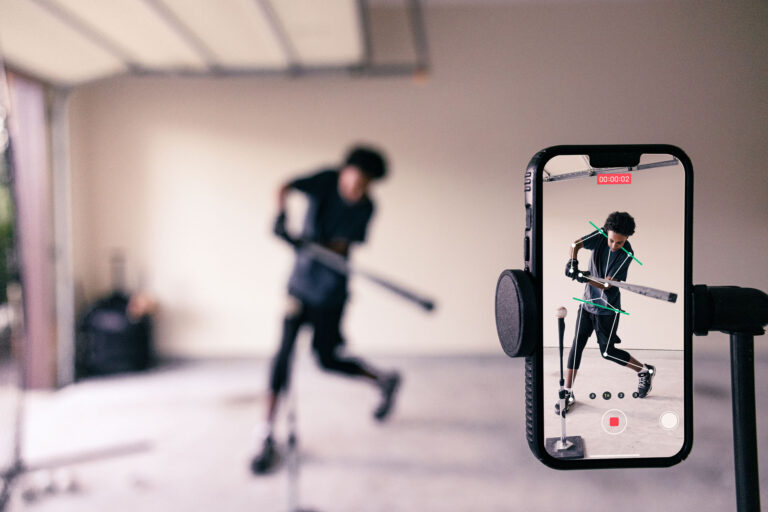
- SwingAI turns a phone video into a full biomechanic analysis, giving you baseline-to-progress data on all 12 dimensions.
- Together they cover two of the three pillars, Bat-to-Ball and Swing Decisions, without a single throw.
The mental side matters as much as the mechanical side. A hitter thinking about mechanics in the box freezes, which is why offseason is for mechanics and in-season is for approach and conviction. Sharpening swing decisions pays off directly: batting average drops sharply with two strikes, and cutting swing-and-miss can add significantly to a player’s hit total each season [NEEDS VERIFICATION: source required for 15 to 20 more hits per season claim].
Product Line: All Products
Your development stack runs on three pieces:
- TrainVR for pitch recognition, swing-decision reps, and game-speed timing at home.
- SwingAI for AI swing feedback, progress tracking, and unlimited analyses.
- The Ultimate Hitter Pack bundles TrainVR, SwingAI, and the WIN bat attachment, available as a complete training package when purchased with hardware.
Specific Features to Mention
Point players and parents to the tools that fit each phase:
- VR pitch recognition with 600+ virtual pitchers [NEEDS VERIFICATION: confirm current pitcher count against product specifications] for offseason and bad-weather months.
- Scenario workouts for 0 to 2 approach, 3 to 2 counts, and 2-strike approach.
- Competitive modes like Exhibition Mode to keep offseason reps engaging.
- SwingAI feedback with personalized cues tied to the flaw you flagged.
- Age-flexible at-home sessions that scale from 8U through 14U.
Keep Building From Here
- TrainVR product page
- SwingAI product page
- Offseason youth training plan by age
- How much should youth players practice
- How to support youth player development
- Full Pitch Smart guidelines from MLB and USA Baseball
Build the four-phase calendar, track your roster, respect the workload caps, and let WIN Reality carry the reps through the months your field is closed.