From VR training sessions to draft day, how five years of WIN Reality helped shape one of baseball’s brightest young stars.
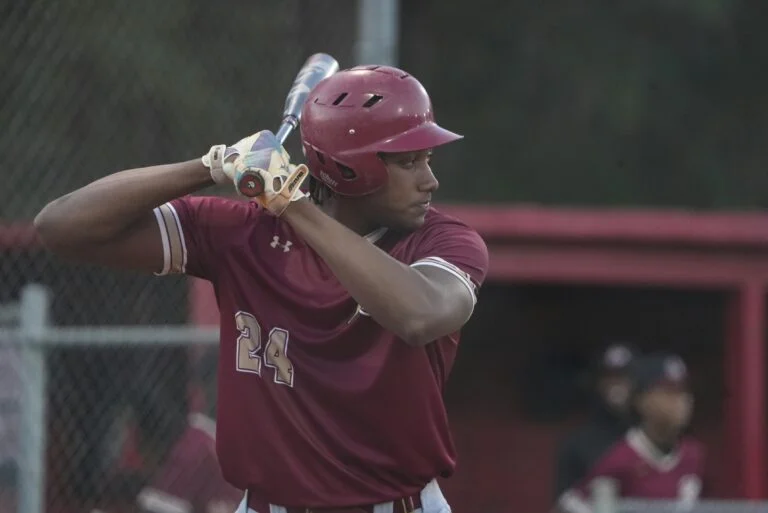
Quentin Young’s name was just called in the second round of the 2025 MLB Draft by the Minnesota Twins, and while the baseball world sees the size, the swing, and the pedigree, those close to him know the reps behind the rise.
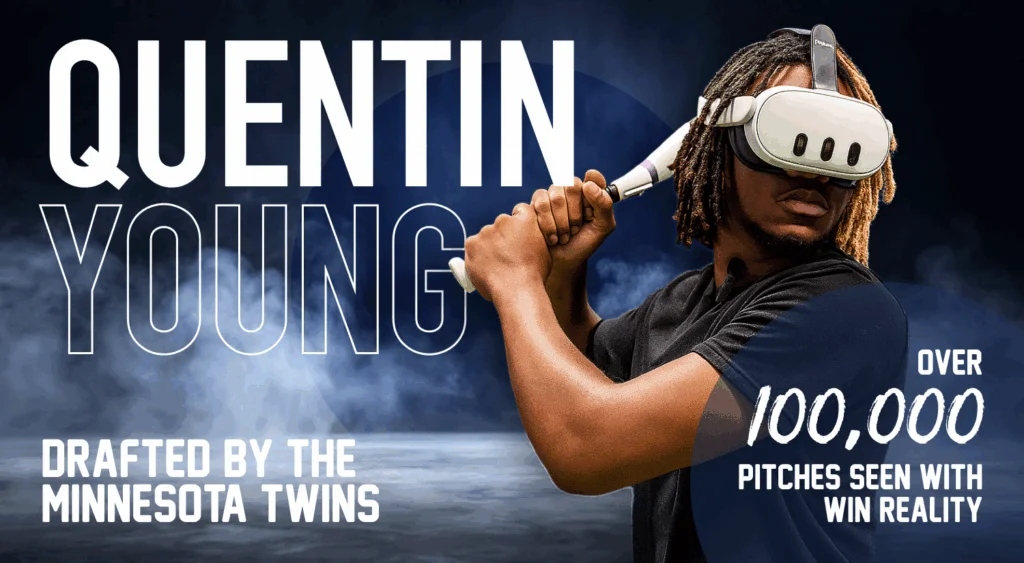
Since 2020, Young has been training daily with WIN Reality’s TrainVR platform, using virtual reality to gain live at-bats from home, sharpen his pitch recognition, and simulate high-pressure game situations. In that time, he’s seen over 100,000 pitches in the headset, reps that have shaped him into one of the most prepared players in the country.
Every Rep Built for the Moment
Young didn’t just dream about the draft. He trained for it. His daily prep with WIN Reality created a space where game-speed decisions became second nature. Unlike traditional cage work or video analysis, TrainVR gave Quentin the opportunity to face virtual pitchers with real-life pitch data, release points, and movement profiles, available anytime and anywhere.
These weren’t mindless reps. They were real preparation. With WIN’s tools, Quentin could simulate specific pitchers, train against breaking balls on the black, or lock in his timing against a mid-90s fastball from a righty with a three-quarter slot.
Inside WIN Reality: The Tools Behind Quentin’s Edge
Here’s the truth: most young hitters don’t struggle because of mechanics. They struggle because they don’t train at game speed. As a result, their timing and decision making become limiting factors.
WIN Reality trains the one skill most hitters never master: game-speed decision making. Through immersive, cognitive-focused training, athletes like Quentin sharpen their pitch recognition, approach, and timing with thousands of reps they could never get in a cage.
Core Training Modes Quentin Has Used:
- Batting Practice: Face high-velocity, game-style sequencing to build timing and decision-making.
- Pitch Recognition: ID pitch type and location without swinging.
- Recognition Window: Train “Yes-Yes-No” decision making against ideal timing windows.
- Disappearing Pitch Drill: Read the pitch type and location before the ball vanishes.
- Release Point Drill: Focus on subtle pitch differences right out of the hand.
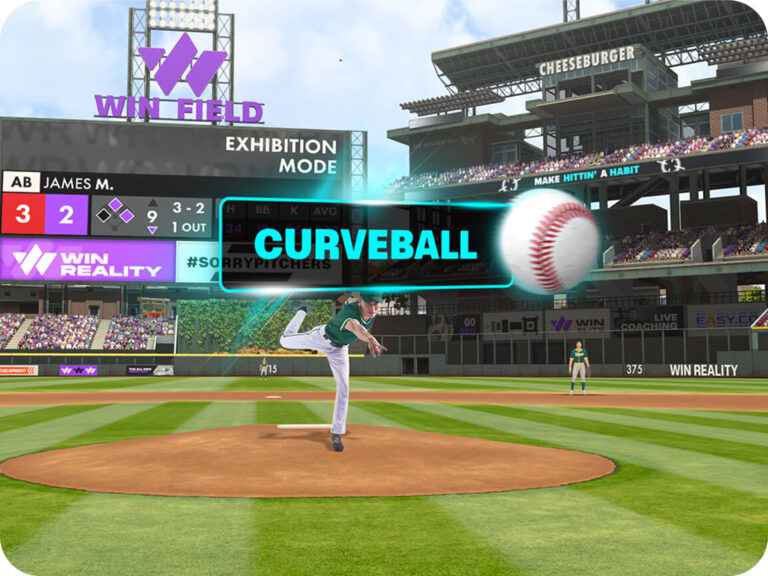
- Exhibition Mode: Full game situations to apply everything you have trained with adjustable difficulty and real pressure.
These drills simulate real at-bats and because they’re done in VR, hitters can get more reps with less fatigue, and instantly adjust to pitch type, speed, and location.
WIN Reality isn’t a one-size-fits-all tool. With modifiers, Quentin was able to tailor each session based on what he wanted to focus on, whether it was pitch type, location, velocity, or game context.
Some examples:
- Simulate right-handed offspeed pitches low and away
- Adjust pitch mix based on upcoming opponents
- Crank up difficulty in 2-strike scenarios or late-inning pressure
These controls made every session specific, game-relevant, and just hard enough to push growth.
Locked In, Day After Day
Whether he was traveling for tournaments, prepping before games, or just putting in extra reps after practice, WIN Reality gave Quentin a portable way to stay sharp, even when he wasn’t on the field.
Legacy Mindset, Forged with Reps
Quentin isn’t just a rising star; he’s carrying a family legacy. The nephew of Dmitri Young (2× MLB All-Star) and Delmon Young (2003 No. 1 overall pick), Quentin has followed his own path, forged through five years of focused, tech-driven training.
There’s an old-school-meets-new-school energy to Quentin’s approach. He brings the grit, confidence, and competitive fire of generations past, but he trains like the future.
Words to the Next Generation
When asked what he’d tell his younger self or any kid chasing this same path, Quentin doesn’t talk about launch angle or stats. He talks about fun, grit, and resilience.
What’s Next for Quentin Young
With his name called in the 2025 MLB Draft, Quentin now stands at a crossroads: begin his professional career or go forward with his commitment to play at LSU. Either path leads to a stage where his preparation will be tested and WIN Reality will continue to be a key part of how he stays ready.
Whether he’s stepping into the batter’s box in a college stadium or reporting to a pro facility, one thing is certain: the work will continue. The reps don’t stop. And with WIN Reality, Quentin will keep sharpening the skills that got him here and will carry him even further.
Train Like Quentin
Quentin Young didn’t get here by accident, and he didn’t do it alone.
If you’re a youth player chasing your next level, whether it’s a travel ball roster or a future college scholarship, WIN Reality can help you get there. With thousands of reps available anytime, anywhere, and drills designed by the best minds in the game, you don’t just get more practice. You get game-ready.
Start your journey. Train like Quentin. Build your game in WIN.
Start building game-speed instincts with the same drills, tools, and reps that helped shape one of baseball’s top prospects.