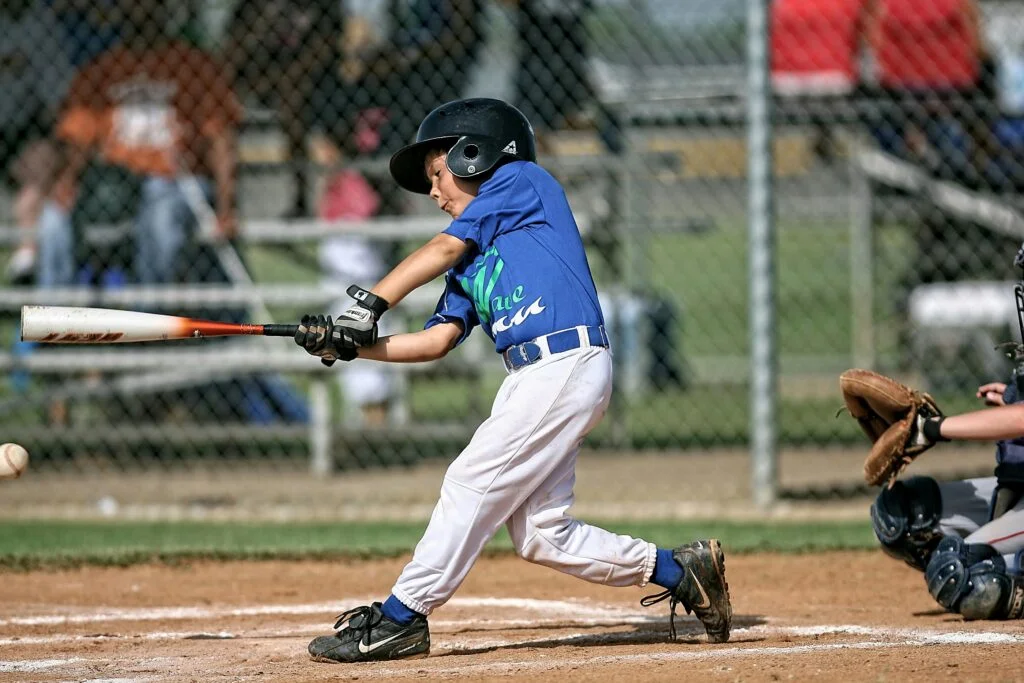
You just watched your 10-year-old crush the ball in rec league, and a travel coach handed you a card after the game. Now you are staring at a $2,000 season, 20-plus weekend tournaments, and a decision you are not sure your kid is ready for. That anxiety is normal, and it does not mean you are behind.
Readiness is not one thing. It is a mix of player skill, real motivation from the kid (not just you), family time and budget, arm health and workload, and whether the program actually fits your child. This guide gives you a clear framework to check all five before you sign anything.
Quick Answer
Your child is ready for travel baseball when they consistently rank among the top 1–2 players on their rec team, ask for reps on their own, handle failure without shutting down, and genuinely want to play more, and when your family can absorb the time and cost without strain.
Here are the green lights that say “go”:
- They are a standout in their current league, not just an average contributor.
- They ask to hit, throw, or go to the cage without you pushing.
- They bounce back after a strikeout or an error within an at-bat or an inning.
- They stay focused through a full 90-minute practice.
Here are the signs to wait a season:
- You are more excited about “exposure” than they are.
- Practice already feels like a chore to them.
- They mostly want to play to be with friends.
- Your weekends or budget are already stretched thin.
Travel baseball is not required for player development. Plenty of college and pro players started travel at 12, 13, or later. A strong rec player who trains smart at home can develop just as well as a kid grinding 40 tournament games. Ready or not, keep the game fun first.
Is My Child Ready for Travel Baseball? Start with This Scorecard
Most “should my kid play travel?” advice stops at “does he/she love the game?” That is not enough to spend thousands of dollars and countless weekends. Use a four-part scorecard instead, and score each area honestly from 1 to 5.
- Player readiness: skill, focus, coachability, and competitive fit.
- Family readiness: time, money, siblings, and weekend bandwidth.
- Health readiness: workload, rest, and burnout risk.
- Program-fit readiness: does this specific team develop your kid or just fill a roster?
If any single category scores below 3, pause before committing.
A. Player Readiness: Skills, Focus, and Competitive Fit
The realistic benchmark most coaches use is that a player should be a top talent in their current house league before trying out.
Baseball IQ and coachability:
- Knows the count, number of outs, and where to throw before the pitch.
- Applies a coaching cue within 3–5 reps instead of repeating the same mistake.
- Takes feedback without pouting or arguing.
Defensive reliability:
- Makes the routine play cleanly 8 out of 10 times.
- Can play at least one position at game speed, not just “somewhere in the outfield.”
Hitting readiness:
- Makes consistent hard contact against live pitching, not just off a tee or coach-pitch.
- Recognizes a ball out of the zone and takes it.
WIN Reality builds hitters around the Three Pillars of Good Hitting: Bat Speed, Bat-to-Ball, and Swing Decisions. A travel-ready hitter shows a repeatable swing through all four phases (Load, Stride, Swing, Finish) and is not fighting flaws like Drifting or Casting on every swing. Fix those mechanics at home before your hitter faces 65-mph arms in a tournament.
Response to failure: Travel pitching is faster and better, so your kid will strike out more. Even elite hitters see batting average fall to around .165 with two strikes, so failure is built into the game. A ready player treats a strikeout as information and adjusts the next at-bat.
Your move: Rate your player 1–5 on each area above. If hitting is the weak link, explore how SwingAI grades the swing so you know exactly what to fix before tryouts.
B. Family Readiness: Time, Money, Siblings, and Weekends
Before you judge the kid’s readiness, be honest about yours. Travel baseball is a family commitment, not a youth activity.
Here is the typical commitment to plan around:
- Practices: 2–3 per week, often 90 minutes each.
- Tournaments: 15–25 weekends, many running Friday through Sunday.
- Games: 40–70 per season versus 12–20 in most rec leagues.
- Cost: roster fees, uniforms, bat and glove, plus hotels, gas, and food that can push a season well past $2,000–$5,000.
Now run the family math: Can you give up many weekends without resenting it? Do siblings have activities that will collide with tournament travel? Can your budget absorb the season without cutting something that matters?
Ask your child directly: “Do you want to play more baseball, or do you just like being with your friends?” Their honest answer should carry more weight than your ambition.
Your move: Score family readiness 1–5 as a household. If two adults disagree, settle that before tryouts, not after you have paid the deposit.
C. Emotional and Health Readiness: Fun, Burnout, and Workload
Watch for these burnout signals:
- Practice feels like a chore, and they drag their feet getting ready.
- They stop talking about baseball outside of games.
- Sunday of a tournament looks more like exhaustion than excitement.
- You are keeping the schedule going more than they are.
If you see two or more of these, travel ball may be too much right now, and that is okay.
Workload becomes a health issue for pitchers and catchers especially. Follow MLB and USA Baseball’s Pitch Smart guidelines, which set age-based pitch limits and required rest for players ages 7 to 22. Key caps to know:
- A 9 or 10-year-old can throw a maximum of 75 pitches per day, with 66 or more pitches requiring 4 days of rest.
- An 11 or 12-year-old can throw a maximum of 85 pitches per day, with 66 or more pitches requiring 4 days of rest.
- A 13 or 14-year-old can throw a maximum of 95 pitches per day.
Two rules matter most on tournament weekends.
First, no pitcher should appear as a pitcher on three consecutive days, regardless of pitch counts. This is a calendar-day rule, not a game-count rule, so it applies even if your tournament schedules multiple games in a single day.
Second, a 12-year-old who throws 55 pitches on Saturday cannot pitch again until Wednesday, so plan your weekend roster accordingly. Watch the pitch-and-catch combo too, since catching on non-pitching days adds throws and stress the guidelines specifically warn against.
Your move: Ask any prospective coach how they track pitch counts and rest across a weekend. If they cannot answer clearly, that is a program-fit problem.
Ready to build arm-friendly, at-home reps that raise skill without piling on innings?
Tools and Methods: How to Test Readiness Before You Commit
Before you pay a roster fee or show up to a tryout, run these three low-pressure tests over about two weeks.
Method 1: The Two-Week Practice Check
Set up 14 days of structured practice: three sessions a week, 30–45 minutes each, mixing tee work, live reps, and defense. You are not testing talent. You are testing whether the drive comes from your kid.
Track four things each session: Did they ask for reps or did you push them? Did they apply a cue within 3–5 reps? Did they stay locked in for the full session? Did they still want to play at the end?
If you hit “yes” on initiation and enjoyment in at least 10 of 14 sessions, that is real, self-driven interest. If the answers trend “no,” give it another rec season and rerun the test.
Your move: Print a 14-box chart on the fridge and let your kid track the streak. Ownership is part of readiness.
Method 2: The Game-Speed Hitting Test
Rec league pitching sits well below what your kid will see in travel. A hitter can look great at 45 mph and get exposed at 60-plus. Watch for timing against faster velocity, pitch recognition on breaking balls, swing decisions on balls out of the zone, and contact quality after a strikeout.
TrainVR delivers game-speed reps against 600-plus virtual pitchers, with Pitch Recognition and Recognition Window drills built to test whether a hitter picks up velocity and spin in time.
Your move: Log contact quality over 30–40 game-speed swings. If hard-hit contact stays above 40–50 percent against faster velocity, your hitter’s bat is travel-ready.
Method 3: The Program-Fit Interview
Interview the coach before you commit. Ask these questions directly: How do you balance winning versus developing every player? What does a bottom-of-the-roster kid’s weekend look like? How many players are you carrying? How do you manage pitch counts across a tournament weekend? What is the all-in cost?
Listen for specifics. A development-first coach answers with numbers and a plan. A roster-padder gives vague answers and dodges the playing-time question.
Your move: Interview at least two programs before deciding. Comparing answers side by side makes a weak fit obvious fast.
How WIN Reality Helps
The parents who make the smartest travel decisions replace guessing with objective data. Here is how WIN Reality tools map to the readiness tests above:
- TrainVR: Game-speed reps against 600-plus virtual pitchers at home. Pitch Recognition, Recognition Window, and scenario workouts build the swing decisions travel pitching demands.
- SwingAI: Upload a swing video and get instant AI biomechanic analysis across 12 dimensions, from Pelvis Load to Hip Shoulder Separation at Contact, plus personalized cues. Unlimited analyses let you confirm that a flaw is actually fixed before tryouts.
- Ultimate Hitter Pack: TrainVR and SwingAI together in one bundle, built for players who want to train the complete skill set.
Instead of debating whether your kid is “ready,” you can watch hard-hit rate, pitch recognition, and swing scores trend up over a few weeks. That turns an emotional, expensive decision into a measurable one.
Keep the Decision Child-Centered
Travel baseball is a choice, not a checkpoint. Use the scorecard, run the two-week check, test the bat at game speed, and interview the coaches. Then let your kid’s honest answer lead. If you decide to wait a season, build skill and confidence at home so they are ready when the timing is right.
Support their development on your terms, at your pace, with data you can trust.