I’ve always believed that the future of player development lies at the intersection of elite instruction, real-time feedback, and scalable technology.
For me, that belief is personal.
From the moment I picked up a bat, I was lucky to be surrounded by people who helped shape my journey from Little League to college ball, to a career in professional baseball. At every level, I had access to world-class coaching, critical feedback, and timely guidance from some of the best minds in the game. When I struggled, there was always someone like Todd Helton in the cage or Clint Hurdle with the right words to get me back on track.
Most players don’t have that kind of support. But what if they could?
My dad and I built this company with one core belief: that we could take the silver-spoon experience I was lucky to have, the insights, the reps, the timing, the coaching, and make it accessible to every player, everywhere.
That’s why we built WIN Reality.
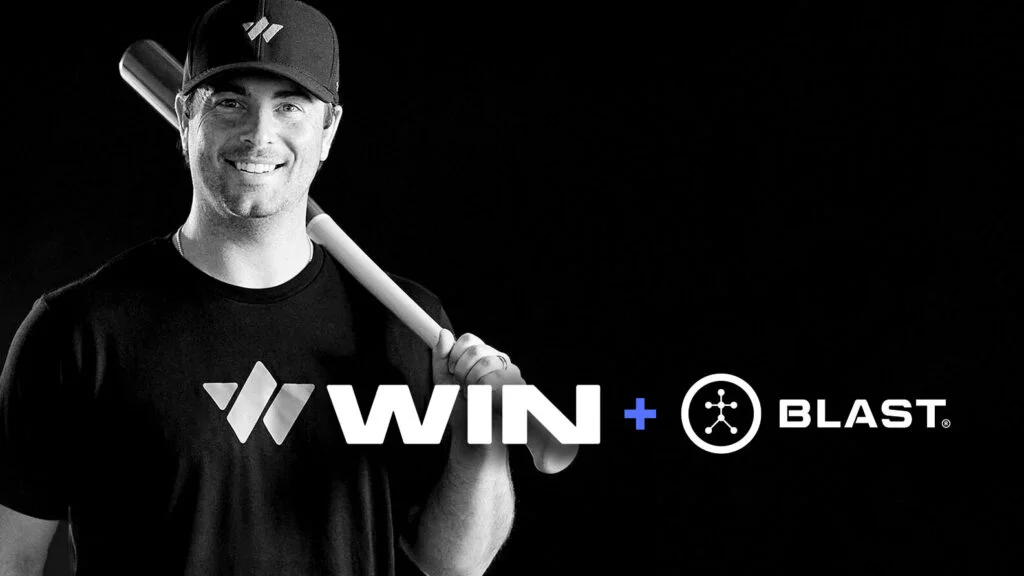
And that’s why I’m incredibly proud to share that we’ve acquired Blast Motion, the industry leader in swing sensor and motion analysis technology. This acquisition of Blast Motion is a continuation of that mission. It’s not just about combining technologies. It’s about combining the right moments with the right tools to help players unlock their full potential.
This isn’t just a big moment for our company, it’s a leap forward for athletes everywhere.
A Shared Vision for Player Development
At WIN, we’ve spent the last several years building the most immersive, game-speed training experience in baseball and softball. With TrainVR and SwingAI, we’ve helped players complete over 100 million swing reps, each one offering critical feedback on timing, decisions, and mechanics. But the next frontier goes even deeper: combining those real-time experiences with biomechanical insights from over 400 million Blast Motion swings. That’s over half a billion swings — a dataset unlike anything else in sports. And we’re just getting started.
We didn’t pursue this partnership to change what makes Blast great. We pursued it because they’ve built something athletes love and we believe that, together, we can amplify it.
What This Means for Players and Coaches
Right now, nothing changes for your WIN or Blast experience. Both platforms will continue to operate independently — and that’s by design. We’re not here to disrupt. We’re here to elevate.
But looking ahead, this move unlocks possibilities we’re incredibly excited about.
Imagine a world where every swing, whether it happens in the cage, in-game, or in VR, is tracked and analyzed automatically. A world where your sensor quietly works in the background, surfacing key moments, syncing with WIN experiences, and helping you understand not just what happened, but why. SwingAI will fuse video with Blast biomechanics. TrainVR will connect pitch recognition to contact point and bat path. The result? A new standard for development: personalized, connected, and built for every athlete chasing their next breakthrough.
We’re not rushing to blend everything overnight. But the potential? It’s massive. And the goal is simple: help athletes improve faster, with confidence and clarity, using the most complete training tools available.
Building the Future — Together
I care deeply about this game. And I care even more about the people who play it. Players. Parents. Coaches. Trainers. Everyone who shows up, puts in the reps, and dreams of getting better.
That’s who this acquisition is for.
Blast and WIN share a belief: that better technology should lead to better athletes — not more confusion, not more noise, but more results. We’re here to deliver that.
To the teams and athletes who use Blast today: we see what has been built, and we’re not changing what you trust. We’re honored to be stewards of this brand and to support the mission that brought you here.
To our WIN Reality users: we’re going to keep pushing, innovating, and raising the bar on what training can be. This is the next big step and it’s just the beginning.
Thanks for being on this journey with us.
Let’s keep building
— Chris