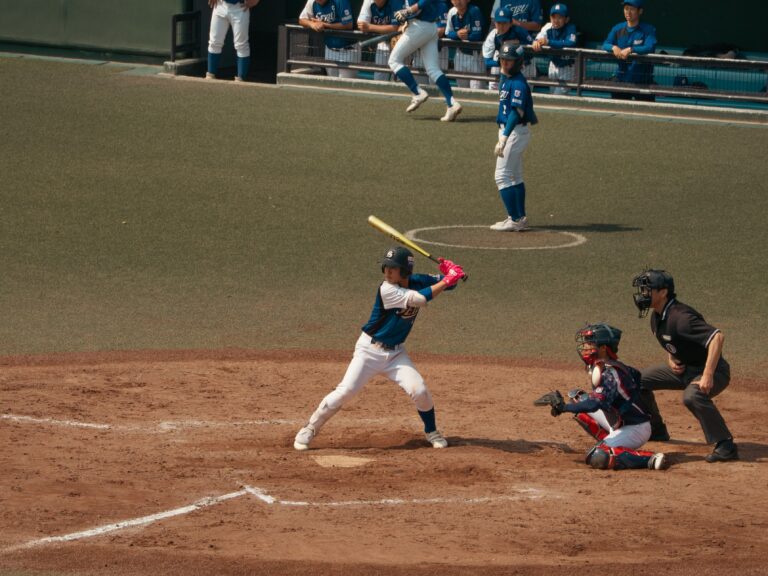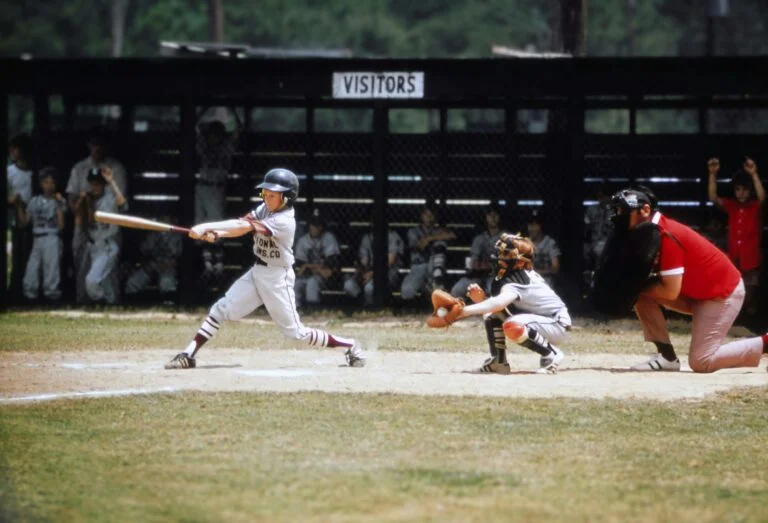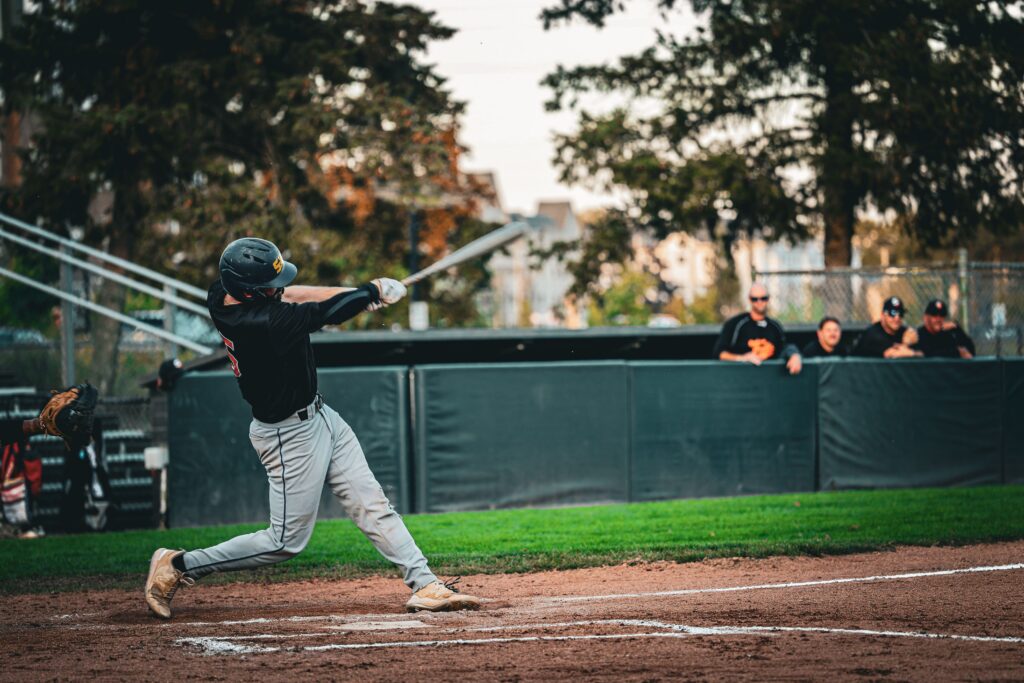
Next-five-years forecast for connected baseball and softball training across players, coaches, facilities, and programs.
Why the Next 5 Years Could Reshape Baseball Training
Your hitter takes 200 swings in the cage this week and you still cannot answer the simplest question: did any of it transfer to Saturday’s game? That gap between reps and results is exactly what the next five years of baseball training technology will close.
Training is moving from a pile of disconnected gadgets to one connected development loop. VR builds pitch recognition, swing sensors capture mechanics, and connected fields now measure the actual game, then feed all of it back to a coach who turns numbers into cues.
WIN Reality is building that loop directly. The company pairs VR training and AI swing analysis with Blast Motion’s sensor technology, and together the two companies have powered over 1 billion swings across VR, sensor, and AI-powered training, forming the largest swing dataset in sports. On the field, WIN launched SmartPark, a connected field technology capturing 125+ live performance metrics from every pitch, swing, and ball-in-play, as announced on BusinessWire.
Whether you are a parent buying your first bat sensor or a program director wiring a complex, this forecast is for you.
Here Is Where Baseball and Softball Training Are Headed
Over the next five years, the tools that win will not be the ones with the most numbers. They will be the ones that connect, so your athlete gets better reps, faster feedback, and more confidence at the plate.
Here is the concrete forecast:
- VR becomes the standard for decision training. Pitch recognition, timing, and two-strike approach get trained in game-speed virtual at-bats before the athlete ever faces a live arm.
- Swing data gets paired with video and AI. Bat sensors report objective metrics, AI reads your mechanics on video, and the two combine into one plan instead of two separate screens.
- Fields start measuring themselves. Connected parks capture 125+ live metrics automatically, so game performance stops being a guess and starts being data.
- Access widens fast. Tools that used to live only in pro cages reach youth, travel, high school, college, and softball programs.
- The coach stays at the center. The human still translates data into cues, protects confidence, and decides what to fix first.
Train the Three Pillars of Good Hitting (bat speed, bat-to-ball, and swing decisions) with tools that talk to each other, and you compress the time between a rep and a result.
The Next Era of Baseball Training: From More Data to Better Development
Walk into a serious cage today and you will find a radar unit, a phone on a tripod, a bat sensor, and a coach with a clipboard. Four tools, four screens, zero conversation between them. That fragmentation is the problem the next five years will solve.
A. Training Will Move From Isolated Reps to Connected Player Development
Picture your 14-year-old. He hits 150 balls off the machine Monday, takes a lesson Wednesday, and plays two games Saturday. Right now those are three unconnected events. In five years they become one record.
Here is what connected development looks like in practice:
- VR reps train pitch recognition and timing against 600+ virtual arms.
- Swing-sensor data logs bat speed and swing path on every physical rep in the cage.
- AI video analysis scores the four-phase swing (Load, Stride, Swing, Finish) and flags the specific flaw to fix.
- Connected-field data captures what actually happened in the game.
- A coach dashboard ties it together into one development history.
WIN is already stacking these pieces. As detailed in WIN’s SmartPark launch announcement, insights captured during games fuel training between games through WIN’s development tools, including TrainVR, SwingAI, and Blast Motion. That is the shift: your game informs your training, and your training shows up in your next game.
The takeaway for you right now: stop buying one-off gadgets that live on separate screens. Start with a tool that already connects reps to results, and build from there.
B. Feedback Will Get Faster, More Personal, and More Coachable
Every parent knows the cage frustration: your kid feels like he crushed it, the result says otherwise, and nobody can explain the gap. Feedback that arrives Tuesday for a swing taken Saturday is useless. The next five years kill the delay.
Expect three changes:
- Instant metrics. Bat sensors already report bat speed, attack angle, and time to contact the moment you finish the swing.
- AI that reads mechanics. Upload a swing video and get a biomechanical breakdown scored across multiple dimensions, plus a personalized cue, in seconds. [NEEDS VERIFICATION: confirm exact number of biomechanical dimensions in knowledge base before publishing]
- Translation, not just numbers. The real value is turning “hip-shoulder separation is low” into a cue like “back pocket down the line” and a drill your hitter can actually feel.
Sensors are practice and warm-up tools, and no tool is 100% accurate on every rep, so read metrics as trends across 20 to 30 swings, not gospel on any single one. A faster swing that wrecks your bat path is a worse swing, so never chase one number in isolation.
If your hitter is late, the fix is a timing and rhythm cue like “slow and early,” not a random rotational drill. If low bat speed traces to poor hip-shoulder separation, prescribe the Torque Drill and Knob to Knee Drill, not upper-body isolation work.
Your move now: pick feedback tools that hand you a cue and a drill, not just a dashboard full of numbers.
C. Access Will Expand Beyond Pro Facilities
Five years ago, optical ball tracking lived only in MLB parks. That wall is already falling. As WIN’s SmartPark announcement details, technology once found only in MLB ballparks is now accessible at every level of baseball and softball.
The democratization is real and measurable:
- Connected fields are scaling fast. More than 2,500 SmartParks are already committed for installation beginning in 2026, marking the start of a nationwide rollout.
- Sensors already reach youth and school programs. Blast Motion is used by 36 professional baseball teams, over 300 college programs, and thousands of high school and youth organizations.
- VR brings game-speed reps home. You no longer need a live arm in the bullpen to train pitch recognition in your living room.
Softball gets pulled forward with baseball here. TrainVR, SwingAI, SmartPark, and Blast all support both sports, so your softball hitter trains timing, recognition, and recruiting data on the same connected stack.
The takeaway: you do not need a pro budget to train like a pro. Start with the tool that fits your access level today, then layer in the rest.
Ready to train the connected way? GET STARTED WITH WIN REALITY
Tools and Methods That Will Define the Future of Baseball Training Technology
Three methods will carry the next five years. Each one solves a specific part of the development loop, and together they cover recognition, mechanics, and game transfer.
Method 1: VR Pitch Recognition and Decision Training
The most common youth problem I hear is some version of “my 9-year-old is hesitating and cannot time the load.” You cannot fix that with 20 BP swings a week, because you cannot feed a kid enough live pitches to train recognition. VR solves the volume problem.
TrainVR puts your hitter in game-speed virtual at-bats against 600+ virtual pitchers for both baseball and softball. The drills target decisions, not just contact:
- Pitch Recognition, Release Point, and Recognition Window build the eyes.
- Scenario workouts train 0-2 approach, 3-2 counts, breaking-ball recognition, and fastball-curveball tunneling.
- Multi-week Training Tracks structure the reps so progress is deliberate, not random.
[NEEDS VERIFICATION: confirm .165 two-strike batting average and 15–20 hit gain figures against knowledge base or attach a verifiable external citation before publishing] VR trains the exact skill that protects your average: deciding yes or no before you commit.
Start here: run three VR sessions a week focused on recognition before your hitter ever steps in the cage.
Method 2: Swing Sensors, Video, and AI Feedback
SwingAI handles the video side. Upload a swing, get instant AI analysis across multiple biomechanical dimensions covering the full four-phase sequence, and receive personalized cues plus a plan. It runs unlimited analyses and tracks progress over time.
Blast Motion handles the sensor side. It clips to the knob and reports objective swing metrics in real time. Keep the two roles straight:
- Blast measures bat-side metrics like bat speed, attack angle, and time to contact.
- SwingAI reads your body mechanics on video, such as hip-shoulder separation and pelvis load.
- Together they tell you what the barrel did and why your body made it happen.
Expect errors on individual reps and judge trends across sessions. Casting or the barrel leaking away from your body calls for the Stop at Contact Drill, while a weak forward move, Sway, or Hanging Back calls for the Walk Through Drill.
Start here: film and sensor every cage session, then review one flaw and one cue per session, not ten.
Method 3: Connected Fields, Smart Facilities, and Automated Game Data
Here is the Saturday reality that breaks every development plan: nobody charts the games. One scorekeeper, 40 games, zero swing data. That ends with connected fields.
Picture a Saturday tournament across eight fields. SmartPark captures 125+ live metrics on every one of those fields at once, ranging from pitch velocity, movement, and spin efficiency to bat speed, swing path, batted-ball data, and swing biomechanics. Fixed optical cameras and MLB-grade tracking capture every pitch, swing, and at-bat, then push the data to coaches, players, and fans in real time.
This is the piece most “future of training” articles miss, and it is the one that closes the loop:
- Program directors get swing and pitch data on every athlete without staffing a chart crew.
- Families gain verified recruiting data instead of a highlight reel.
Start here: if you run a program or facility, ask whether your fields can become connected parks, because SmartPark is rolling out nationwide beginning in 2026.
How WIN Reality Helps Build the Future of Baseball Training
Most companies sell you one link in the chain. WIN’s whole thesis is that the links have to connect, and the company has spent its acquisitions buying every link. As the CEO put it in the Yakkertech acquisition announcement, “By acquiring Yakkertech, we now own every key link in the development chain.”
Here is how the stack maps to the work:
- TrainVR builds pitch recognition, timing, and approach with 600+ virtual pitchers and scenario workouts for two-strike counts, tunneling, and opposite-field power.
- SwingAI analyzes your swing video across multiple biomechanical dimensions and returns a personalized cue and plan, with unlimited analyses and progress tracking.
- Blast Motion adds objective, bat-side sensor metrics on every physical rep.
- SmartPark captures the actual game with 125+ live metrics and verified recruiting data.
As WIN’s Blast Motion acquisition post describes the vision: imagine a world where every swing, whether it happens in the cage, in-game, or in VR, is tracked and analyzed automatically, with SwingAI fusing video with Blast biomechanics to surface not just what happened but why.
If you want the full connected stack in one purchase, the Ultimate Hitter Pack bundles TrainVR, a SwingAI annual subscription, and the WIN bat attachment, with an optional Meta Quest 3S headset, at a significant first-year discount when you add hardware.
One more thing: the tech only works if your athlete uses it, and a hitter thinking about mechanics in the box usually freezes. Train mechanics in the cage and VR, build belief and conviction, then let the athlete compete free at the plate. For the science behind why virtual reps transfer to live at-bats, see WIN’s deeper dive on elite baseball training with VR.
Start Training for the Future of Baseball Today
The future is not one magic gadget. It is a connected loop where your VR reps, your swing data, and your game data all point to the same next step. You can start building that loop this week, at your budget, for baseball or softball.
Players and parents, start with VR reps and AI feedback at home. Coaches, programs, and facilities, build toward connected fields and roster-wide visibility.