You have a left-handed hitter who crushes right-handed pitching, then looks lost the second a lefty steps on the mound. Most drill libraries make it worse, because they teach a lot from a right-handed box and tell you to “just reverse it for lefties.” That shortcut leaves out the exact baseball drills left-handed hitters need most: oppo flares, rollover grounders to the right side, getting jammed, and bailing out on left-on-left breaking balls.
This guide fixes that. You get lefty-specific tee mapping, a barrel-direction fix for glancing contact, a left-on-left pitch-recognition plan, and practice-station setups for teams with both righty and lefty bats.
Do Left-Handed Hitters Need Different Drills?
Yes and no. The swing mechanics are identical, but the cues, tee placement, field targets, and matchup prep all flip, and that is where coaches lose reps mirroring a righty plan on the fly.
Here is the short version. Train left-handed hitters with the same four-stage progression every hitter uses, but map it to their field:
- Tee work sets the swing path and contact point at zero pitch speed.
- Soft toss and front toss lock in timing and location reads.
- Live or simulated pitching transfers it to game speed.
That progression is the backbone of how Little League’s own coaching resources teach hitting: tee work first, then soft toss, then live-arm batting practice, with situational BP as the bridge to games. For additional drill frameworks, see WIN Reality’s 30 baseball hitting drills for coaches. For left-handed hitters specifically, you prioritize three things:
- Contact points by location: inside drives to right field (pull), outside works to left field (oppo).
- Barrel direction: stop the hands from dragging the barrel across the body.
- Left-on-left reps: the single biggest gap, since most teams have no reliable lefty BP arm.
Run these in small-group stations so every hitter gets 20-plus swings per session. The drills below are built for that.
Best Baseball Drills for Left-Handed Hitters
Match each drill to the fault you see, not to a generic checklist. These three cover contact points, barrel path, and matchup recognition, which is where left-handed hitters leak the most production.
A. Lefty Contact-Point Tee Drill
The problem shows up fast: a left-handed hitter who yanks every outside pitch into a weak grounder to the right side. The fix is teaching where contact lives for each location, because for a lefty the field map is reversed from everything they read online.
Set three contact points and say the field target out loud on every swing:
- Inside pitch: contact out front, pull it hard to right field.
- Middle pitch: contact slightly out front, drive it back up the middle.
- Outside pitch: let it travel deep, work it to left field (oppo).
This reinforces the core hitting principle outlined by Little League: hit the ball where it is pitched, inside to the pull side, outside to the opposite field, and back up the middle.
Run 8 swings per location, 24 total, and track how many land in the correct field zone. Target 6 of 8 on each. Use the Load Phase checkpoint “back pocket down the line” so your hitter coils before the barrel ever moves.
Coaching takeaway: if your lefty can only pull, start every cage session here before live reps.
B. Lefty Barrel Direction and Flush Contact Drill
This is the most common lefty complaint in youth and travel ball, described almost word for word by parents: a left-handed hitter whose hands pull the barrel across the body, creating oppo flares and glancing blows instead of flush contact. In WIN Reality terms, that is Casting, and the barrel is leaking away from the body before contact.
Prescribe the Stop at Contact Drill to retrain the path:
- Swing from a tee and freeze the barrel exactly at the contact point for a 1-count.
- Check that the hands stay inside the ball and the barrel is still behind them.
- Run 2 sets of 8 reps, resetting posture between each.
Pair it with the cue “short to it, long through it.” That stops the across-the-body drag and turns flares into line drives.
If the flare comes from pulling off the ball or over-rotating the upper body, that is a different fault. Use the Dead Legs Drill to isolate the upper body, keep the front side closed, and feel the barrel drive through instead of around. Keep the hip turn controlled: the hips rotate more aggressively on an inside pitch, but the hitter must hold posture on the outside pitch, because coming around it is exactly the mistake that creates glancing contact.
Coaching takeaway: diagnose first. Casting gets Stop at Contact; pulling off gets Dead Legs. Do not swap them.
C. Left-on-Left Pitch Recognition Drill
Every coach knows the pattern: a lineup that hits .300 against righties and disappears against lefties. The root cause is reps, not courage. Your hitters have simply seen thousands of right-handed release points and almost no left-handed ones.
The lefty-vs-lefty challenge is specific:
- The ball starts behind the hitter and sweeps across the zone.
- Backdoor breaking balls look like balls, then clip the outer third.
- Hitters freeze or bail because the arm slot is unfamiliar.
Build recognition with release-point and tracking work:
- Release-point focus: call “ball” or “strike” out of the hand before committing.
- Spin recognition: identify fastball vs. breaking ball in the first 15 feet.
- Tracking to deep contact: let the breaking ball travel, then drive it oppo to left.
Remember the two-strike approach here. Cutting swing-and-miss with two strikes is worth meaningful production every season, and that is exactly where lefties lose ground against lefties.
Coaching takeaway: you cannot fix left-on-left comfort without left-on-left reps, which is the hardest look to replicate on a normal practice field.
Train left-handed hitters against realistic lefty arms without needing a southpaw on staff.
Tools and Methods for Running Lefty Drills
Drills only work if you can run them without stalling practice. These three methods keep mixed rosters moving and tie every swing back to a specific fault.
Method 1: Mirror-Station Setup for Mixed Righty/Lefty Practices
The usual bottleneck is a cage built for right-handed hitters, so every lefty flips the tee, re-aims the screen, and burns 2 minutes per rotation. Build the station both ways once.
- Tees: mark inside and outside contact points for both boxes with colored tape so no one re-measures.
- Screens and nets: angle the L-screen so the feed matches each hitter’s box without moving it mid-round.
- Target zones: set cones for right field (lefty pull) and left field (lefty oppo) so field cues stay correct.
Break the group into 3 or 4 stations and rotate on a timer. Run 9-minute blocks so every hitter gets full reps before switching.
Takeaway: paint the cage once and you never reverse cues on the fly again.
Method 2: Lefty Toss-Angle Progression
A right-handed coach tossing to a lefty often feeds the wrong angle and accidentally teaches a pull-happy swing. Fix the feed, not the hitter.
Move through three stages, 10 swings each:
- Side toss: feed from the correct angle so inside balls work to right, outside balls to left.
- Front toss: read pitch height from out front, letting outside pitches travel deep.
- Live-arm BP: add a count and game timing.
Keep the field language identical at every stage, because the fastest way to confuse a lefty is to flip “pull” and “oppo” between drills.
Takeaway: lock the field cues first, then add speed one stage at a time.
Method 3: Video Feedback and Drill Assignment
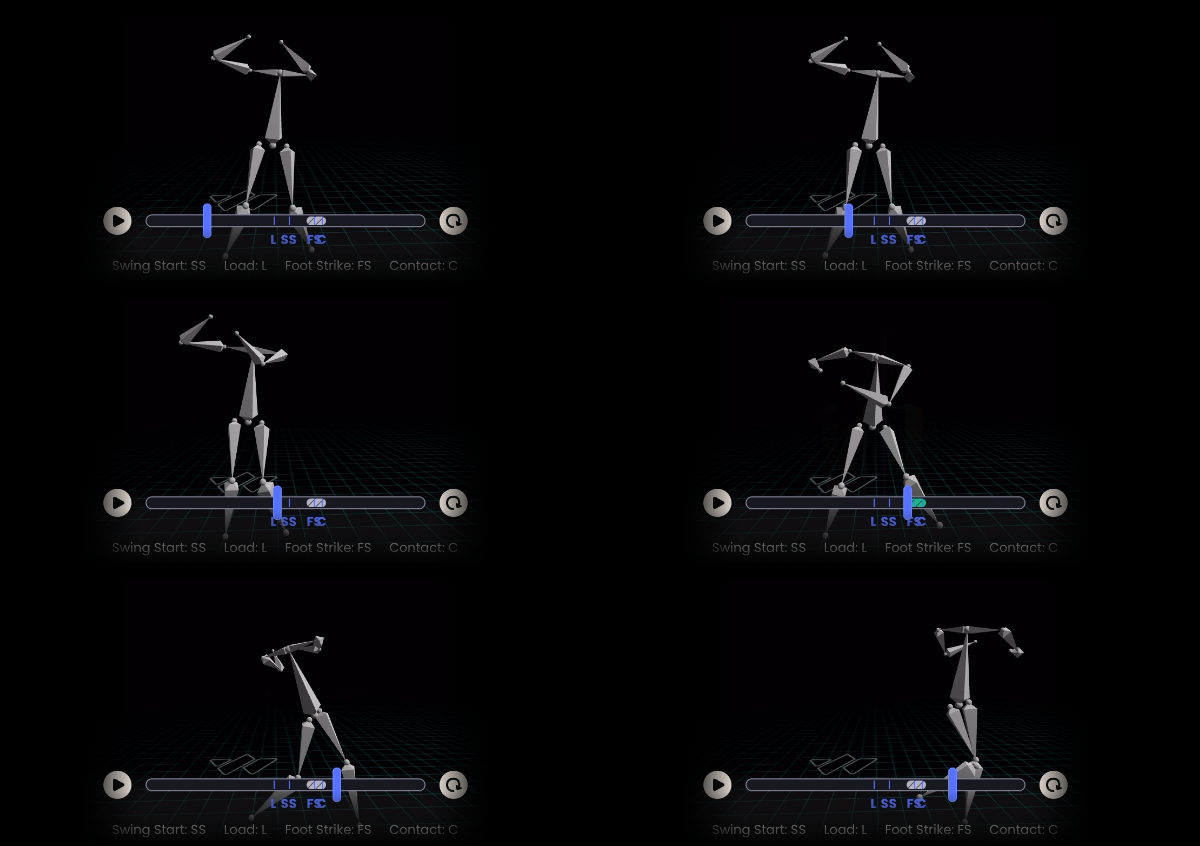
Guessing at a lefty’s fault wastes a week of reps. Film the swing, diagnose it, then assign the matching drill. Upload the clip to SwingAI for instant analysis across its 12 biomechanical dimensions, then match the flag to the fix:
- Low Hip Shoulder Separation at Foot Down or low bat speed → Torque Drill + Knob to Knee Drill.
- Casting / barrel leaking away from the body → Stop at Contact Drill.
- Sway, Hanging Back, or a weak Forward Move → Walk Through Drill.
- Pulling off the ball → Dead Legs Drill.
SwingAI scores dimensions like Negative Move, Pelvis Load, and Pelvis Direction at Contact, so you assign one drill per fault instead of ten drills per hitter.
Takeaway: one video, one flagged dimension, one drill. That is the fastest development loop you can run.
How WIN Reality Helps Left-Handed Hitters
The hardest part of this whole plan is live left-on-left reps, and most staffs simply do not have a lefty BP arm who throws a sharp breaking ball. WIN Reality closes that gap with reps your field cannot produce.
TrainVR puts your hitters in the box against realistic pitching at home:
- 600+ virtual pitchers, including left-handed arm slots and release points your lineup rarely sees.
- A full pitch library for breaking-ball recognition, tunneling, and location reads.
- Scenario workouts for 2-strike approach, 0-2 counts, 3-2 counts, and opposite-field power.
- Game-speed timing reps that build comfort before a lefty ever steps on the mound.
SwingAI keeps the mechanics honest. Your hitters upload a swing, get instant biomechanic feedback across the 12 dimensions, and receive personalized cues plus a plan, with unlimited analyses and progress tracking.
Together they cover the Three Pillars of Good Hitting: Bat Speed, Bat-to-Ball, and Swing Decisions. Mental approach and mechanics work together, and a hitter thinking about mechanics in the box usually freezes, so you want recognition and timing trained to the point they are automatic.
For coaches running the whole roster, the Ultimate Hitter Pack bundles TrainVR, SwingAI, and the WIN bat attachment with hardware. Want the full drill menu first? Start with WIN’s general baseball hitting drills and the 30 drills for coaches guide, then layer in the lefty-specific work above.
Takeaway: your field builds the swing; WIN Reality builds the left-on-left reps and the feedback loop around it.
Start Training Your Left-Handed Hitters Today
Map the contact points, fix the barrel path, and get your lefties real left-on-left reps against a pitch library that mirrors game day. Do that and you turn a lineup that fades against southpaws into one that squares them up.