Coach-ready drill library for youth practices, station rotations, skill fixes, and technology-supported player development.
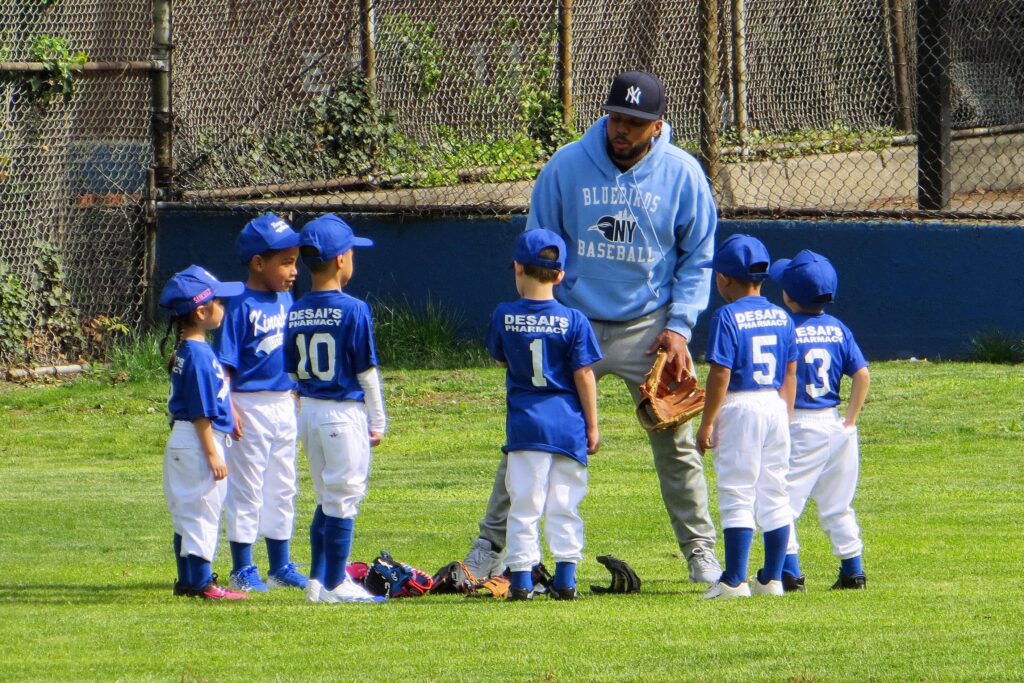
You signed up because the team needed a coach, and now 12 kids are staring at you waiting to hit. Some can barely reach the tee. Two of them flinch at every kid-pitch fastball. You have 75 minutes, one field, and maybe one other parent who can throw.
This guide hands you 30 baseball hitting drills built for exactly that. Each one is mapped to the problem it fixes, the age range it fits, the setup and rep count, and the outcome you can actually see. No deep mechanics lectures, no standing in lines. Just high-rep, low-downtime work you can run tomorrow, plus a simple way to add VR pitch-recognition and AI swing feedback when you want more.
What Are the Best Baseball Hitting Drills for Coaches?
The best youth hitting drills move through a progression: tee work for contact and swing path, soft toss and front toss for timing, and live or simulated pitching for game transfer. Pick the drill that fixes the symptom you see, then run it in small-group stations so every hitter gets 20-plus swings.
That progression is the backbone of how Little League’s own coaching resources teach hitting: tee work first, then soft toss, then live-arm batting practice, with situational BP as the bridge to games.
Here is how this library is organized:
- Drills 1-10: contact, barrel control, and swing path (tee and close-range)
- Drills 11-20: timing, pitch recognition, and game transfer (toss, tracking, live)
- Drills 21-30: power, approach, situational hitting, and team stations
Hitting rests on three pillars: Bat Speed, Bat-to-Ball, and Swing Decisions. Every drill below trains at least one. Match the drill to your hitter, keep reps high, and coach one cue at a time.
30 Baseball Hitting Drills for Coaches by Skill, Setup, and Practice Goal
A. Contact, Barrel Control, and Swing Path Drills (1-10)
These are your tee and close-range builders for beginners, weak contact, casting, and hitters who pull off the ball. Run them at 15-25 reps per hitter.
- High Tee / Low Tee Drill. Fixes flat or uphill swing path. Ages 8-12. Set the tee belt-high, then knee-high, 10 swings each. Outcome: line drives off both heights, not pop-ups off the low one.
- Inside / Outside Tee Placement. Fixes one-zone hitters. Ages 8-14. Move the tee off the inside corner, then the outside corner, 8 swings each. Outcome: inside ball pulled, outside ball driven to center or oppo.
- Two-Tee Path Drill. Fixes Casting and Barrel Dump. Ages 9-14. Place a front tee with the ball and a back tee as a barrier. The hitter stays short to it and long through it to clear the back tee. Outcome: a tighter, more direct barrel path.
- Stop at Contact Drill. Fixes poor contact position, drift, and connection issues. Ages 8-14. The hitter swings and freezes at the point of contact for a 2-second hold. Outcome: a strong, repeatable contact point with hips working through the ball.
- One-Hand Tee (Top and Bottom Hand). Fixes weak hands and rolling over. Ages 10-14. Choke up, 8 swings top hand, 8 swings bottom hand, into a net at close range. Outcome: a firmer barrel through contact and fewer weak ground balls.
- Fence Drill. Fixes Casting and long swings. Ages 9-14. Stand a bat-length from a fence and swing without hitting it. Outcome: a compact path. Use the cue “short to it, long through it.”
- Walk Through Drill. Fixes Sway and grooves the forward move. Ages 10-14. The hitter strides, swings, then walks through toward the pitcher after contact. Outcome: weight loaded into the correct part of the foot instead of drifting back, with a controlled forward move.
- Shoulder Slot Drill. Fixes excessive hip-shoulder separation and Gate Swing. Ages 11-14. The hitter keeps the front shoulder closed and on slot through the load and stride. Outcome: staying closed longer and covering the outer third.
- Short Bat / Quick Hands Tee. Fixes slow hands and low Bat Speed. Ages 9-14. Use a short or training bat, 15 rapid swings with a 5-second reset. Outcome: faster hands without losing the barrel.
- Dot / Number Ball Tee. Fixes head pull and poor focus at contact. Ages 8-12. Mark balls with a dot or number and ask the hitter to call it out at contact. Outcome: eyes stay on the ball through the zone.
Coach move: rotate these in pairs so no hitter waits more than 30 seconds. Build a tee station into every practice and use SwingAI to review contact mechanics from a phone video, because Bat-to-Ball is won in this phase.
B. Timing, Pitch Recognition, and Game-Transfer Drills (11-20)
Cage success means nothing if your hitter freezes against live velocity. Most kids who struggle at kid-pitch are waiting to confirm the ball is not coming at them before they decide to swing. These drills fix timing and Swing Decisions.
- Front Toss Timing Drill. Fixes late swings. Ages 9-14. Toss from behind an L-screen at 20-25 feet, 15 reps. Outcome: the barrel on time, balls hit out front.
- Slow-and-Early Front Toss. Fixes chronic late timing. Ages 10-14. Cue “slow and early,” telling the hitter to start the load sooner. Outcome: fewer foul balls to the opposite side, more squared contact.
- Colored Ball Recognition. Fixes slow pitch recognition. Ages 10-14. Toss two ball colors; the hitter swings at one color and takes the other. Outcome: faster recognition and sharper decisions.
- Yes-Yes-No Drill. Fixes indecision and taking hittable pitches. Ages 9-14. The hitter loads “yes” on every pitch and only shuts it down “no” on a clear ball — the same yes-yes-no discipline WIN’s Vision Training Track builds toward at higher levels. Outcome: an aggressive, ready-to-fire approach.
- Two-Strike Approach Drill. Fixes striking out looking. Ages 11-14. Choke up, widen the zone, shorten the swing for 10 reps. League average drops to roughly .165 with two strikes, so cutting swing-and-miss is a season-changer. Outcome: more balls in play in tough counts.
- No-Stride Tracking Drill. Fixes poor ball tracking. Ages 8-12. The hitter tracks 10 pitches into the catcher’s glove without swinging. Outcome: eyes trained to the contact zone.
- Rapid-Fire Soft Toss. Fixes slow load and reset. Ages 9-14. Toss every 2-3 seconds for 12 reps. Outcome: a quicker, repeatable load under tempo.
- Velocity Ladder (Machine). Fixes fear of speed. Ages 11-14. Step machine speed up 3-5 mph per round across 3 rounds. Outcome: comfort against game velocity built gradually.
- Confidence Toss for Timid Hitters. Fixes flinching and fear at the plate. Ages 8-11. Start with soft, predictable tosses and reward every swing. Outcome: a hitter who commits instead of bailing. A young hitter who’s afraid of the ball will never work on mechanics that matter — confidence has to come first.
- Recognition Window Reps. Fixes slow decisions against unfamiliar arms. Ages 11-14. Train the early window where the hitter must read pitch type out of the hand. Outcome: faster reads, which is exactly where TrainVR adds game-speed pitchers you cannot get on a Tuesday practice.
C. Power, Approach, Situational, and Team Station Drills (21-30)
Now you transfer skill into runs. These drills build the lower half, train approach, and keep a full roster of mixed-ability hitters moving.
- Dead Legs Drill. Fixes over-rotation and pulling off the ball. Ages 11-14. Isolate the upper body so the hitter feels the kinetic chain from torso to hands. Outcome: better separation feel without over-rotating the lower half.
- Torque Drill. Fixes weak hip-shoulder separation. Ages 11-14. Train the X-Factor angle between hips and shoulders at foot down. Outcome: more stored torque, which drives Bat Speed.
- Med Ball Scoop Toss. Fixes no lower-half power. Ages 10-14. Scoop-toss a light med ball into a wall at 2 sets of 4 reps per side. Outcome: a stronger forward move and rotation through the ball.
- Opposite-Field Tee and Toss. Fixes hitters who only pull. Ages 10-14. Tee on the outer third, drive the ball the other way for 12 reps. Outcome: full-field coverage.
- Forward Move Walk-Up. Fixes Drifting and Sway. Ages 10-14. Cue “land firm, turn behind your front hip.” Outcome: a stable front side instead of leaking forward.
- Situational BP (Move the Runner). Fixes selfish swings. Ages 11-14. Runner on second, the hitter must hit the ball to the right side. Outcome: contact with intent and a plan.
- Hit-and-Run Station. Fixes hitters who cannot put the ball in play on command. Ages 12-14. The hitter protects the runner by making contact on the pitch. Outcome: bat control under pressure.
- Mixed-Ability Station Circuit. Fixes one drill that bores half the team. Ages 8-14. Run a tee station, a toss station, and a tracking station at once so beginners and advanced hitters each get the right reps. Outcome: every kid working, nobody watching.
- One-Coach Rotation Format. Fixes understaffed practice. Ages 8-14. Set self-run tee and tracking stations while you run the live station. Outcome: 3 stations on 1 coach, with every hitter active.
- Competitive Game-Speed Round. Fixes flat, low-energy practice. Ages 9-14. Award points for line drives and oppo contact across 10 swings each. Outcome: game intensity and reps that matter.
Add WIN Reality to Your Hitting Stations
You cannot be a private hitting coach for 14 kids, and you cannot find enough live arms. Your players can add TrainVR for game-speed pitch recognition against 600-plus virtual pitchers, and SwingAI for instant biomechanic feedback from a phone video.
Three Ways to Run These Drills Without Wasting Practice Time
You get a few practices a week, so make them count. Down time kills attention, and a drill where one kid hits while 11 watch wastes your best 90 minutes. Use these three methods to keep every hitter working.
Method 1: The 3-Station Rotation
Split the team into three groups of 4-5 and rotate every 8-10 minutes.
- Station 1 (Contact): tee work, drills 1-6, 20 swings each
- Station 2 (Timing): front toss or soft toss, drills 11-17, 15 swings each
- Station 3 (Decisions): tracking or recognition, drills 13-20, 10 reps each
Keep 15 feet of spacing between stations for safety. Three rounds gives every hitter 45-plus reps in 30 minutes.
Method 2: The Fix-the-Symptom Drill Map
Stop guessing. Match the symptom you see to the drill that fixes it.
- Late swings → Drill 12, Slow-and-Early Front Toss
- Fear of velocity → Drills 18-19, Velocity Ladder and Confidence Toss
- Casting → Drills 3 and 6, Two-Tee and Fence
- Overswinging / pulling off → Drills 8 and 25, Shoulder Slot and Forward Move
- Weak contact → Drills 4-5, Stop at Contact and One-Hand Tee
Confirm the fix with an observable outcome, not a feeling. If the ground balls turn into line drives, the drill worked.
Method 3: The One-Cue Coaching Rule
Make mechanical changes in small bursts and reinforce one before adding the next. Giving a 9-year-old five thoughts at once gets them frazzled and frozen.
Pick one cue per drill: “back pocket down the line,” “land firm, turn behind your front hip,” or “short to it, long through it.” Reinforce it for 15-20 reps before changing anything. Judge progress by the result you can see, not perfect mechanics.
One cue, one fix, one win at a time. That is how you actually move a youth hitter.
How WIN Reality Helps Coaches Turn Drills Into Game Results
Cage reps build skill, but games are won on timing, recognition, and conviction. WIN Reality gives you the technology layer that closes the gap, and your players can train at home between practices.
TrainVR puts your hitters in the box against 600-plus virtual pitchers at game speed. The drills cover Pitch Recognition, Release Point, and Recognition Window, plus scenario workouts like 0-2 approach, 3-2 counts, and 2-strike battles. When you cannot find live arms, this is your live-arm replacement.
SwingAI turns a phone video into instant analysis across 12 biomechanic dimensions, from Negative Move and Pelvis Load to Hip Shoulder Separation at Contact. You get personalized cues and an improvement plan with unlimited analyses, so you can check a hitter’s path without becoming a private instructor for the whole roster.
Want both products plus the bat attachment and headset option? The Ultimate Hitter Pack bundles TrainVR and SwingAI with hardware add-ons into one package.
Use the field drills above to build the swing. Use WIN Reality to train the decisions and the reps that turn practice into hits.
Build Better Hitters With WIN Reality
Run the 30 drills, fix the symptom, coach one cue, and add VR pitch recognition plus AI swing feedback to your team’s development. Your hitters get game-speed reps at home and you get measurable progress on the field.