Your hitter wants to swing the bat 100 times a day. Your calendar says two team practices, a tournament team session, and two games this week. So which is it: more reps or more rest?
That tension is the whole question. Figuring out how much youth baseball players should practice depends on age, goals, your weekly schedule, and how well your body recovers between sessions. A 6-year-old and a 14-year-old chasing a high school roster spot need completely different workloads.
This guide breaks it down by age and separates the four things parents lump together: organized team practice, at-home individual reps, games, and recovery. The goal is simple. Help you train enough to improve without piling up empty swings or worn-down arms.
How much should youth baseball players practice each week?
Most youth players develop best with 2 to 4 total baseball touchpoints per week, scaled by age, with at least 1 to 2 full rest days built in.
Here is the age-by-age breakdown:
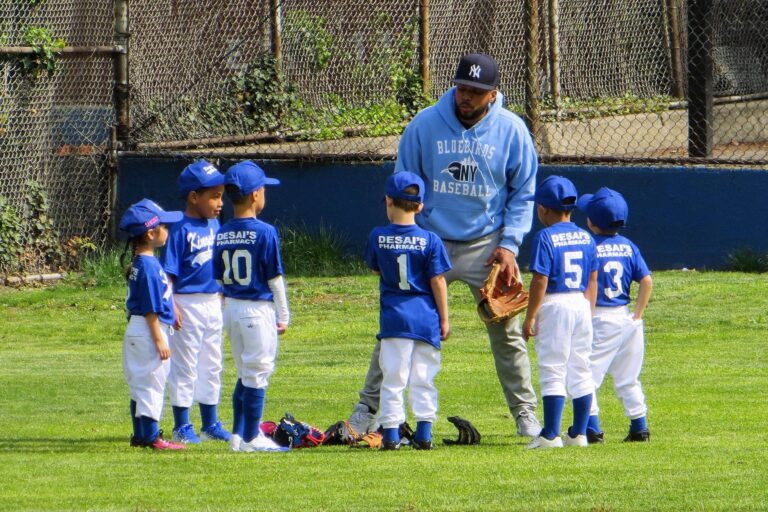
- Ages 4–6: 1 to 2 short organized sessions per week (30 to 45 minutes each), plus backyard catch. No structured at-home grind required.
- Ages 7–10: 1 to 2 team practices and 1 to 2 games per week, plus optional 10 to 20 minute at-home reps 2 to 3 times per week.
- Ages 11–14: 2 to 3 practices plus games or a tournament, plus 15 to 30 minute focused skill sessions 2 to 4 times per week.
Two rules apply at every age. Keep at least 1 to 2 rest days per week, which is a recommendation that lines up with the American Academy of Pediatrics’ own guidance on preventing overuse injury and burnout in young athletes. Follow MLB and USA Baseball’s Pitch Smart pitch-count and rest guidelines for anyone throwing off a mound.
More is not automatically better. Quality reps at game speed beat 100 tired swings every time. The sections below show you exactly what that looks like at each age.
Age-by-Age Youth Baseball Practice Guide
Coaching pages tend to give you one number and call it a day. Real schedules do not work that way, so here is a weekly workload model that accounts for team practice, games, individual reps, and recovery at each stage.
A. Ages 4–6: Tee Ball and First Exposure
Your 4-year-old does not need a training plan. At this age, the entire job is making baseball fun and building basic athletic movement.
Aim for 1 to 2 organized sessions per week, 30 to 45 minutes each. Anything longer and you lose their attention.
Keep the ratio heavily weighted toward play, not instruction:
- Catch and toss: 5 to 10 minutes of underhand throw-and-catch with a soft ball.
- Tee swings: 10 to 15 swings off a tee, focused on contact and having fun, not mechanics.
- Movement games: running the bases, simple fielding rolls, anything that keeps them moving.
Skip the daily at-home regimen here. If your kid wants to play catch in the yard, great, but do not schedule it. Protect their love of the game first, and the skills will come.
Takeaway: At ages 4 to 6, success is measured by smiles and swings, not reps. Two short, fun sessions a week is plenty.
B. Ages 7–10: Building Skills Without Burnout
This is where structure starts, and where overscheduling becomes a real risk. Many rec and minors teams already run 2 practices and 2 games per week, which is a solid baseline on its own.
Target weekly load for ages 7 to 10:
- 1 to 2 team practices (45 to 75 minutes each)
- 1 to 2 games
- Optional at-home reps: 10 to 20 minutes, 2 to 3 times per week
- 1 to 2 full rest days
At-home work should be short and intentional. The Three Pillars of Good Hitting are Bat Speed, Bat-to-Ball, and Swing Decisions, and at this age you build the foundation for all three with simple tee and front-toss reps.
Keep hitting basics simple:
- Tee work: 15 to 20 quality swings, focused on a balanced Load Phase and solid contact.
- Front toss: 15 to 20 swings to start tracking a moving ball.
- Catch: 8 to 10 minutes to build throwing volume gradually and safely.
Watch the throwing. Young arms are not ready for high-volume mound work, so layer in rest and never push through arm soreness. If your motivated 7-year-old wants 100 swings a day, cap it. Channel that energy into 20 great swings and stop while it is still fun.
Takeaway: Hold the line at 3 to 4 baseball touchpoints a week. Short, high-intent reps build skills; endless lines and tired swings build burnout.
C. Ages 11–14: More Reps, More Structure, More Recovery
By 11 to 14, the gap between rec players and travel-track players widens fast. The volume goes up, but so does the need for deliberate recovery and smarter reps.
Target weekly load for ages 11 to 14:
- 2 to 3 team practices (60 to 90 minutes each)
- Games or a weekend tournament
- 15 to 30 minute focused skill sessions, 2 to 4 times per week
- At least 1 to 2 full rest days, more after a tournament
This is the age to add pitch recognition and approach work, not just more swings. League average drops to roughly .165 with two strikes, and learning to cut down swing-and-miss can add 15 to 20 hits across a season. That is a skill you train with your eyes and decisions, not just your barrel.
Build sessions around one focus at a time:
- Bat speed: rotational drills like the Torque Drill to sharpen hip-shoulder separation.
- Bat-to-ball: tee and machine reps with a clear contact goal.
- Swing decisions: pitch recognition and tracking reps that do not add throwing or cage volume.
A player doing team practice, a private lesson, weightlifting, and a tournament in the same week is at real overuse risk. When the schedule is already full, add mental reps, not more swings.
Takeaway: At 11 to 14, manage total load like a coach. Protect 1 to 2 rest days and replace empty volume with focused, decision-based training.
Train smarter between practices. TrainVR lets your hitter take game-speed reps and pitch-recognition work at home without adding wear to the arm or the swing.
What Counts as Practice?
Most guides count only the hours on the field. That math misses half the picture, because development happens across physical reps, mental reps, and recovery.
A. Physical Reps: Hitting, Throwing, Fielding, Running
A “practice” only counts if the reps are high-intent. Twenty focused swings beat 60 tired ones, because fatigue breaks down your Kinetic Chain sequence of Pelvis, Torso, Arms, Hands, Bat.
Use these limits to keep reps clean:
- Hitting: 20 to 40 quality swings per session, then stop. Late-session swings often turn into a Barrel Dump or Casting as the body tires.
- Throwing: build volume gradually and respect pitch-count rest rules.
- Fielding and running: 10 to 15 minutes of game-speed movement, not endless lines.
Takeaway: When mechanics start slipping, the rep stops helping. End the session on a good swing, not a wish for one more.
B. Mental Reps: Pitch Recognition, Approach, Game Decisions
Your brain doesn’t get sore the way your arm does, which means you can keep developing decision-making skills even when your body needs a break. Stack these on rest or sore days:
- Pitch recognition: 10 to 15 minutes reading release point and spin.
- Approach work: rehearsing a 2-strike approach or a 3–2 plan before you ever step in the box.
- Game decisions: reviewing swing decisions to train your eyes to say no to bad pitches.
Takeaway: On days your arm or hands are toast, train your brain. Decision reps add hits without adding wear.
C. Recovery: The Practice Most Players Skip
Recovery is not the absence of training. It is the part of training that lets the reps stick.
Watch these signals that you need rest, not reps:
- Sleep under 8 to 10 hours for multiple nights
- Arm or hand soreness that lingers more than a day
- Motivation dips or dread before practice
- Tournament fatigue after a 3 to 4 game weekend
When you see two or more, take a full day off. Adding work on top of fatigue is how slumps and injuries start.
Takeaway: Build in 1 to 2 rest days every week. Recovery is the rep that protects all the others.
Tools and Methods: Three Ways to Practice Smarter
You will not always have 90 minutes and a full cage. Here are three repeatable methods for the 15 to 30 minute windows where most real development happens.
Method 1: The 15-Minute Focused Rep Block
Run this block when you have 15 minutes in the garage:
- Pick one skill and one goal (example: stay closed through contact).
- Warm up with 5 to 8 easy tee swings.
- Take 15 to 20 quality reps with a cue like “Land firm, turn behind your front hip.”
- Reflect for 60 seconds: what felt right, what to fix next time.
Takeaway: One skill, one goal, 20 great reps. That beats an unfocused hour.
Method 2: The Weekly Workload Check
Tally the week every Sunday:
- Games and tournaments
- Team practices and private lessons
- Throwing volume (bullpens, long toss)
- Soreness, sleep, and school stress
If the total tops 4 to 5 high-effort baseball days, cut something or swap it for low-impact work.
Takeaway: Audit the week before you add to it. The check takes 5 minutes and prevents months of burnout.
Method 3: Low-Impact Pitch Recognition Training
When your hitter is sore from a tournament but wants to train, this is the perfect window for visual and decision reps. Pitch recognition training lets you read release point and spin, rehearse approach in 0–2 and 3–2 counts, and sharpen swing decisions without extra throwing or cage swings.
Takeaway: When the body needs a break, train the eyes. Pitch recognition is the highest-value rep you can take on a recovery day.
How WIN Reality Helps: Smarter Practice Between Practices
The hardest part of youth development is getting quality reps between the 2 to 3 team practices a week. That is exactly the gap WIN Reality is built to fill, across both physical and mental training.
TrainVR turns your living room into a game-speed environment:
- 600+ virtual pitchers for true game-speed reps at home
- Pitch Recognition, Release Point, and Disappearing Pitch drills for low-impact decision training
- Scenario workouts like 2-strike approach, 0–2 counts, and breaking ball recognition
- Multi-week Training Tracks that structure development instead of leaving it to chance
SwingAI handles the mechanics side. Upload a swing video and get instant analysis across 12 biomechanical dimensions, including Pelvis Load, Hip Shoulder Separation at Foot Down, and Forward Move, plus personalized cues and an improvement plan you can run at home.
Together they cover all Three Pillars: TrainVR sharpens Swing Decisions, SwingAI cleans up the mechanics behind Bat Speed and Bat-to-Ball. Want both in one plan? The Ultimate Hitter Pack bundles TrainVR, SwingAI, and the WIN bat attachment.
Takeaway: Use team practice for live work and WIN Reality for everything in between.
Build Better Reps Without Adding Extra Wear
Enough practice is not about maxing out the calendar. It is about the right number of high-intent reps for your age, plus the recovery that makes them stick. Scale the load, protect the rest days, and replace empty swings with decision training.
Ready to give your hitter game-speed reps that build skills without the wear?