You’re in the box, 1-1 count, pitcher throws a slider off the back corner. You freeze. By the time you decide, it’s already in the catcher’s glove. That hesitation is the real plate discipline problem. It’s not passivity. It’s the absence of a trained, measurable system for making swing decisions before the pitch arrives. The best hitters attack what they can drive and lay off everything else with conviction, not guesswork. The metric that makes that trainable? Your Z/O ratio. Once you understand what it reveals, you have a real starting point to build better plate discipline without ever going passive.
How to improve plate discipline in baseball: Know your attack zone, build a count-based pitch plan before every at-bat, train pitch recognition at game speed so you read ball/strike earlier, and use objective swing-decision data, like your Z/O ratio, to track what you actually chase versus what you attack.
Build Plate Discipline Around Better Decisions, Not Passive Takes
The phrase “be more patient” has ended more careers than bad mechanics. Patience at the plate without a plan just means taking strikes and falling behind in the count.
Real plate discipline is a decision system. You enter every at-bat with a specific pitch type and location you’re hunting, a zone you’ll attack, and a clear cutoff for what you’ll take. That system is built on three things: zone knowledge, a count-based approach, and enough game-speed reps to execute it under pressure.
A. Start With Your Z/O Ratio: The Plate Discipline Metric That Shows What You Actually Chase
Your Z/O ratio measures the relationship between your swings on pitches inside the zone versus your swings on pitches outside the zone. A high Z/O ratio means you’re attacking strikes and laying off balls. A low ratio means you’re chasing, and you may not even know which pitch type or location is the problem.
Most hitters go off feel: “I think I’m pretty selective” or “I chase a little when I’m down in the count.” That’s not a training target. That’s a guess.
Your Z/O ratio gives you a real number to improve. It tells you:
- Which pitch locations you over-swing on (sliders low and away, fastballs up and in)
- Whether your chase problem is count-dependent (first pitch vs. two-strike situations)
- Whether you’re taking too many hittable pitches inside the zone (a passive problem, not a discipline problem)
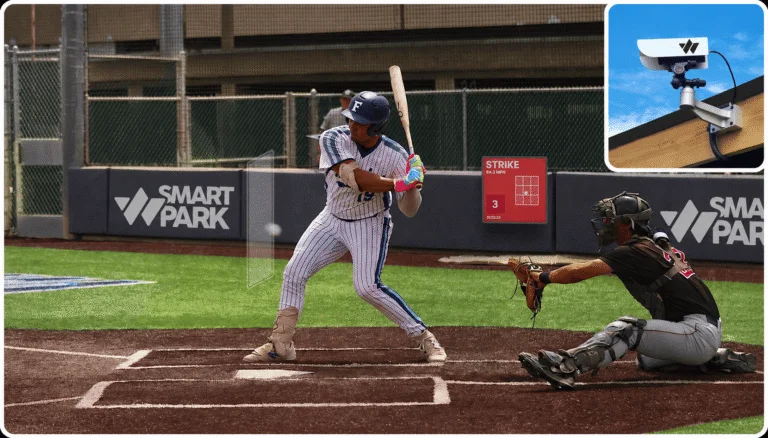
WIN Reality tracks your Z/O ratio across every virtual at-bat so you can see exactly where your swing decisions break down and helps you build reps around fixing the specific patterns that hurt you most.
B. Separate the Strike Zone, the Damage Zone, and the Protect Zone
Most hitters treat the strike zone like a single box. That’s why they’re average at best. Elite plate discipline means operating with three distinct zones in mind on every pitch.
The Strike Zone is the rule-book boundary. Pitches here are technically hittable, but not all of them are equal. Knowing a pitch is a strike isn’t enough, you need to know whether it’s one you can drive.
Your Damage Zone is smaller. It’s the specific part of the strike zone where you make hard contact, the pitch types and locations that match your bat path and timing. For most hitters, the damage zone is 4–6 locations, not 25. When a pitch enters your damage zone in a hitter’s count (2-0, 3-1, 1-0), you attack it without hesitation.
The Protect Zone activates with two strikes. This is where you expand your coverage to anything near the zone, including pitches that aren’t in your damage zone. With two strikes, league average drops to .165, so your goal isn’t to drive the ball, it’s to make contact, foul off tough pitches, and stay alive until you get something you can handle.
Train these three zones separately. When you blur them, you either chase outside pitches trying to do damage, or you take attackable strikes waiting for perfect.
C. Stay Aggressive by Hunting the Right Pitch Earlier in the Count
Passive discipline gets you called out looking. Count-based hunting keeps you dangerous.
Here’s the framework:
- 0-0, 1-0, 2-0: Hunt your pitch in your damage zone. If it doesn’t show up, take it. Don’t expand.
- 0-1, 1-1: Stay disciplined but don’t shut down. Look for your pitch to show up early in the sequence.
- 2-1, 3-1: Hitter’s count. Shrink the zone further. Only attack a pitch squarely in your damage zone.
- 0-2, 1-2, 2-2: Shift to protect. Expand coverage. Your job is to stay alive, make contact, and force a mistake.
The key mental shift: you’re not “waiting” in early counts, you’re hunting. You know what pitch you want, where you want it, and you’re ready to attack the first time it shows up. That’s how you stay aggressive while eliminating chases.
Three Training Methods to Improve Plate Discipline in Baseball
Method 1: Game-Speed Pitch Recognition Reps
Most plate discipline drills happen in a cage at 55 mph with a coach lobbing front toss. That doesn’t train your brain for the recognition window you actually face in games. Against a 90 mph fastball, that time is under 400 milliseconds from release to contact.
You need game-speed reps against multiple pitch types, different release points, left- and right-handed pitchers, and sequences that set up off-speed chases (fastball/slider tunneling, 2-0 curveball, 3-2 breaking ball).
WIN Reality’s TrainVR delivers exactly that. With 600+ virtual pitchers throwing at realistic velocities, you can train Pitch Recognition, Release Point, Disappearing Pitch, and Recognition Window drills from home, with a Meta Quest headset and no live pitcher required. You get the visual stimulus your brain needs to make faster ball/strike reads before your Load Phase ever begins.
This is the kind of rep that transfers to the box. Not colored ball drills. Not verbal “take” cues from a batting practice pitcher. Game-speed, game-shape, game-sequence reps.
Method 2: Swing/Take Decision Training With Count-Based Goals
After you define your three zones, you need reps making decisions inside them. This isn’t about mechanics, it’s about training your swing decision circuit to fire correctly on every pitch.
Structure your decision reps by count:
- Early-count damage zone training: Take every pitch outside your damage zone, no exceptions. Attack every pitch inside it, no hesitation.
- Two-strike protect training: Expand coverage. Train yourself to take borderline balls while making contact on anything near the zone.
- Pitcher’s count survival reps: 0-2 and 1-2 scenarios against offspeed sequences. Your only goal: don’t expand on chase pitches.
WIN Reality’s TrainVR includes scenario-based workouts for 3-2 counts, 0-2 approach, 2-strike approach, and opposite-field contact, built specifically to train the decision layer, not just the swing. Track your swing/take decisions across every session. If you’re expanding on sliders low and away at a 40% rate in 0-2 counts, you have a specific target. That’s how plate discipline improves, not through vague “be patient” mantras, but through measurable progress on identified patterns.
Method 3: AI Swing Feedback to Diagnose Why You Chase
Here’s what most players miss: chasing isn’t always a recognition problem. Sometimes it’s a mechanics problem wearing a discipline mask.
Common swing flaws that create chase behavior:
- Early Extension — Your hips fire before your hands, causing you to lunge at pitches low and away that your bat speed can’t catch cleanly
- Drifting (Forward Move) — Premature center-of-mass shift forward compromises your ability to read pitch depth and pull back on breaking balls
- Barrel Dump — Your barrel drops under the ball on high fastballs, making chase attempts above the zone feel like “good swings” when they aren’t
- Hanging Back — Late sequencing in the Kinetic Chain causes timing problems that push you into chase territory on elevated velocity
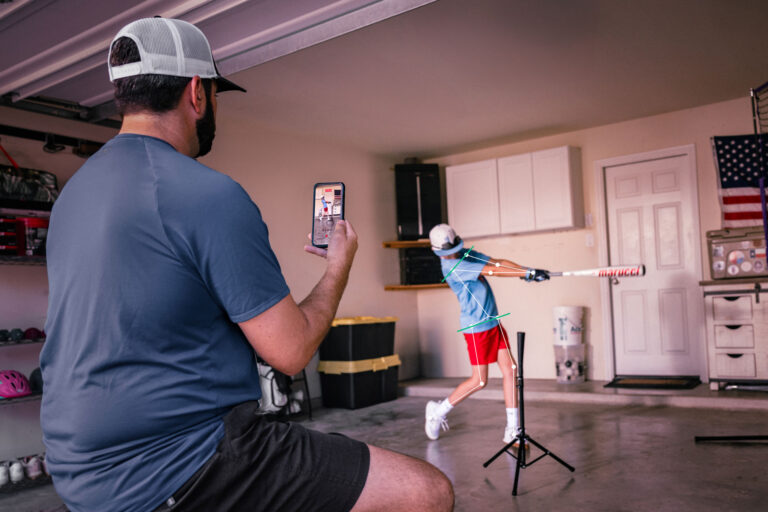
WIN Reality’s SwingAI identifies these patterns immediately. Upload your swing video and the AI delivers instant biomechanical analysis across 12 dimensions, including On-Plane Efficiency, Early Connection, and Rotational Acceleration, with personalized coaching cues tied to the specific flaw. If your OPE is below 70% and you’re regularly chasing high fastballs, the fix isn’t to “watch the ball better.” It’s to correct the mechanical breakdown causing the chase.
How WIN Reality Helps
Plate discipline is one of the Three Pillars of Good Hitting — and the one most hitters train the least, because they don’t have objective data or game-speed decision reps available outside of games.
WIN Reality’s Ultimate Hitter Pack (Bundle) closes that gap.
The WIN Reality Bundle
The Bundle combines TrainVR and SwingAI into a complete player-development system — covering both the decision layer (pitch recognition, swing/take reps, count-based scenarios) and the mechanics layer (AI swing analysis, biomechanical feedback, improvement plans). It’s the only platform that connects your Z/O ratio data to your swing mechanics in one place.
Specific Features That Drive Plate Discipline Gains
Z/O Ratio Tracking
Every virtual at-bat generates swing decision data. You see your Z/O ratio across sessions, pitch types, and locations — so you always know what to train next.
600+ Virtual Pitchers via TrainVR
Game-speed at-bats against realistic pitching profiles at home. No live arm required. Train against lefties, righties, arm-side breakers, and tunneling sequences any time.
Scenario-Based Pitch Recognition Workouts
Dedicated modes for breaking ball recognition, fastball/curveball tunneling, 2-strike approach, and 0-2 count survival — all the specific situations where plate discipline breaks down.
Hot and Cold Zone Feedback
See exactly which pitch locations you’re attacking versus avoiding so you can identify damage zone gaps and chase patterns in minutes.
AI Swing Analysis via SwingAI
Upload a swing video. Get instant biomechanical feedback on the 12 SwingAI dimensions. Unlimited analyses with a subscription, so you can track mechanical progress alongside decision progress.
Internal Resources
- WIN Reality Bundle — Full VR + AI hitting development platform
- TrainVR — VR Baseball Training — Game-speed pitch recognition and at-bat simulation
- SwingAI — AI Swing Analysis — Biomechanical feedback for every swing flaw behind chase patterns
- Hitting Training Resources — Full library of player-development content
Your Z/O ratio doesn’t lie. Your feel at the plate does. Stop training plate discipline with static drills and start building it with real data, game-speed reps, and AI feedback that shows you exactly why you chase — and how to stop.