Every hitter has a pitch that gives them trouble. But some pitches are universally difficult — they exploit the limits of human reaction time, visual processing, and swing mechanics. Understanding why these pitches are so tough is the first step toward learning to hit them.
The Short Answer: The hardest pitch to hit in baseball is the high fastball at the top of the zone, but it’s not alone. The slider, changeup, cutter, and splitter all rank among the most difficult pitches to square up consistently. Each one challenges hitters in a different way — speed, movement, deception, or a combination of all three.
The 5 Hardest Pitches to Hit: Ranked
| Rank | Pitch | Why It’s Hard | Avg. Whiff Rate |
|---|---|---|---|
| 1 | High Fastball | Speed + “rising” effect + short reaction window | 28–32% |
| 2 | Slider | Late horizontal break + speed differential | 33–37% |
| 3 | Changeup | Speed deception + arm-side fade | 30–34% |
| 4 | Cutter | Late movement + looks like fastball | 24–28% |
| 5 | Splitter | Drops sharply out of the zone + fastball tunnel | 35–40% |
Whiff rate ranges based on Baseball Savant Statcast Pitch Arsenal Stats for well-executed versions of each pitch type.
1. The High Fastball
Why It’s Hard
According to pitch reaction time data, high fastballs at 95+ mph give hitters approximately 400 milliseconds from release to the plate. High spin rates create a “rising” effect — the ball appears to jump, causing hitters to swing under it. The pitch disrupts timing and forces a compact, efficient swing path that many hitters haven’t trained.
How to Beat It
- Be on time with a yes-yes-no mindset — start committed, then adjust
- Stay short to the ball — a long, steep swing can’t catch up to velocity up in the zone
- Change your sights — aim to swing slightly over the ball to match its flatter trajectory
- Train against velocity — face high-speed reps consistently to build reaction time
2. The Slider
Why It’s Hard
A good slider looks like a fastball out of the hand, then breaks laterally 4–8 inches in the last 15 feet. Hitters commit to what they think is a fastball, then the ball darts away from the barrel. According to Baseball Savant’s pitch arsenal data, the slider is among the most common strikeout pitches in professional baseball, consistently ranking at or near the top in total strikeouts generated.
How to Beat It
- Look for the dot — a slider’s spin creates a visible dot or red circle on the ball
- Stay inside the ball — keep your hands tight and let the ball travel deep before committing
- Recognize the arm slot — some pitchers tip their slider with a slightly different release
3. The Changeup
Why It’s Hard
The changeup is the ultimate deception pitch. The pitcher’s arm speed mimics a fastball, but the ball arrives 8–12 mph slower with arm-side fade. This speed differential causes hitters to commit too early, resulting in weak contact out in front or swings and misses.
How to Beat It
- Let it get deep — don’t commit until you can confirm it’s not a fastball
- Look for arm-side movement — changeups fade toward the pitcher’s arm side
- Have a plan — if you’re sitting fastball, don’t chase the changeup. If you’re looking off-speed, attack it early in the zone
4. The Cutter
Why It’s Hard
The cutter sits between a fastball and slider in both speed and movement. It’s thrown at 87–93 mph with 2–4 inches of late horizontal break. Hitters see fastball velocity and assume fastball location, then the cutter jams them inside or slides off the barrel.
How to Beat It
- Recognize it’s not a true fastball — the cutter has slightly less backspin
- Stay connected — keep hands and body in sync to adjust mid-swing
- Don’t try to pull it — let the cutter travel and drive it the other way
5. The Splitter
Why It’s Hard
The splitter tunnels perfectly with the fastball for the first 40 feet, then drops sharply. Per Baseball Savant’s Statcast data, the splitter ranks among the highest whiff-rate pitches in MLB. Hitters commit to swing because it looks like a fastball at the belt, then the ball drops below the zone.
How to Beat It
- Recognize the lack of backspin — splitters have less rotation than fastballs
- Stay on top of the ball — resist the urge to drop your barrel to chase
- Trust your eyes — if it starts at the belt and drops, it’s probably a ball
Training Against Every Pitch Type
Drills That Work
- High Tee Drill — teaches hitters to handle pitches at the top of the zone with a tight, quick entry
- Recognition Drills — identify pitch type before deciding to swing, building faster mental processing
- Two-Strike Approach Drills — practice disciplined at-bats against mixed pitch sequences
How VR Training Helps
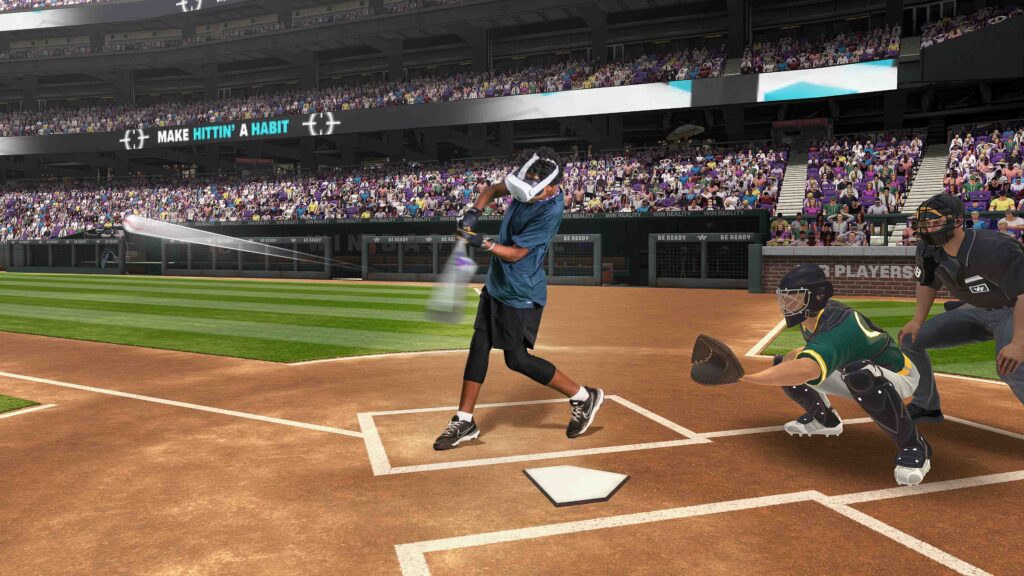
WIN Reality’s VR platform simulates every pitch type on this list at game speed — fastballs with realistic spin, sliders with late break, changeups with deceptive arm speed. You face unpredictable pitch mixes the same way you would against a real pitcher, but you get 5x more reps per session. The platform tracks your recognition accuracy, swing decisions, and timing so you can see exactly which pitches give you trouble and where you’re improving.
Frequently Asked Questions
What Is the Most Unhittable Pitch in Baseball?
Per Baseball Savant data, the splitter generates among the highest whiff rates (35–40% range), but the pitch combination that’s hardest to hit consistently is the high fastball paired with a good slider. When a pitcher can tunnel a 97 mph fastball up with a slider down, the visual overlap makes both pitches significantly harder.
What Pitch Has the Highest Whiff Rate?
According to Baseball Savant’s pitch tracking data, the splitter and sweeping slider typically lead MLB in whiff rate. The sweeping slider in particular has seen a surge in usage, with elite versions generating whiff rates that can exceed 40%.