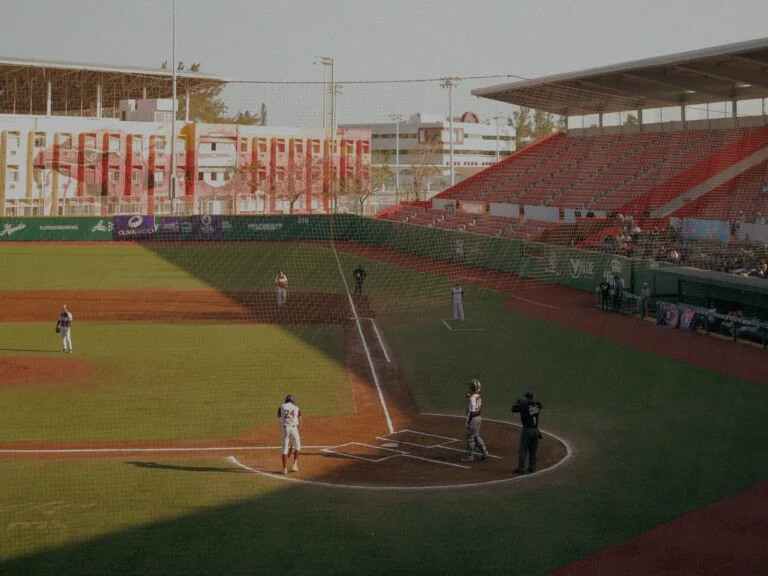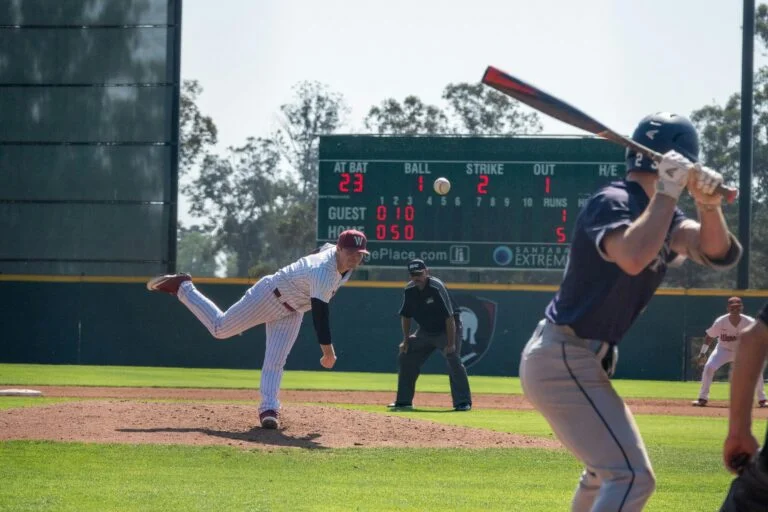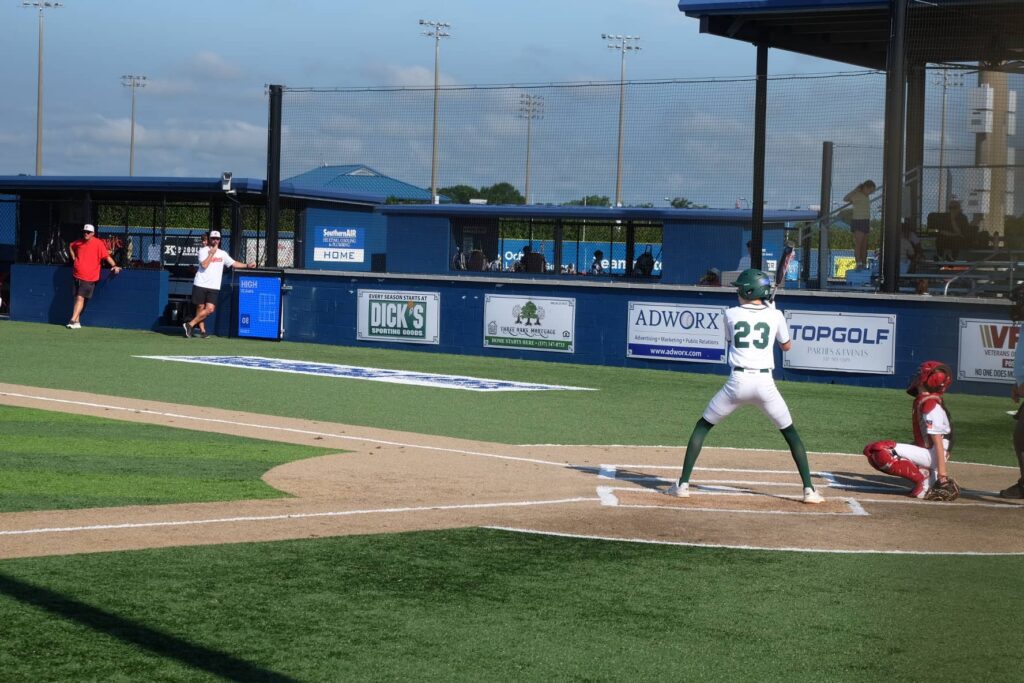
Your 14U pitcher throws a Tuesday bullpen, and your pitching coach logs every spin number. On Saturday, the same arm throws a full tournament game, and none of it gets measured. That gap sits at the center of SmartPark vs Rapsodo.
Rapsodo makes portable ball-flight monitors built for player development: bullpens, cages, and practice fields. SmartPark is an installed field system built to run and capture live games. If your priority is pitch design and practice data, Rapsodo fits. If your priority is running every game, with calls, clock, scoring, and live data, SmartPark fits. Many programs will want both, because they cover different parts of the week.
The Gap Between Tuesday and Saturday
Most programs build a strong practice data habit and then stop measuring at first pitch. Practice data shows what a player can do. Game data shows how it holds up against an umpire, a scoreboard, and a crowd.
The decision usually belongs to whoever runs the program or the field: a director of player development, an athletic director, a travel organization owner, or a tournament operator. Coaches and parents care about the results, but the budget and the schedule sit with the operator. So the useful question is “where do I need data most, and what do I need the system to do there?”
What Rapsodo Does Well
The Rapsodo PRO 3.0 pairs 3 cameras with 2 radars in one portable unit that works indoors and outdoors, with an 8-hour battery. It captures hitting and pitching live-on-live in the same session, and Rapsodo calls it the first practice product to measure seam orientation and seam-shifted wake, which pitchers use for pitch design. It also reports approach angles, contact depth, and whether a pitch was in the zone, and it connects to Edgertronic high-speed cameras.
Rapsodo reports that MLB teams, top college programs, and more than 350 MLB players use its products.
What it costs: Rapsodo’s site does not list specific product pricing. A Pro Series Membership is required to operate it, with tiers for high schools and teams. Rapsodo also sells a “Game Mode” add-on at $2,000 per year. Despite the name, Game Mode is a batting-cage app with games like Home Run Derby and Target Practice, per its App Store listing. It is not live game tracking.
Rapsodo’s published materials position the PRO 3.0 for practice and player development. They do not list officiating, a pace clock, scoring, or a fan app.
What SmartPark Does Differently
SmartPark is a fixed optical camera system installed at your field. WIN includes free on-site installation of the camera system. Once it is running, every game on that field is tracked, and the field boards display Automatic Balls & Strikes, the Pace of Play Clock, and game scoring.
SmartPark reports 125+ live metrics in four groups:
- 35 Game Metrics
- 88 Ball Metrics
- 12 Bat Sensor Metrics
- 12 Biomechanic Metrics
Ball and game metrics come from the camera system. The bat sensor metrics require Blast bat sensors, which players attach to their bats. WIN says its optical tracking measures pitch location to within 6 millimeters on ABS calls.
On game day, SmartPark has three operator roles:
- Scorekeeper: tags each pitch and at-bat outcome, which keeps scoring semi-automated.
- Field operator: configures the strike zone for the age group and runs a pregame system check.
- Umpire: works from behind the pitcher with the LED display. WIN says a single umpire can run a game alongside live ABS.
Parents and players are not operators. They follow along in the WIN Gameday App, which is a free download, and post-game reports are available for purchase.
SmartPark is priced depending on your field configuration.
Side by Side
| Rapsodo PRO 3.0 | WIN Reality SmartPark | |
|---|---|---|
| Primary use | Bullpen, cage, and practice sessions | Live games at an installed field |
| Setup | Portable unit, indoor or outdoor, with a permanent install option | Fixed optical camera system at the field |
| Hardware | 3 cameras and 2 radars in one unit | 4-8 fixed optical cameras, LED display |
| Data focus | Pitching and hitting ball flight, seam orientation, seam-shifted wake | 125+ live metrics across game, ball, bat sensor, and biomechanics |
| Officiating and scoring | Not listed. Strike zone awareness is a training metric, not a call system | Automatic Balls & Strikes, Pace of Play Clock, semi-automated scoring |
| Who sees the data | Coaches and players through Rapsodo’s app and cloud | Scorekeepers, umpires, operators, parents, and players |
| Video | Player video storage and Edgertronic integration | Automatic video capture and highlight generation |
| Published pricing | PRO 3.0 listed at $8,500, plus a required membership | Priced depending on field configuration |
Based on each company’s published materials as of October 2026.
Three Myths About Practice Tracking vs Game Tracking
Myth 1: The two systems are interchangeable. Both track the ball, but they answer different questions. Rapsodo measures a planned practice rep. SmartPark measures a live game with an umpire, a scoreboard, and a crowd.
Myth 2: More spin data equals game data. Seam orientation and seam-shifted wake help you design pitches. Game data adds context a bullpen cannot supply, such as the count, the call, and the score.
Myth 3: Game tracking runs itself. SmartPark runs on cameras, but a game still has defined roles: a scorekeeper, a field operator, and an umpire. The difference is that no one sets up a unit before first pitch, and one umpire can work a game with ABS.
Which System Fits Which Program
- Pitching labs, academies, and programs focused on pitch design: Rapsodo. It is portable, built for bullpens and cages, and has a lower entry cost.
- Travel organizations, tournament operators, leagues, and facilities running many games: SmartPark. It handles calls, clock, scoring, fan access, and video across fields.
- High school, junior college, and college programs that want game data and officiating support: SmartPark. WIN says every SmartPark can run an ABS challenge to NCAA standards and that it is the NJCAA’s exclusive partner.
- Programs that want both practice data and game data: use both.
Beyond Ball Tracking
SmartPark connects to the tools a game day already uses: Playbook365 for rosters and schedules, live streaming through an open API, and a post-game handoff to WIN training tools including SwingAI, Blast Motion, and TrainVR. A hitter who chases high fastballs on Saturday can take that game data into TrainVR reps on Monday. To see the full picture, read What Is a Smart Baseball Field? and how the ABS challenge system works at a SmartPark.
Frequently Asked Questions
Can I use Rapsodo during a game? Rapsodo positions the PRO 3.0 for practice and player development, and its published materials do not list live-game officiating or scoring features. Ask Rapsodo directly about game-day use at your field.
Do I need Rapsodo if my field has SmartPark? It depends on your practice goals. SmartPark covers live games, while Rapsodo supports pitch design and practice data in the bullpen and cage.
How much does Rapsodo cost? Rapsodo’s site lists the PRO 3.0 at $8,500, and a Pro Series Membership is required to operate it. The Game Mode add-on is $2,000 per year.
How much does SmartPark cost? SmartPark is priced based on your field configuration. Ask WIN for a quote.
How many metrics does SmartPark track? SmartPark tracks 125+ live metrics: 35 Game Metrics, 88 Ball Metrics, 12 Bat Sensor Metrics, and 12 Biomechanic Metrics. The bat sensor metrics require Blast bat sensors.
Who runs SmartPark on game day? A scorekeeper, a field operator, and an umpire, working in SmartPark Ops. Setup details are in the SmartPark System Overview.
How do parents see the data? Parents follow live in the WIN Gameday App, and the LED display shows game-day data at the field.
Bring Game-Day Data to Your Field
Keep your practice tools for the bullpen, then give your games the same measurement standard with 125+ live metrics, automated calls, and live scoring.