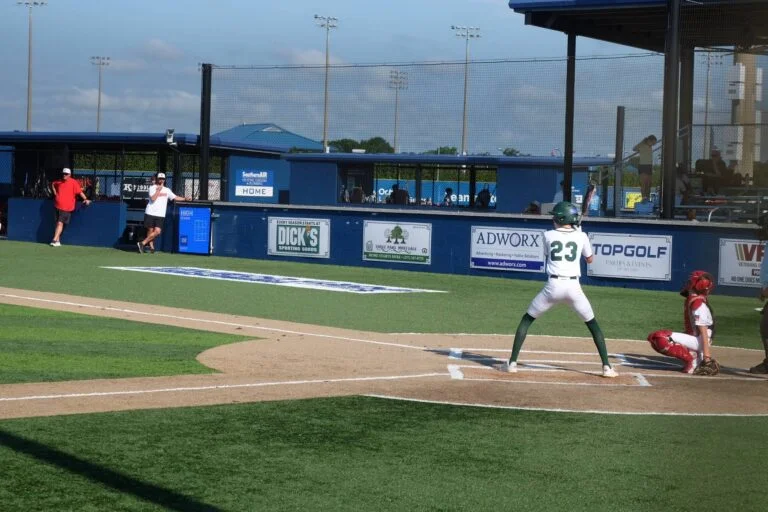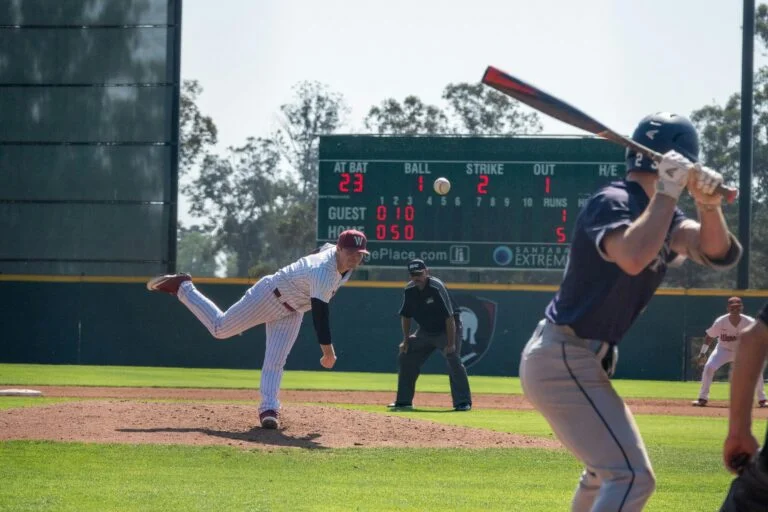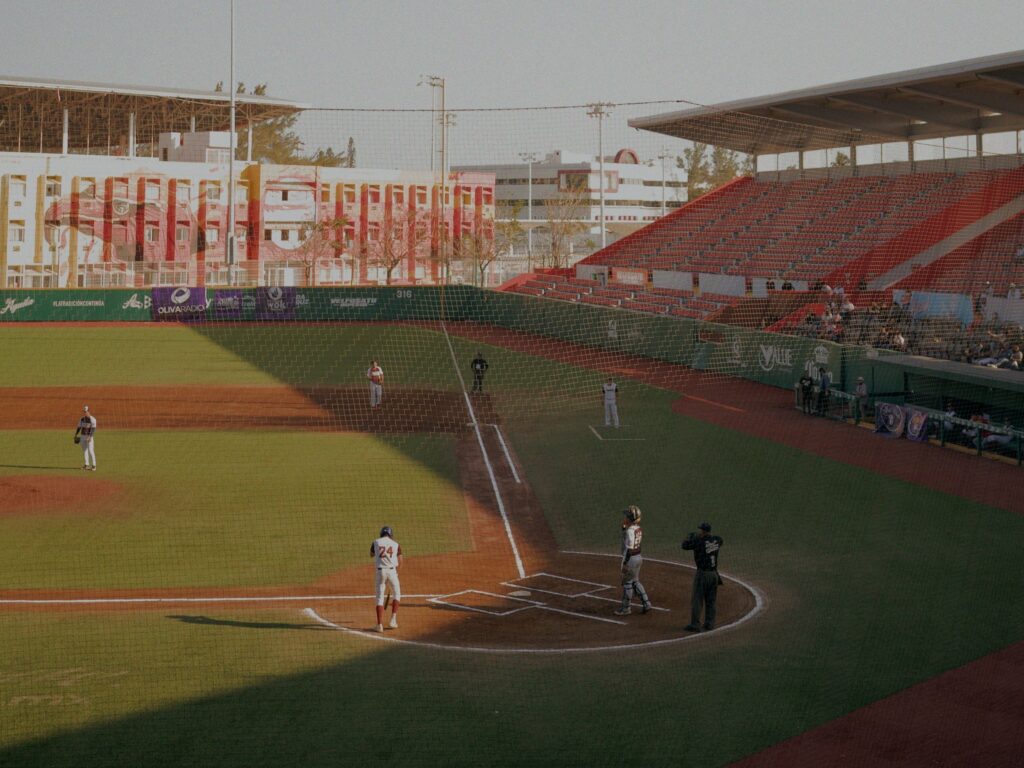
When considering SmartPark vs Trackman, you should understand that they both track baseball, but they were built to solve different problems. Trackman is the long-established ball-tracking standard in professional and college baseball, and it is expanding into umpire evaluation and, starting in 2027, ABS at the conference level. SmartPark is WIN Reality’s field system for running game day. It automates balls and strikes, runs the pace-of-play clock, supports scoring, and sends live data to a fan app, with bat and biomechanics data layered in.
If your first priority is ball-flight data for player development at the pro or top college level, start with Trackman. If your first priority is running every game on every field, start with SmartPark. The two are not mutually exclusive, because they were built for different jobs.
What You’re Really Deciding
It’s the bottom of the sixth in a one-run 14U game. A parent disputes a called strike, the volunteer scorekeeper lost the count two batters ago, and the next game on that field is already 20 minutes behind.
That is an operations problem, and it lands on whoever runs the field: athletic directors, facility owners, travel organization directors, and tournament operators. Coaches and parents feel it, but the buying decision usually sits with the person responsible for the schedule, the budget, and the officials.
So the useful question is not “which tracker is better?” It is “what do I need this system to do on game day?”
What Trackman Does Well
Trackman’s baseball line has two products: the B1, a portable practice unit, and V3 Game Tracking, its stadium system. Both use Trackman’s patented Optically Enhanced Radar Tracking (OERT). The B1 specs list dual synchronized radar systems plus high-speed optics, and the V3 specs list radar plus two 4K cameras. That makes Trackman a hybrid system, not radar alone.
Its installed base is the biggest in the sport. In an April 2026 conference announcement, Trackman reported that it is used by all 30 MLB teams and more than 385 colleges, and is embedded in more than 1,000 stadiums. The ACC reports that all 16 of its baseball programs use it.
Trackman has also moved beyond player development. The ACC, CAA, and American conferences use it to evaluate and train umpires, and several conferences use it to deliver in-game data to dugout tablets. In October 2026, the Sun Belt Conference announced that Trackman will power ABS in conference baseball in 2027.
What it costs: Trackman’s shop lists the B1 software subscription at $2,500 per year, a B1 fixed mount at $325, and a protection plate at $600. Colleges are asked to contact a sales rep before buying. B1 hardware and V3 pricing are not published, so you will need a quote.
What SmartPark Does Differently
SmartPark is built around the whole game rather than the ball alone. A fixed optical camera system watches every pitch and play, and the SmartPark field boards display Automatic Balls & Strikes, the Pace of Play Clock, and game scoring. WIN includes free on-site installation of the camera system.
Here is what a SmartPark field runs:
- ABS: built-in Automated Balls & Strikes, including the challenge model. See how the ABS challenge system works at a SmartPark.
- Game operations: the Pace of Play Clock, semi-automated scoring run by a scorekeeper, and event tagging.
- Fan and parent access: live game data in the WIN Gameday App and Fan In-Game App, plus an LED display at the field.
- Video: automatic, camera-based video capture and highlight generation.
- Connections: hand-off to WIN training tools, a recruiter portal, and event operator websites.
SmartPark reports 125+ live metrics in four categories: 35 Game Metrics, 88 Ball Metrics, 12 Bat Sensor Metrics, and 12 Biomechanic Metrics. Here is where the data comes from, because it affects setup:
- Ball and game metrics come from the fixed camera system.
- Bat sensor metrics come from Blast bat sensors. Per WIN’s quick-start guide, players attach a bat sensor and WIN manages programming and configuration remotely.
- Biomechanic metrics come from swing analysis through SwingAI.
WIN reports that its optical tracking measures pitch location to within 6 millimeters on ABS calls.
SmartPark pricing depends on your field configuration. Like Trackman’s hardware, the full price is quote-based.
Side by Side
| Trackman Baseball | WIN Reality SmartPark | |
|---|---|---|
| Core technology | Optically Enhanced Radar Tracking: dual radar plus high-speed optics (B1 portable, V3 stadium) | Fixed optical cameras, plus Blast bat sensors for swing data |
| Data captured | Pitch and batted-ball flight data, with pitch-synced video | 125+ live metrics: 35 game, 88 ball, 12 bat sensor, 12 biomechanic |
| Umpire and ABS support | Used by the ACC, CAA, American, and Sun Belt to evaluate umpires. Sun Belt ABS in baseball in 2027 | Built-in ABS on every SmartPark, including the challenge model |
| Game-day operations | In-game data to dugout tablets. No pace clock or scoring tools listed on Trackman’s baseball pages | Pace of Play Clock, semi-automated scoring, event tagging, LED field boards |
| Fan and parent experience | Team analytics through the Trackman app and portal. No fan-facing app listed | WIN Gameday App and Fan In-Game App |
| Video | Pitch-synced clips through the Trackman app, with external cameras supported | Automatic video capture and highlight generation |
| Integrations | Trackman app and Team Portal | WIN training tools, recruiter portal, event operator websites |
| Where it is used most | Pro and NCAA baseball, conference partnerships, and amateur showcases | Youth, travel, high school, college, and event operators |
| Published pricing | B1 software $2,500 per year, mount $325, protection plate $600. Hardware and V3 by quote | SmartPark pricing depends on your field configuration |
Based on each company’s published materials as of October 2026.
Questions to Ask Both Vendors
Because neither company publishes full system pricing, compare scope as well as price. Ask each vendor:
- What hardware is included, and what is billed separately?
- What does installation cost, and who does it?
- What are the annual software or licensing fees?
- Who operates the system on game day?
- How many fields does one license or contract cover?
- Which of these can it do: call balls and strikes, run a pace clock, score the game, show fans live data, capture video?
Takeaway: compare what each system does on game day before you compare quotes.
Which System Fits Which Program
- Pro and top college programs focused on player development and scouting: Trackman. It has the widest installed base, and its data is directly comparable across the pro and college programs that use it.
- Conferences focused on umpire evaluation and ABS: Trackman is an established partner in several conferences. SmartPark also runs ABS, and WIN says every SmartPark can run an ABS challenge to NCAA standards.
- Travel organizations, tournament operators, high school and junior college programs, and facilities: SmartPark. It is built for the full game-day workflow, including the clock, scoring, fan access, and officiating support, not only ball-flight data.
- Programs that need both ball-flight development data and game operations: evaluate both, since they were built for different jobs.
How SmartPark Runs on Game Day
Picture a Saturday tournament with six games on one field. Umpires work every pitch with Automatic Balls & Strikes. Scorekeepers run scoring through SmartPark Ops. Field operators keep the schedule moving with the Pace of Play Clock. Parents and players follow live game data in the apps.
For setup details, see the SmartPark System Overview.
After the Final Out
Game-day data does not have to stop at the scoreboard. SmartPark connects to WIN’s training tools, so a hitter who chases high fastballs on Saturday can take that data into TrainVR reps on Monday. For a broader look at how the connected field fits together, read What Is a Smart Baseball Field?
Frequently Asked Questions
How much does Trackman cost? Trackman lists B1 software at $2,500 per year, the B1 fixed mount at $325, and the protection plate at $600. Colleges buy through a sales rep. B1 hardware and V3 pricing are not published, so request a quote.
How much does SmartPark cost? SmartPark pricing depends on your field configuration. Like Trackman’s hardware, the full price is quote-based.
Can SmartPark replace Trackman? It depends on the job. If your main need is ball-flight data for bullpens and practice, look at Trackman’s B1. If your main need is running live games with ABS, a pace clock, scoring, and fan access, look at SmartPark.
Radar or camera: which is better? Trackman is itself a hybrid of radar and high-speed optics. MLB’s own tracking moved to optical cameras in 2020, while Trackman remains widely used for development and umpire evaluation. Both approaches are used at the highest levels. For more, see WIN’s guide to radar vs camera ball tracking.
Does SmartPark require bat sensors? Ball and game metrics come from the camera system alone. The 12 bat sensor metrics require Blast bat sensors that players attach to their bats.
Does Trackman offer ABS? Trackman has been used to evaluate umpires in several conferences, and the Sun Belt announced that Trackman will power ABS in conference baseball in 2027.
Does it work for softball? SmartPark supports both baseball and softball fields. Trackman also serves softball, including in-dugout tablets for Sun Belt softball in 2027.
Bring SmartPark to Your Field
Trackman is the established standard for ball-flight data at the pro and college level. SmartPark is built to run the full game on every field, from youth and travel to high school, junior college, and college. Ask about pricing for your field configuration and see everything included.