You have seen the 3-2 pitch that catches the corner to decide the game, and you have heard the dugout erupt when the call goes the wrong way. The ABS challenge system settles that argument with a measurement, not an opinion, and it now runs at every WIN Reality SmartPark. It tracks each pitch to under 6 millimeters and puts the answer on the LED board in seconds.
The Short Answer
A hitter, catcher, or pitcher signals a challenge on a ball or strike, the operator triggers the video board, the optical camera system measures exactly where the pitch crossed the plate against that batter’s zone, and the corrected call appears on the LED board almost instantly. Outcomes are measurements accurate to under 6 millimeters, not judgment calls.
Why This Matters Right Now
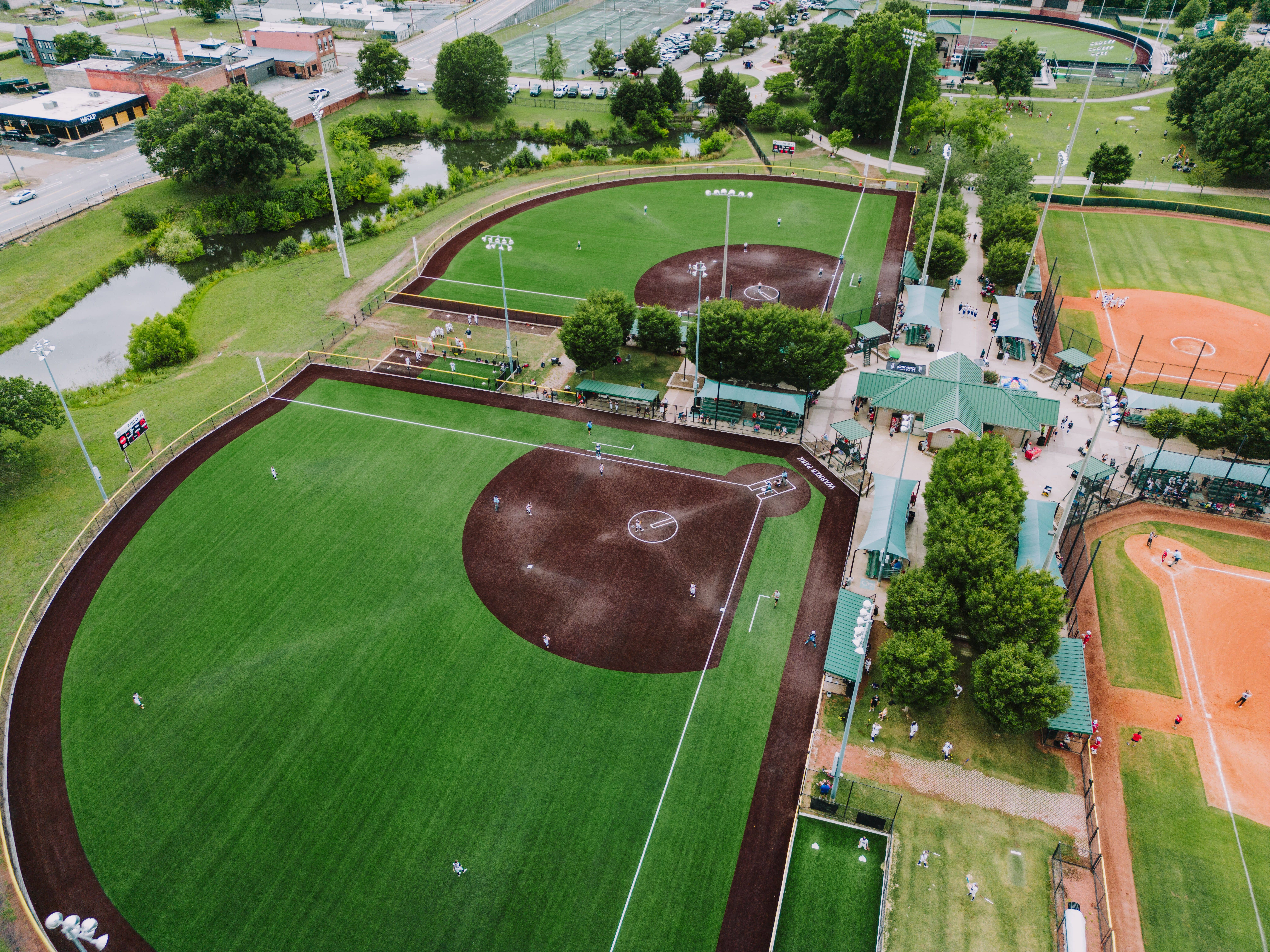
MLB adopted the ABS challenge system for the 2026 season, and the NCAA rules subcommittee approved it for college baseball beginning in 2027, with the SEC running a live test in its 2026 tournament. That means the standard your players will compete under at the next level is already set, so waiting until 2027 leaves your program a full year behind. Every WIN Reality SmartPark is equipped to run an ABS Challenge system that meets the standards for use in NCAA baseball competition today, and WIN Reality SmartParks are the exclusive partner of the NJCAA.
Give your athletes reps under the exact challenge format that pro and college fields now use.
The Problem Everyone Experiences
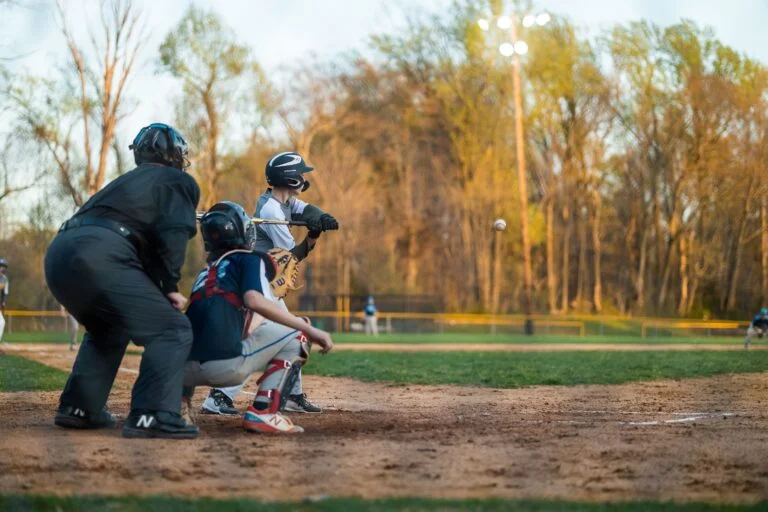
Picture a 12U championship with 2 outs in the last inning and a called strike three that the entire stadium disputes. MLB umpires miss an average of 10.88 close pitches per game, and every missed call at that moment costs a team the game.
Human umpires are an absolutely integral part of the game, but for decades, “ball or strike?” has had no definitive answer at the amateur level. That gap is exactly what a measured, on-field challenge closes.
How the ABS Challenge System Works
An ABS challenge at a SmartPark is a 4-step sequence that resolves in milliseconds:
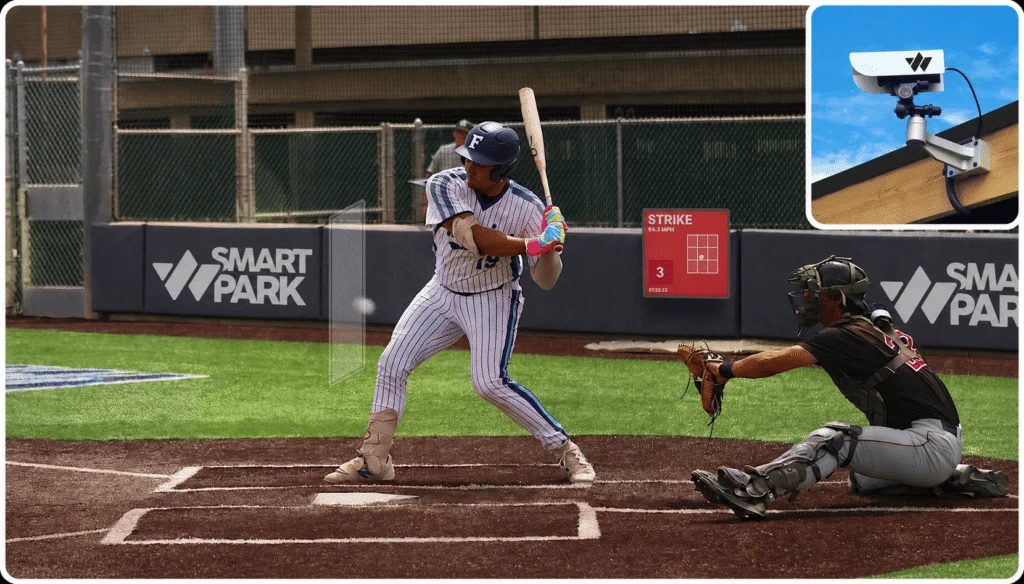
- Track the pitch. Fixed optical cameras and MLB-grade tracking technology measure each pitch’s location with 6mm precision as it crosses the plate – finer than a pencil width.
- Scale the zone to the hitter. The strike zone is dynamically adjusted in real time to the height of the hitter in the box. Event Operators can also control how much the dynamic strike zone should expand to support the play level of your athletes, ensuring every batter from youth to adult gets a perfect fit.
- Signal the challenge. Following standard pro rules, only the batter, catcher, or pitcher can challenge, and each team gets a limited number of challenges and keeps them on a successful challenge.
- Reveal the call. The event operator pushes one button, and the challenge replay is produced instantly on any pitch and displays natively on the LED Display with an animated reveal of the exact location plus the final ball or strike call.
In a standard strike zone, the top sits near 53.5% of batter height and the bottom near 27%. However, a lot of SmartParks use expanded zones to be flexible and help support all levels of play. One button in, a definitive call out.
Common Misconceptions
Three ideas trip people up before they see ABS run live:
- “It replaces the umpire.” It does not. The challenge system keeps your umpire calling every pitch and only reviews the pitches that get challenged, unlike a complete ABS setup that calls every pitch.
- “It cannot really be that accurate.” SmartPark has passed multiple ground truth accuracy assessments from the top professional and collegiate leagues – validating that each pitch is accurate to under 6 millimeters as it crosses the plate.
- “The zone is one size for everyone.” The zone is built from each hitter’s height in the box, so a 10-year-old and an 18-year-old get correctly scaled strike zones in the same game.
Seeing one animated replay on the LED board ends most of these debates on the spot.
What Changes in Practice
Run one weekend of games on ABS and 3 things shift immediately. Close calls that used to trigger a 2-minute argument now resolve with a single button press, so games keep moving on the SmartPark pace-of-play clock. Every challenged pitch gets a visual, verified answer that players, coaches, and the stands all see at once on the LED board.
Your field stops running on opinion and starts running on measurement.
Beyond ABS: The Full SmartPark Data Package
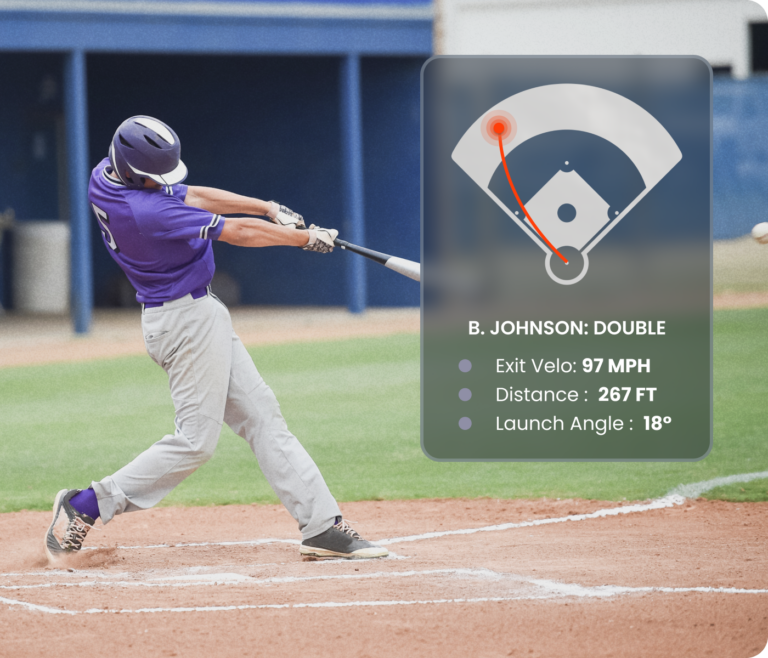
ABS is the visible tip of a much larger data engine. The same optical tracking software that powers challenges captures 125-plus live metrics across 4 categories at your field: 35 Game Metrics, 88 Ball Metrics, 12 Bat Sensor Metrics, and 12 Biomechanic Metrics.
That means one system covers your core game operations and your development data at once:
- Automate the game. Automatic Balls & Strikes, Pace of Play Clock, Game Scoring, and a Fan In-Game App run on the same hardware.
- Capture higher-fidelity data. Beyond ball-strike calls, the software tracks ball flight, bat tracking, and biomechanics on every swing.
- Connect your stack. SmartPark integrates with scoring systems and Playbook365 for rosters and schedules, supports live streaming through an open API, and hands off to WIN Training tools including SwingAI, BlastMotion, and TrainVR.
Start with a definitive strike call, and you finish with a full performance profile for every hitter who steps in the box. Get the full picture on the SmartPark system overview.
Frequently Asked Questions
Who can challenge a ball or strike?
How exactly you choose to enforce an ABS Challenge system is up to you. However, WIN recommends only the batter, catcher, or pitcher can challenge, matching standard pro rules. That keeps challenges fast and limits them to the players closest to the pitch.
How many challenges does each team get?
Each team gets a limited number of challenges and keeps a challenge when it wins one. WIN recommends 3 per team. That encourages interaction with the system, but discourages teams from burning challenges on every borderline call.
Is the strike zone the same for every hitter?
No. The zone is scaled to each hitter’s height in the box, with the top near 53.5% and the bottom near 27% of batter height across a 17-inch plate (same as pro regulations), so a youth player and an adult get correctly sized zones. Additionally, the strike zone is often expanded further to account for the play level of that game. For example, 13u games default to an additional baseball expansion on the sides and top of the zone. This is always instantly configurable by the event operator in SmartParkOps.com
How accurate is it really?
The system measures each pitch’s location to under 6 millimeters as it crosses the plate, finer than a pencil width. The result is a measurement, not a judgment call.
When can my program run ABS?
Today. Every WIN Reality SmartPark already runs an ABS Challenge operation that meets standards accepted for NCAA baseball competition, ahead of the NCAA’s 2027 start.
Ready to Settle the Argument
Put NCAA-standard, sub-6-millimeter pitch tracking and one-button LED replays on your field this season, and turn every disputed call into a measured answer on the SmartPark LED board.