You have 60 minutes, 14 hitters, and one cage. Half your lineup can barely square up a fastball, and two kids are terrified to swing. Most batting practice fails right here, at the gap between “reps taken” and “swings that transfer to Saturday’s game.”
This guide fixes that. You will learn how to build batting practice as a system, not a free-for-all: goal-driven rounds, tight rotations, game-like decisions, real feedback, and safe field layout. We will cover the exact structure for baseball and softball hitters ages 8 through college, plus how tools like WIN Reality’s TrainVR and SwingAI add reps and feedback without adding coaches.
The Short Answer
Run effective batting practice by setting one clear goal for the day, then rotating hitters through 3 to 4 stations in small groups of 3 to 4 players so no one stands around more than 90 seconds between reps.
Here is the operating system:
- Pick one goal: contact quality, timing, approach, pitch recognition, or pregame readiness.
- Build the rotation: tee, front toss, cage, live BP, and defense, with 6 to 12 quality swings per round.
- Time it tight: 5 to 7 minutes per station, then rotate on a whistle.
- Give feedback with limits: one cue per hitter, not a lecture after every swing.
- Finish competitive: end with a game-like round that forces real swing decisions.
Quality beats volume. A hitter who takes 40 focused, game-speed reps will out-develop one who takes 100 lazy swings off a tee. Below is how to build every piece.
How to Structure an Effective Batting Practice Session
Your last practice probably had one flaw: too many hitters waiting and one coach flipping balls to a line. Baseball Canada’s own coaching guide recommends running batting practice through multiple stations (tee work, soft toss, and live coach-pitch BP) precisely to eliminate that dead time. Here is the full flow, from setup to your final competitive round.
A. Start With the Goal of the Day
You cannot run a good BP session without knowing what “good” means today. Walking onto the field and saying “everybody hits” is how you burn 45 minutes and improve nothing.
Pick one primary goal per session:
- Contact quality: barrel accuracy, hard line drives, 70%+ solid contact off front toss.
- Timing: matching your load and stride to pitch speed, on-time at foot down.
- Approach: hitting your zone, laying off borderline pitches, hunting a location.
- Pitch recognition: reading spin and release out of the hand.
- Situational hitting: moving runners, 0-2 and 3-2 counts, opposite-field work.
- Pregame readiness: short, sharp, confidence-building reps 2 to 3 hours before first pitch.
Ground the goal in the Three Pillars of Good Hitting: Bat Speed, Bat-to-Ball, and Swing Decisions. A timing day trains Swing Decisions. A tee-and-toss contact day trains Bat-to-Ball. Name the pillar out loud so hitters know what they are working on.
Adjust by age. Youth hitters (8 to 12) need fundamentals and fearless swings. Middle school (13 to 14) can handle competition rounds. Advanced hitters (15 to college) need approach, film, and two-strike work, where league average drops to roughly .165 and cutting swing-and-miss can mean 15 to 20 more hits per season.
Write the goal on a whiteboard before the first hitter steps in. If you cannot name it in one sentence, you are not ready to run BP.
B. Build the Rotation: Tee, Toss, Cage, Field, and Live Looks
The rotation is where practice lives or dies. Your job is to keep every player working while only 1 or 2 hit at a time.
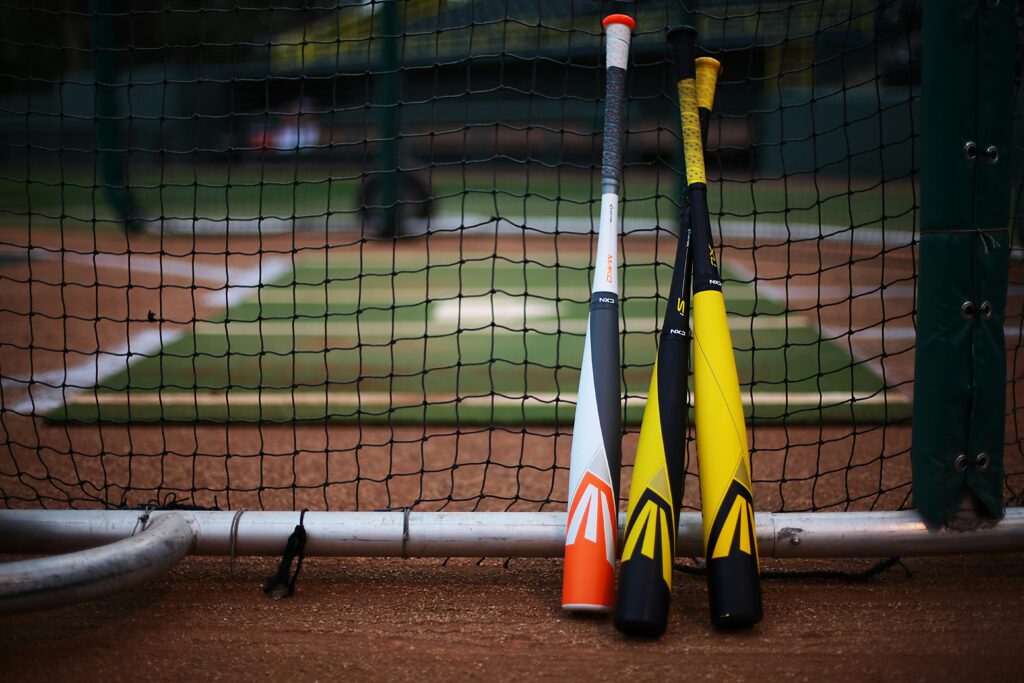
Set 4 stations for a 14- to 16-player roster, groups of 3 to 4:
- Station 1 – Tee work: 10 to 12 swings focused on the Swing Phase and barrel path. Cue casting hitters “short to it, long through it.”
- Station 2 – Front toss: 10 to 12 reps, protective screen at 12 to 15 feet, working contact quality and the forward move. Cue “land firm, turn behind your front hip.”
- Station 3 – Live BP or cage: 6 to 10 game-speed swings, tracking hard-contact rate.
- Station 4 – Defense and shagging: the group not hitting fields live off the bat, so BP doubles as read-and-react work.
Set station timing at 5 to 7 minutes, then rotate on a whistle. That keeps total BP under 30 minutes for the group and holds wait time between reps under 90 seconds.
Assign coach responsibilities before players arrive:
- One coach flips front toss and gives the single cue.
- One coach runs the tee station and tracks contact.
- Station 3 needs its own live arm or a machine. This is the one station you can’t run unstaffed, since someone has to deliver the pitch. If you’re down to one or two adults, run a machine at Station 3 instead of a live thrower so it can run itself between your check-ins, and rotate a coach through Station 4 only long enough to reset safety, not to supervise continuously.
- If you only have yourself, run tee and toss as self-serve stations and float, prioritizing your live attention on Station 3 since that’s the station with the highest injury risk and the most coaching value per rep.
Every player has a job on every round. A hitter, an on-deck loader, a shagger, a baserunner. Nobody watches and every station needs to be actually staffable with the coaches you actually have, not the coaches a perfect roster would have.
C. Keep BP Safe, Fast, and Game-Like
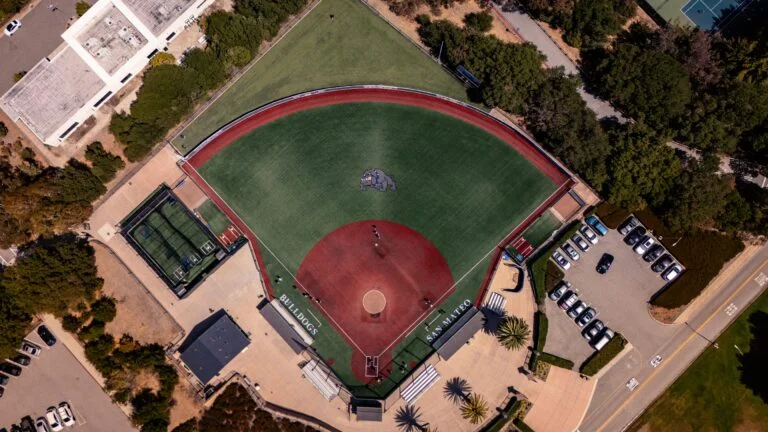
The scariest practice question is the honest one coaches ask on forums: how do you run two groups without someone getting hit by the other group? Layout solves it.
Lock these safety rules:
- Screens everywhere: an L-screen for the BP thrower and a screen protecting any player fielding within 60 feet of the plate.
- One bat zone: bats only come out at the hitting and on-deck stations, never at shagging or baserunning.
- Angle the stations: point tee and toss nets away from live hitters so no crossfire crosses the infield.
- Helmets on for every hitter and on-deck loader, no exceptions at any age.
Fight dead time with a ball flow system. Keep 2 buckets of 30-plus balls per station so no one stops to collect while a hitter is swinging.
For mixed-skill teams, split by need, not ego. Put fearful or contact-struggling hitters on tee and front toss where success rate climbs above 70%, then feed them into live looks once they are squaring balls up.
If you can run BP with one coach, screens set, and zero standing around, you have solved 90% of what breaks youth and travel practices.
Ready to add reps without adding coaches? WIN Reality’s VR and AI tools let every hitter train game-speed pitch recognition at home and get swing feedback between sessions, so your on-field time goes further.
Tools and Methods: Three Ways to Run Effective Batting Practice
No single method builds a hitter. The best coaches stack three, matching each to their facility, roster size, and the goal of the day. Here is how each one works and when to use it.
Method 1: Station-Based On-Field BP
This is your foundation, and it works with 1 field and 2 buckets. Station rotations like this are the backbone of nearly every efficient practice plan used at the youth through college level.
Run this circuit for a full-team session:
- Tee and front toss: 10 to 12 reps each, building the Load and Stride phases.
- Live BP: 6 to 10 swings against coach pitch or a machine at game velocity.
- Defense and shagging: the off-group fields live for read-and-react reps.
- Baserunning reads: 1 runner per round reacting off the bat.
- Competition round: end with a scored game, like 5 swings for most hard-hit balls.
Best for: full rosters, in-season maintenance, and situational work.
Station BP maxes out reps per player but caps out on game-speed recognition. That is where Method 2 comes in.
Method 2: Game-Like Pitch Recognition and Timing Work
Here is the truth coaches feel but rarely fix: it is hard to make your game swing resemble your tee or soft-toss swing. A tee never shows spin, release point, or velocity. That is the tee-to-game gap.
Close it by training pitch recognition and timing directly with TrainVR:
- 600+ virtual pitchers throwing game-speed reps, so hitters see real velocity and spin.
- Pitch Recognition and Release Point drills that train reading the ball out of the hand.
- Scenario workouts: breaking ball recognition, 3-2 counts, 0-2 approach, and 2-strike approach.
- Recognition Window and Disappearing Pitch drills that sharpen swing decisions.
This trains the Swing Decisions pillar that a tee cannot touch. Most slumps trace to timing, getting caught between pitches, or thinking mechanics in the box, not a lack of effort or a mental block that can’t be trained.
Best for: velocity prep, approach training, and hitters who “look great in the cage” but struggle at the plate.
Takeaway: Add 2 to 3 VR sessions per week and your hitters walk into live BP already on time.
Method 3: Feedback-Driven Swing Review
The fastest way to ruin BP is to coach every rep. Over-cueing freezes hitters. The fix is a simple feedback loop with hard limits.
Build it in three layers:
- Coach notes: one cue per hitter per round, tied to one swing flaw from the Big 13, like Sway, Casting, or Barrel Dump.
- Contact tracking: chart hard-hit rate so progress is measurable, not a feeling.
- AI swing review: upload video to SwingAI for instant biomechanic analysis across 12 dimensions and personalized cues.
SwingAI scores dimensions like Pelvis Load, Hip Shoulder Separation at Foot Down (X-Factor), and Forward Move, then hands the hitter a specific improvement plan.
Cap live coaching at one cue per swing and let AI carry the detailed breakdown after practice.
How WIN Reality Helps
Your biggest constraint is not knowledge. It is time and coaches. You get 3 to 4 practices a week, a handful of parent volunteers, and a roster with a 5-year skill spread. WIN Reality’s tools extend your reach into the 6 days between practices.
WIN Reality connects on-field work to at-home development into one system:
- TrainVR trains pitch recognition and timing at game speed, so hitters arrive at practice already prepared.
- SwingAI delivers AI swing analysis and progress tracking, so you get feedback visibility without filming every rep yourself.
- The Ultimate Hitter Pack bundles both tools for a complete development stack.
Key features your hitters get access to:
- 600+ virtual pitchers for game-speed VR reps at home.
- Pitch recognition and release-point training that closes the tee-to-game gap.
- Approach and swing-decision workouts covering 3-2, 0-2, and 2-strike scenarios.
- AI biomechanic analysis across 12 SwingAI dimensions with personalized cues.
- Unlimited swing analyses and progress tracking to measure development over weeks.
Final Coaching Takeaway
Effective batting practice is planned reps, game-like decisions, one clear cue at a time, safe rotations, and progress you can measure. Set the goal, run tight stations under 7 minutes, and finish competitive every time.
Ready to Run BP That Transfers to Game Day?
Give every hitter game-speed reps and real feedback between practices, and watch cage swings finally show up at the plate.