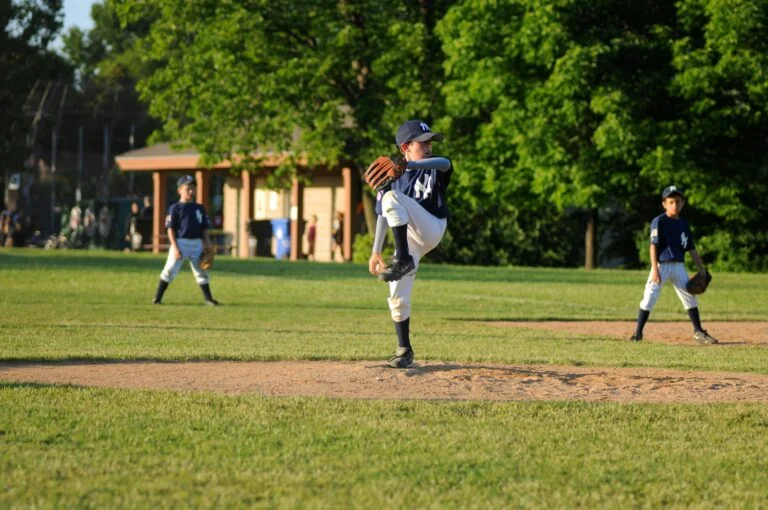
Your kid loves baseball. You want to help them get better without becoming the parent they dread riding home with. That tension is real, and it shows up everywhere from the cage to the car seat.
The fear is simple: push too hard and they quit by 13, push too little and they get passed by the families training year-round. Most parents on forums like r/Homeplate say the same thing in different words: “I don’t want to push so hard that they end up resenting the game.”
You don’t have to choose between development and joy. This guide gives you a parent-first framework to build skill, confidence, and a long-term love for baseball or softball, without piling on more travel, more pressure, or more total workload than a 10-year-old body and brain can absorb.
The Short Answer:
Support your youth baseball player by leading with encouragement, protecting rest, keeping practice short and focused, and letting their motivation drive the pace.
Here’s how that breaks down:
- Lead with encouragement, not correction. Praise effort, decisions, and improvement before you touch mechanics. Aim for a 5-to-1 ratio of encouragement to instruction.
- Protect rest and fun. Build in at least 1–2 full days off per week and 2–3 months off from any single sport per year to lower overuse and burnout risk.
- Keep the workload realistic. Track total swings, throws, and travel across rec, school, travel ball, and lessons, not just one team’s schedule.
- Train short and focused. Ten to fifteen minutes of quality reps beats 200 mindless swings. “More swings” does not equal “better swings.”
- Let the athlete lead motivation. Ask whether they still love it. If the drive comes from them, development sticks. If it comes only from you, burnout is coming.
Do those five things and you protect both the player and the relationship. Below is the framework to put them into practice.
A Parent Framework for Development Without Burnout
Picture a Sunday in July. Your hitter has played three games in 95-degree heat, faced 11 different pitchers, and still has a private lesson booked Monday. That’s the moment most parents add more. The better move is knowing when to add, when to hold, and when to pull back.
Use this simple decision model every week:
- Add support when your player is asking for more reps, recovering well, and still smiling at the field.
- Maintain when they’re steady, competing, and the schedule already fills 4–5 days.
- Pull back when you see mood changes, dread, fake injuries, or a flat response to the game they used to love.
The framework only works if you read the right signals. The next three sections give you the cues, the workload math, and the input choices.
A. Watch for the Difference Between Support and Pressure
Support feels like a tailwind. Pressure feels like a spotlight. The same sentence can be either one depending on timing and tone.
The car ride home is where most parents cross the line without knowing it. A study-backed rule from youth coaches: the most powerful phrase you can say after a game is “I love watching you play,” full stop. No mechanics, no “you should have,” no box-score breakdown.
Watch for these warning signs that support has tipped into pressure:
- Your hitter stops bringing up baseball on their own for a week or more.
- They get quiet or defensive in the car after games.
- They tie their worth to going 0-for-3 instead of to effort and competing.
- They flinch when you mention extra reps, lessons, or the next tournament.
One longtime travel-ball dad warned that “kids will do almost anything a parent asks of them to make them happy,” which means silence is not the same as buy-in. Protect their identity beyond the box score. A 12-year-old should be a kid, a sibling, a student, and a teammate, not just a hitter you’re trying to fix.
Your move this week: Be a fan in the stands and a parent in the car. Save the coaching for practice, where 10 focused minutes does more than an hour of postgame critique.
B. Balance Skill Growth With Rest, Fun, and Family Life
A 10-year-old throwing for three teams isn’t developing faster. He’s accumulating mileage. The body and the brain both need recovery to turn reps into real gains.
Total workload is the number that matters, and most parents only count one team. Add it all up across rec, school ball, travel, private lessons, cages, and at-home work. That full picture is what drives both growth and burnout.
Use these guardrails to keep the load sustainable:
- Rest days: At least 1–2 complete days off per week, no throwing or swinging.
- Time off per year: 2–3 months away from baseball/softball specifically, per AAP overtraining guidance, to cut overuse injury risk.
- Pitch counts: Follow MLB Pitch Smart limits and required rest days by age, tracked across every team your kid throws for.
- Sleep: 9–11 hours a night for ages 8–13. Recovery is a training input, not a luxury.
One parent on r/Homeplate named hotel-circuit travel as the single biggest cause of family burnout. Protect dinner, homework, and downtime with siblings. A kid who feels like their whole house revolves around their batting average carries that weight to the plate.
Your move this week: Map every baseball commitment on one calendar, then block two recovery days you won’t move.
C. Choose Development Inputs That Match Your Child and Your Family
Not every development path fits every kid or every budget. Here’s how the main options compare for youth players ages 8–14:
- Travel ball: High game-speed reps and exposure, but the highest cost in money, travel, and weekend fatigue. Best when your kid is internally driven and recovering well.
- Private lessons: Targeted mechanical work, usually $60–$100+ per session. Strong for fixing specific flaws, limited for game-speed decision-making.
- At-home reps: Free or low-cost, fully flexible, and the easiest to keep short and low-pressure. Quality depends on structure.
- Tech-enabled training (VR and AI): Game-speed pitch recognition and instant swing feedback at home, no driving required. Built for short, measurable sessions.
The parents who feel they’re “not doing enough” usually compare their family to the most extreme one in the dugout. You don’t need every input. You need the two or three that match your kid’s drive, your budget, and your weekly time.
Your move this week: Pick one primary path and one supplement, then drop anything that’s there only because another family is doing it.
Low-Pressure Baseball and Softball Training at Home
Want to add reps without adding miles? WIN Reality lets your hitter take game-speed at-bats and track real progress in short 10–15 minute sessions at home, no tournament travel required. It’s the kind of focused, measurable training that builds confidence without the burnout.
Practical Ways to Support Youth Baseball Player Development Without Overtraining
A parent emailed asking how to help her daughter “without becoming her coach.” The answer is structure, not volume. These three methods give you repeatable tools for communication, focused reps, and honest progress tracking.
Method 1: The 10-Minute Check-In
Most parents talk at their players. The skill is listening first, then advising only if asked. Use these prompts at three key moments:
- Before a game: “What’s one thing you want to compete at today?” Keep it about effort, not results.
- After a game: “What was the most fun part?” Let them lead. Save mechanics for practice.
- End of season: “Do you still love this, and do you want to keep going?” One travel-ball family did exactly this every summer to check for burnout before re-committing.
Your move this week: Run one after-game check-in and resist every urge to coach. Listening is the rep here.
Method 2: The Short-Reps Practice Plan
Two hundred tee swings doesn’t build a better hitter. It builds fatigue and bad habits. The brain learns mechanics best in short, focused blocks with rest between. Build sessions around quality, not count:
- 15 minutes, 3–4 days a week beats one marathon weekend cage session.
- 3 sets of 8–10 intentional swings with a reset between sets, instead of nonstop hacking.
- One focus per session. Cue “Land firm, turn behind your front hip” rather than fixing five things at once.
- Add pitch recognition, not just swings. Hitting is 90% mental, and decisions win at-bats.
Your move this week: Replace one long cage trip with three 15-minute focused sessions and watch effort go up.
Method 3: The Progress-Not-Comparison Tracker
Sideline anxiety comes from comparing your kid to the player two lockers down. Track your own hitter against your own hitter, and the panic fades. Skip the rankings and track these five things on your phone each week:
- Confidence: Did they step in the box ready to compete? (1–5)
- Effort: Did they run it out and stay engaged? (1–5)
- Swing decisions: Did they swing at strikes and lay off chase pitches?
- Contact quality: Hard contact and barrels, not just hits.
- Enjoyment: Did they still love it this week? (1–5)
As one parent put it on r/Homeplate, chasing rankings below 13 is “worthless.” Let trends, not single games, guide your conversations.
Your move this week: Log all five numbers once and use the trend over four weeks, not a single bad game, to make decisions.
How WIN Reality Helps: Support Development Without Adding More Mileage
A parent’s hardest math is fitting real development into a week already full of school, homework, and practices. WIN Reality brings game-speed reps and pro-level feedback into your living room, so growth doesn’t require another tank of gas.
TrainVR — game-speed at-bats at home
- 600+ virtual pitchers deliver realistic, game-speed reps on a Meta Quest headset.
- Drills target the mental game: Pitch Recognition, Release Point, Disappearing Pitch, and Recognition Window.
- Scenario workouts train real situations like 0–2 and 3–2 counts, 2-strike approach, and opposite-field power.
- Multi-week Training Tracks keep sessions short and structured, ideal for 10–15 minute reps.
League batting average drops to roughly .165 with two strikes. Cutting swing-and-miss can mean 15–20 more hits across a season, and that confidence boost matters for any youth or softball hitter.
SwingAI — instant swing feedback
- Upload a swing video and get instant AI analysis across 12 biomechanical dimensions.
- Scores cover the swing from Negative Move and Pelvis Load through Hip Shoulder Separation at Contact.
- You get personalized cues, an improvement plan, and unlimited analyses with progress tracking.
Instead of guessing whether your hitter is Drifting or Casting, you get a named focus and a cue like “Short to it, long through it.” That turns vague sideline worry into one clear thing to work on.
The Ultimate Hitter Pack bundles TrainVR and SwingAI with the WIN bat attachment, so your hitter trains decisions and mechanics together. It fits youth baseball and softball players ages 8 and up, without adding a single mile of travel.
Your move this week: Pick the product that matches your biggest gap, pitch recognition or swing mechanics, and start with three short sessions.
Build Skills Without Burning Out
You can help your hitter get better and still keep the game fun. Short reps, honest check-ins, real rest, and progress over comparison protect both the player and the relationship. Add game-speed training at home with WIN Reality and you build skill and confidence on your family’s schedule, not the tournament circuit’s.