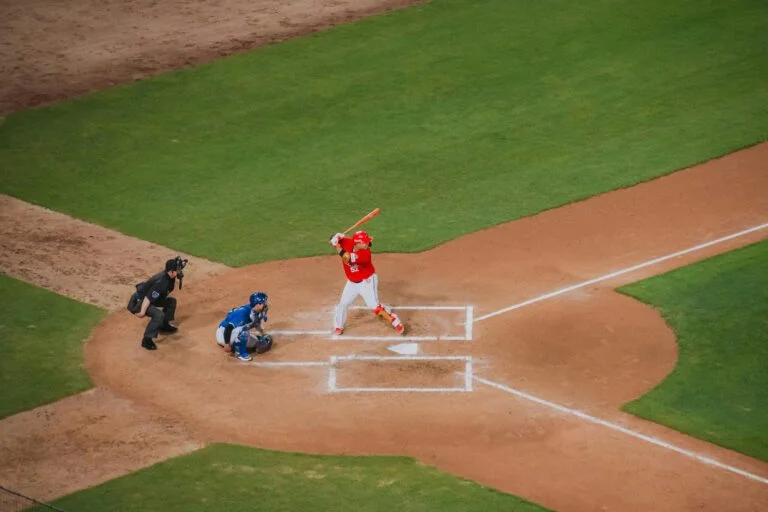
You have 14 hitters, one field, and 75 minutes. Half your roster is either popping up to the left side or rolling over to first base, and you can only stand behind the cage for one kid at a time. That is exactly where AI swing analysis for youth baseball coaches starts to earn its spot in practice.
This guide tells you how you can use SwingAI to film your whole roster, read the feedback, pick one focus per hitter, and run a better practice, all without turning your kids into swing robots. You coach. The tool checks your work.
How does the training loop work?
Youth coaches should film 3 to 5 swings per hitter, run them through SwingAI, and pick exactly one priority per player before assigning a drill and retesting in 2 to 3 weeks.
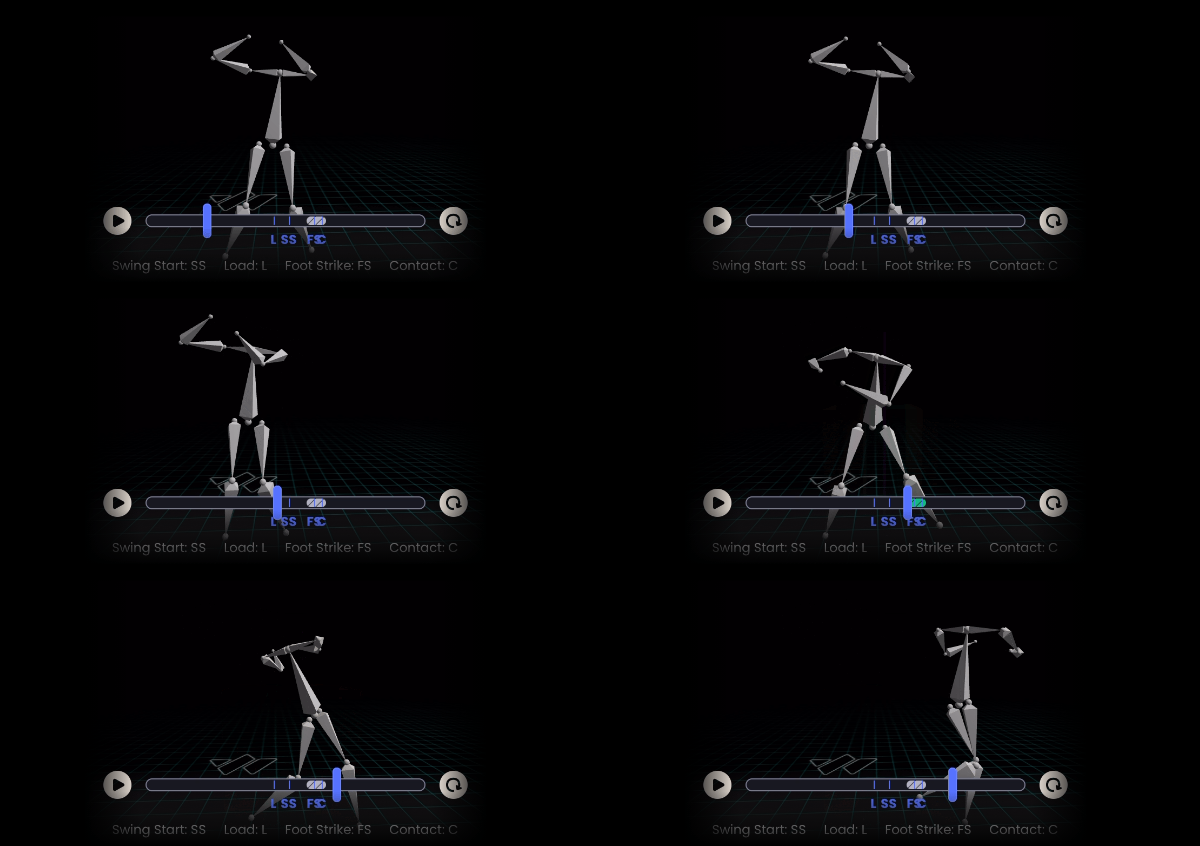
That’s the whole loop. SwingAI scores 12 biomechanical dimensions across the swing, so you get objective feedback that fact-checks your eye instead of replacing it.
The mistake most coaches make is dumping every AI note on a 10-year-old at once. At the youth level (ages 8 to 12), one clear cue beats five mechanical corrections every time. Your job is to filter the report down to the single change that unlocks the most for that hitter, then protect their confidence while they work on it. Everything below breaks that loop into a practice-ready system you can run this week.
A Simple SwingAI Workflow for Youth Baseball Coaches
The best youth workflow fits inside a normal 60 to 90 minute practice without stealing reps from the rest of the team. You are not running a lab. You are grabbing clean video, reading it later, and coming back with one focus per hitter.
A. Record Swings Without Taking Over Practice
Set up one filming station and rotate hitters through it while the rest of the team works other stations. You want 3 to 5 quality swings per hitter, which takes about 90 seconds each. With 10 to 14 hitters, budget 20 to 25 minutes of a single station’s time.
Capture priorities, in order:
- Tee swings first for a clean mechanical baseline with no timing variable
- Front toss next to see how mechanics hold up with a moving ball
- Live BP to check the swing at closer to game speed
- Game swings when you can (film one inning per week from behind the plate or the dugout angle)
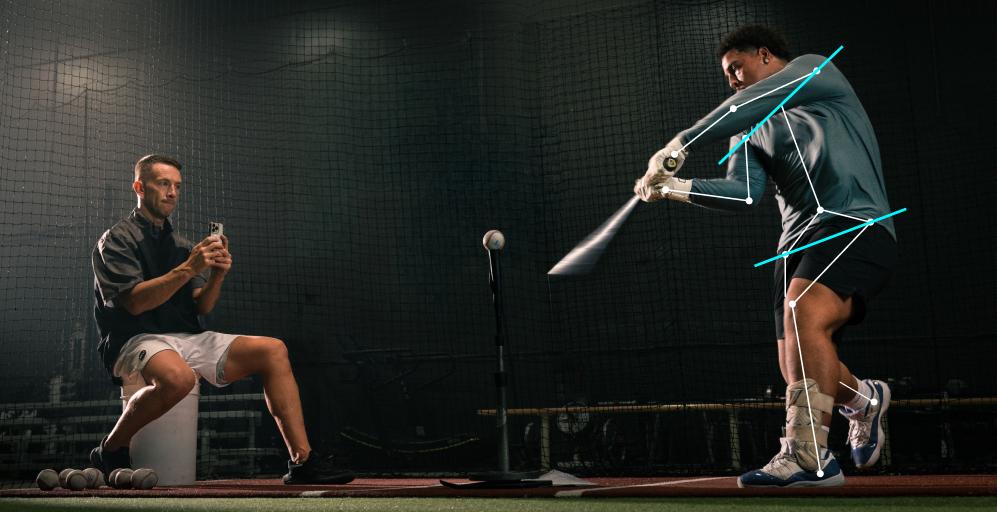
Follow the same filming basics every time so your video is usable: shoot from the side at about waist height, keep the phone stable, and get the full body in frame. Consistent angles let SwingAI read the swing the same way each session, so your before-and-after comparisons actually mean something.
Do not narrate corrections at the station. Film, thank the kid, send them to the next drill. You will do the coaching later, once the data tells you where to look.
B. Turn AI Feedback Into One Cue Per Hitter
Here is where coaches overcoach. SwingAI will grade 12 dimensions, and it is tempting to fix all of them. Resist that.
SwingAI reads the swing across four phases (Load, Stride, Power Move, Contact and Follow-Through) and scores dimensions like Negative Move, Pelvis Load, Hip Shoulder Separation at Foot Down, Forward Move, and Pelvis Direction at Contact. Read the report, then ask one question: what is the earliest breakdown in the kinetic chain? Fix the first domino, not the fifth.
Work the sequence in order (Pelvis to Torso to Arms to Hands to Bat), because an early fault upstream usually causes the mess downstream. A few common youth flaws from the Big 13 and the one cue that matches:
- Drifting or a weak Forward Move: “Land firm, turn behind your front hip”
- Casting (bat leaking away from the body): “Short to it, long through it”
- Poor Pelvis Load: “Back pocket down the line”
Pick one cue. Say it in kid language, not biomechanics language. A 9-year-old cannot process “increase your hip-shoulder separation at foot down,” but they can absolutely feel “turn behind your front hip.”
Then match that cue to one drill you already run:
- Casting: Stop at Contact Drill
- Load and separation: Torque Drill or Shoulder Slot Drill
- Forward move and firm front side: Walk Through Drill or Dead Legs Drill
One cue, one drill, one hitter. That is the entire coaching intervention for the next two weeks.
C. Retest, Track, and Communicate Progress
Do not refilm every practice. Retesting every rep turns baseball into a data session and kills the fun. Refilm the same hitter every 2 to 3 weeks so the drill has time to stick.
When you retest, compare the same dimension you targeted, on the same swing type (tee vs. tee). SwingAI’s progress tracking stores every analysis, so you can see the specific number move instead of guessing whether the change worked.
Keep parent updates simple and confidence-first:
- Share the focus (“we’re working on his forward move”), not a raw swing score
- Report effort and one measurable win (“firmer front side on 4 of 5 swings”)
- Never let “my kid’s swing score” become the conversation
Progress the youth hitter can feel plus a parent who understands the plan equals a player who keeps swinging free.
Ready to run this loop without adding hours to your week?
Three Ways Youth Baseball Coaches Can Use AI Swing Analysis
Not every team has the same time, roster size, or age group. Pick the method that fits your week.
Method 1: Roster Triage Method
You cannot give 14 hitters equal attention, so stop trying. After you film and review, sort your roster into three buckets:
- Immediate help (2 to 4 players): a clear early-chain fault hurting contact right now
- Maintenance (5 to 8 players): solid swing, needs reps and one small tune-up
- Leave alone for now (2 to 4 players): it works, they are confident, do not touch it
Spend 70% of your coaching attention on the immediate-help group over the next 3 weeks. Use SwingAI’s objective feedback to confirm your gut on who belongs where, especially the “leave alone” kids you might be tempted to tinker with. Triage keeps your energy on the hitters where one change creates the biggest jump.
Method 2: One Cue, One Drill Method
This is the youth-purest version of the workflow. Every hitter gets exactly one AI-identified priority, one cue, and one matching drill, and nothing else changes until you retest.
Run it like this:
- Pull the earliest fault in the kinetic chain from the SwingAI report
- Translate it to one cue from the library (“Back pocket down the line,” “Short to it, long through it”)
- Assign one drill (Torque Drill, Stop at Contact Drill, Walk Through Drill)
- Give it 30 to 50 focused reps per practice for 2 to 3 weeks
One change at a time respects how kids actually learn. Master one, then stack the next.
Method 3: Game Swing vs. Practice Swing Method
Youth hitters often look great on the tee and lost in the box. That gap tells you the problem is not always mechanics. Film both a tee/BP set and an at-bat, then run each through SwingAI.
Read the split:
- Same swing in both, poor mechanics: it is a real mechanical fix, use Method 2
- Clean in practice, breaks down in games: it is timing, pitch recognition, or confidence, not mechanics
A kid thinking about mechanics in the box will freeze. The swing itself isn’t the problem, the decision-making under pressure is. If the game swing falls apart on decisions and timing, the answer is game-speed reps and pitch recognition, which is exactly what VR training is built to deliver against 600+ virtual pitchers.
How WIN Reality Helps
Most coaches on forums like r/Homeplate ask the same thing: is there an objective tool to fact-check the feedback I already give my hitters? That is precisely the lane SwingAI fills for youth coaches.
SwingAI
SwingAI is the AI coaching tool that turns your phone video into a real swing breakdown. Upload a swing, get instant biomechanic analysis, then get personalized cues and an improvement plan you can actually coach from. It is built to support your instruction, not overrule your relationship with the player.
Specific features worth highlighting:
- AI swing analysis across 12 biomechanical dimensions, from Negative Move and Pelvis Load through Pelvis Direction at Contact
- Actionable, personalized cues tied to the fault, so you are not left translating raw data alone
- Unlimited analyses so filming 14 hitters costs you nothing per swing
- Progress tracking that stores every analysis for clean 2 to 3 week retests
- Video review you can revisit after practice on your own schedule
For teams that want to close the game-swing gap, the Ultimate Hitter Pack bundles SwingAI with TrainVR at a significant discount on first-year pricing.
Explore More
Coach Judgement and AI Guardrails
AI is your assistant, not your replacement. Keep feedback to one cue per hitter, keep the language age-appropriate for 8 to 12 year olds, and protect confidence over correctness. If a kid is raking and happy, let the swing breathe.
Use SwingAI to confirm what you see and simplify what you say. Then get back to coaching the player.