Your hitter squares up the machine in the cage but gets beat by real velocity in the game. That gap almost always traces back to one number people misunderstand: bat speed. Bat speed is how fast the barrel is moving through the hitting zone, and it drives power, but only when it actually plays against live pitching.
Bat speed is the speed of the barrel (the sweet spot of the bat) as it moves through the hitting zone, measured in miles per hour at or near the point of contact. Statcast bat tracking measures an individual swing’s speed at the point six inches from the head of the bat, what is commonly called the sweet spot.
Here is why it matters. A “fast” swing is defined as the bat head moving over 75 mph, chosen because 75 mph is the point at which balls hit into play begin to have better than average outcomes, per Statcast bat tracking definitions.
Faster barrel speed raises your ceiling for exit velocity, distance, and hard contact. But raw speed alone does not win at-bats. You still have to be on time, read the pitch, and hit the ball on the sweet spot. That is the difference between a big cage number and a productive hitter, and it is the whole point of this guide.
What Bat Speed Means and Why It Matters
Bat speed is one of the three things every hitter is trying to build. At WIN Reality we call them the Three Pillars of Good Hitting: Bat Speed, Bat-to-Ball, and Swing Decisions. Speed without the other two just produces loud outs and long strikeouts.
Where does bat speed come from? Not the arms. It is built through your kinetic chain, the sequence that moves energy up from the ground: Pelvis, then Torso, then Arms, then Hands, then Bat. Break that order or leak energy at any link, and the barrel shows up slow and late.
A. Bat Speed vs. Swing Speed, Hand Speed, and Exit Velocity
These four terms get mixed up constantly, and it leads to confusing readings. Here is the clean breakdown:
- Bat speed: how fast the barrel/sweet spot is moving, measured near contact. Since different parts of a bat can move at different speeds, an individual swing’s speed is measured at the sweet spot about six inches from the head, per Statcast bat tracking.
- Hand speed: how fast your hands move, measured at the handle, not the barrel. Fast hands do not automatically mean a fast barrel.
- Swing speed: a looser term people use for the overall swing, often blurring hands and barrel together.
- Exit velocity: the result, how fast the ball leaves the bat after contact.
The takeaway: bat speed is the input, exit velocity is the output. Track the barrel, not the handle, and don’t treat any of these numbers as the same measurement.
B. Why Bat Speed Matters for Power and Timing
More barrel speed gives you more margin. It raises your exit velocity ceiling and lets you get to velocity you couldn’t handle before. The relationship is close to linear: for every one mph of bat speed added, you will be able to hit the ball approximately 1.2 mph harder. [NEEDS VERIFICATION: confirm this specific figure is stated in the cited Driveline source at drivelinebaseball.com/2021/08/hit-the-ball-harder-how-to-increase-your-bat-speed/ before publishing.]
That carries real distance. Every 1 mph increase in bat speed translates to an additional 4 to 7 feet of carry distance on perfectly hit balls, which can turn warning track outs into doubles or home runs. [NEEDS VERIFICATION: confirm this specific range is stated in the cited Driveline source at drivelinebaseball.com/2025/02/the-complete-guide-to-driveline-bat-speed-trainers/ before publishing.]
Speed also buys time. A quicker, more efficient barrel lets you start your swing later, which means you can wait longer on the pitch and still get the barrel there against a good fastball. That is why bat speed and timing are trained together, not separately.
C. Usable Bat Speed vs. Raw Bat Speed
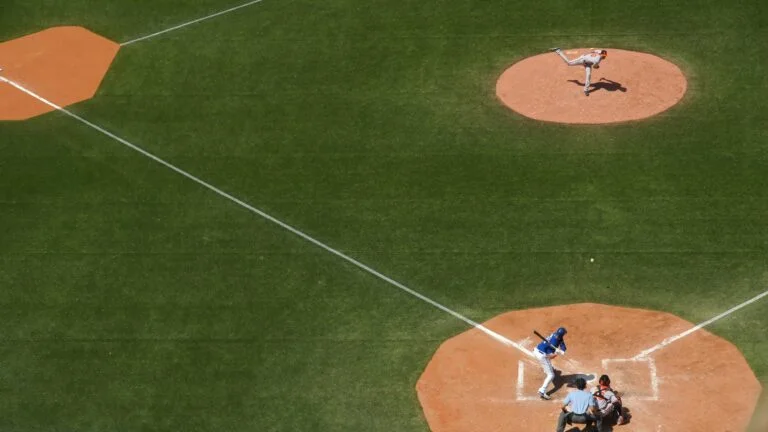
Here is the reframe most bat speed articles skip. Raw bat speed is your number on a tee with no pitcher and no decision. Usable bat speed is how much of that number survives against a real pitch you have to recognize, time, and barrel up.
A hitter can post 70 mph in the cage and swing 60 in the game because they are late, guessing, or thinking about mechanics in the box. Even Driveline’s own data shows swing intensity has a sweet spot: batters perform best when bat speed is between 90 and 95% of their max-effort swing, and they struggle when bat speed is below 85% of their max-effort swing. [NEEDS VERIFICATION: confirm these exact percentages are stated in the cited Driveline source at drivelinebaseball.com/2019/05/debunking-bat-speed-myths/ before publishing.] If you are late or fooled, you fall out of that window without ever changing your physical ability.
Usable bat speed is built on all Three Pillars working together:
- Pitch recognition: if you read pitch type and location early, you commit on time.
- Timing: start your move so the barrel peaks in the zone, not before or after it.
- Barrel accuracy (bat-to-ball): speed only converts to exit velocity on the sweet spot.
- Swing decisions: the fastest barrel in the world is wasted on a pitch you should have taken.
This matters even more with two strikes, where league average drops to around .165. Cutting your swing-and-miss can be worth 15 to 20 more hits per season. That is usable bat speed doing its job.
Ready to turn your cage speed into game speed?
Tools and Methods: How to Measure and Improve Bat Speed
Most hitters chase a bigger number before they know how to measure it correctly. Get the measurement right first, then train the right thing. Here is how to do both.
Method 1: Bat Sensors and Swing-Tracking Devices
Bat sensors like Blast Motion attach to the knob and read barrel speed swing by swing. They are the most accessible way for a hitter, parent, or coach to track bat speed at home or in the cage.
But sensor numbers only mean something when your setup is consistent. If a hitter’s average “drops” 10 mph overnight, it is usually the test that changed, not the swing. Control these variables:
- Same bat and same sensor placement every session.
- Same environment (tee, front toss, or machine), not a mix.
- A real sample size, not one hero swing.
- Track your average and your trend, not just your one-time max.
A rising average over weeks is progress. A single 72 mph swing followed by a bunch of 58s is not. Log the average and watch the line move.
Method 2: Tee, Front Toss, and Live-Pitch Testing
This is where confusion starts. Bat speed off a tee, off front toss, off a machine, and against live pitching are not interchangeable numbers, and comparing them is how good hitters convince themselves they got slower.
Why the readings differ:
- Tee: no timing demand, so it often produces a hitter’s cleanest, highest number.
- Front toss: adds light timing but at low velocity and a friendly angle.
- Machine: consistent velocity, but no windup or release read, so recognition is easy.
- Live pitching: full timing and recognition load, where usable bat speed shows up.
Statcast measures the real thing. The fastest 90% of a player’s swings, plus any 60+ mph swings resulting in an exit velocity of 90+ mph, are deemed to be his “competitive” swings, and the average of these is his seasonal average, per the Statcast bat tracking leaderboard. Test in one context at a time, and never stack a tee number against a live-pitch number and call it a decline.
Method 3: Drills, Strength Work, and Bat Fit
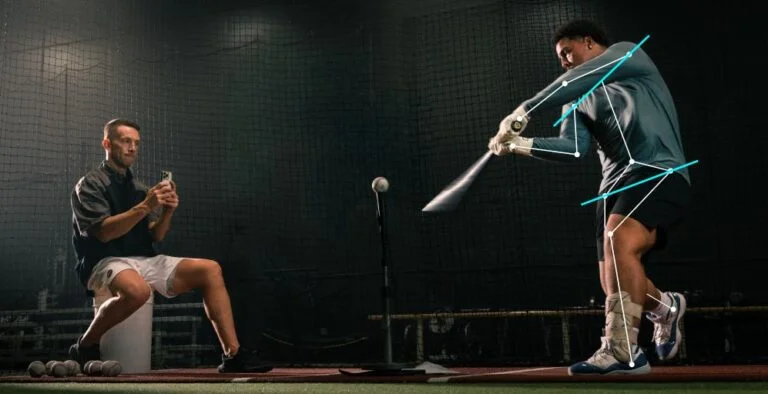
Once you are measuring cleanly, build speed at the source. In our knowledge base, low bat speed most often comes from weak hip-shoulder separation, not weak arms. Match the drill to the flaw:
- Low bat speed from insufficient hip-shoulder separation: the Torque Drill plus the Knob to Knee Drill to build and store separation through the load and stride.
- General separation issues: the Shoulder Slot Drill, matched to the specific dimension SwingAI flags.
- Casting or the barrel leaking away from your body: the Stop at Contact Drill, cued with “short to it, long through it.”
Layer in rotational power and sequencing work (medicine-ball rotational throws, controlled overload/underload swings) so energy moves cleanly from pelvis to torso to hands.
Then check bat fit, because the wrong weight kills speed fast. Increasing bat weight by just one ounce can decrease peak bat speed by approximately 1 to 2 mph for a given player. [NEEDS VERIFICATION: confirm this specific quantified claim is stated in the cited source at proplayerteam.com/blogs/resources/data-driven-guide-to-baseball-bat-performance before publishing.] Chase speed only until it starts costing you contact. A slightly lighter bat you barrel up beats a heavier bat you can’t get to the zone on time.
How WIN Reality Helps
The hardest part of bat speed is not building it in the cage. It is keeping it against a pitcher who is trying to disrupt your timing. That is exactly the gap WIN Reality is built to close, across every product in the lineup.
Built for every hitter chasing usable bat speed
WIN Reality’s ecosystem is designed to help hitters at every level turn raw barrel speed into better timing, sharper swing decisions, and more confident at-bats. Whether you train at home, on the road, or between team practices, the tools work together so your cage gains actually show up in the box.
The features that make it work
- TrainVR puts you in a Meta Quest hitting simulator with 600+ virtual pitchers for game-speed reps at home. You get pitch recognition and timing reps through drills like Pitch Recognition, Release Point, and Recognition Window, plus scenario workouts like breaking ball recognition, 0-2 approach, and 2-strike approach.
- SwingAI lets you upload a swing video for instant AI biomechanic analysis across 12 dimensions, including Max Hip Shoulder Separation, Pelvis Total Rotation Range, and Hip Shoulder Separation at Contact, then hands you personalized cues and an improvement plan with unlimited analyses.
Together they cover both sides of the equation: SwingAI diagnoses why your barrel is slow, and TrainVR trains the recognition and timing that turn that speed into real-game contact. That feedback loop is what most bat speed programs miss.
Want the full setup? The Ultimate Hitter Pack bundles TrainVR, SwingAI, and the WIN bat attachment, often with a significant first-year discount when you add hardware. Explore TrainVR and SwingAI to see how each fits your routine.
Keep going: related WIN Reality guides
Use these to go deeper once you understand the definition:
- Want to know if your number is “good”? Check the benchmarks in Bat Speed by Age, broken down for youth, middle school, high school, and up.
- Ready for the full training plan? Read How to Increase Bat Speed for drills, strength work, and sequencing.
- Want the bigger mechanical picture? Start with What Makes a Good Baseball Swing.
For the pro-level definitions and live MLB data, the public Statcast bat tracking leaderboard shows exactly how the metric is measured at the highest level.
Bat speed only counts when it plays in games. Train the barrel, the timing, and the read together, then go take those reps against 600+ pitchers.