You’re ready to put in the work. You’ve got a bat, a cage, and a phone. The question is: which baseball training app actually helps you get better, and which one just gives you data you don’t know what to do with?
This guide is built for hitters, parents, high school players, private instructors, and team coaches who want one clear answer for each training goal. The “best” app depends entirely on what you’re trying to train, what hardware you’re willing to buy, and whether the feedback you get actually tells you what to do next. We ranked every major app in 2026 on four criteria: actionability, training outcomes, hardware requirements, and consistency of use.
Breakdown by category
WIN Reality SwingAI is the best overall baseball training app in 2026 for players who want immediate, AI-powered swing feedback without buying extra hardware. Upload a video from your phone, get a scored biomechanical analysis of your swing across 12 dimensions, and walk away knowing exactly what to fix at your next session.
Here’s the quick breakdown by category:
| Goal | Best App |
|---|---|
| Best Overall / AI Swing Analysis | WIN Reality SwingAI |
| Best Bat Sensor App | Blast Motion Baseball |
| Best Youth Engagement | Diamond Kinetics |
| Best Video Coaching / Remote Lessons | V1 Baseball |
| Best VR + Pitch Recognition | WIN Reality TrainVR |
The Best Baseball Training Apps in 2026, Ranked
Ranked by training outcome, not marketing claims. The question we asked for every app: does it make you better at the plate, and does it tell you what to do next?
A. Best Overall Baseball Training App: WIN Reality SwingAI
Your hitter is logging cage reps three times a week. But without feedback on what the swing is actually doing, those reps are just repetition, not improvement. That’s the problem SwingAI solves.
SwingAI is a phone-based AI swing analysis app that turns your existing swing video into a scored, personalized coaching report in minutes. No sensor. No additional hardware. No trip to a facility. Just upload your video and get real answers.
What SwingAI analyzes:
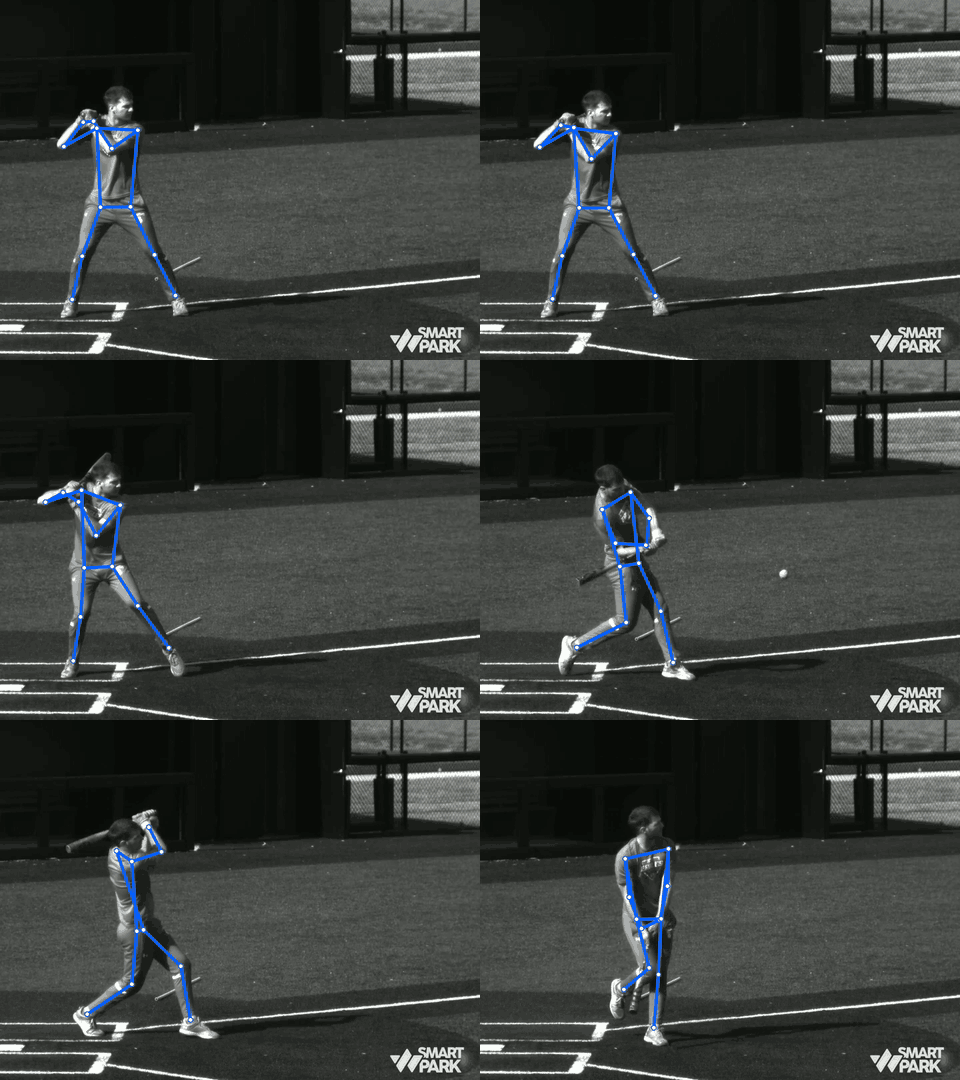
SwingAI evaluates your swing across 12 biomechanical dimensions, covering the full four-phase swing sequence: Load Phase, Stride Phase, Swing Phase, and Finish Phase. The AI tracks the kinetic chain from pelvis through torso, arms, hands, and bat, identifying exactly where the breakdown happens.
Common swing flaws flagged by SwingAI include:
– Sway during the load phase
– Casting on the downswing
– Early Extension through contact
– Barrel Dump in the Swing Phase
– Hanging Back through the Finish Phase
Why it earns the top ranking:
Most apps give you data. SwingAI gives you a next step. Every analysis produces a swing score, identifies your priority flaw by name, and delivers a personalized cue and improvement plan. If your Rotational Acceleration is low, the app tells you why and what to train. If your Early Connection is outside the 80-105 degree window, you get a drill, not just a number.
Best for:
– Self-coached players at the high school and college level
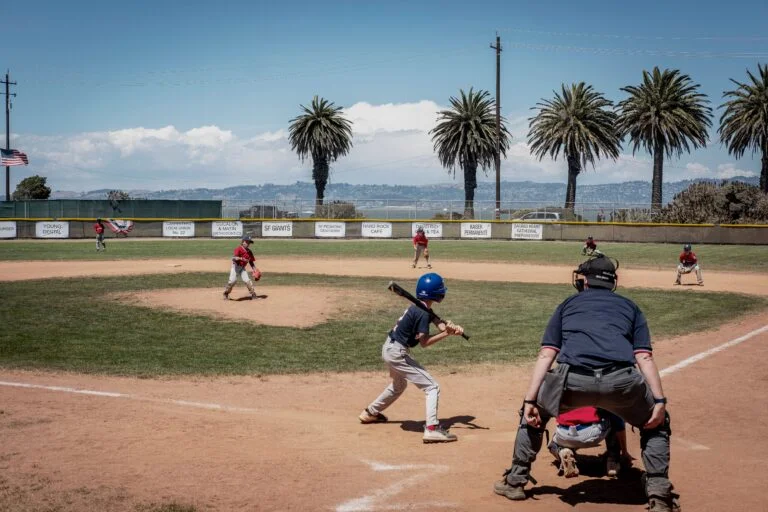
– Parents working with youth hitters (ages 8 and up)
– Private instructors managing multiple athletes between lessons
– Any player who wants instant feedback without buying extra equipment
Free trial available. Sign up through the app store.
B. Best Apps by Training Category
Best Bat Sensor App: Blast Motion Baseball
Blast Motion is the industry’s leading motion sensor and swing analysis platform, providing real-time feedback and performance insights to athletes, coaches, and scouts. The bat-mounted sensor attaches to the knob of any bat and syncs via Bluetooth to the Blast Baseball app, capturing every metric that matters.
Key metrics include bat speed, attack angle, On-Plane Efficiency (OPE), time to contact, and rotational acceleration. Blast iQ automatically assesses and scores every swing, using a simple green, yellow, or red visual indicator that identifies your focus area along with drills and recommendations for improvement.
What it does well:
– Real-time sensor data for bat speed and swing plane
– Dynamic mobile video analysis with auto-edited overlays for instant coach feedback
– Coach Mode lets instructors manage multiple players simultaneously during practice
Limitation: Requires purchasing the Blast sensor hardware. Note: Zepp Baseball sensors are discontinued and no longer supported. If you see one in an affiliate roundup, that list is outdated. Users have also flagged syncing issues between Android and Apple devices and difficulty sorting swing libraries at scale.
Best for: High school and college hitters who want measurable bat-speed benchmarks. Pro average is 66-78 mph; varsity high school players typically fall 60-70 mph.
Best Youth Engagement App: Diamond Kinetics
Diamond Kinetics helps baseball and softball players of all levels improve their swing. Smart Motion Technology uses your phone camera to recognize swings so players can participate in free virtual hitting experiences like Swing Challenges and Lessons without a bat sensor.
As the Trusted Youth Development Partner of Major League Baseball, Diamond Kinetics leans into its MLB partnership for engagement. MLB SwingMatch lets players compare their mechanics against favorite pros inside the DK App.
Limitation: The DK App is iOS-only and not available for Android. The optional DK Bat Sensor unlocks real-time metrics including barrel speed, attack angle, and acceleration. At the sensor level, some users report accuracy limitations on distance metrics.
Best used for engagement and habit-building with youth players ages 8-13. If your young hitter is motivated and building consistency, Diamond Kinetics earns its reps. When they’re ready for more precise mechanical feedback, pair it with SwingAI.
Best Video Coaching App: V1 Baseball
V1 Pro Baseball is the premier baseball pro software on the market, combining live video capture, swing analysis, graphic overlay, and lesson creation tools. It helps athletes improve by capturing high-definition, high-frame-rate swing videos that can be analyzed with graphic overlays and compared side-by-side with MLB professional videos.
Limitation: V1 Baseball is a delivery tool, not an AI feedback tool. The app requires an active coach relationship to unlock its full value. There’s no real-time biomechanical scoring or automated drill prescription, and coaches cannot add recommended drills or write out personal notes between lessons.
Best for: Private instructors managing remote athletes, or players who already work with a V1-affiliated coach and want a clean video-sharing workflow.
Best for VR + Pitch Recognition: WIN Reality TrainVR
For players who have already cleaned up swing mechanics and want to train at game speed, WIN Reality TrainVR is in a category of its own. No other baseball training app puts you in the batter’s box against 600+ virtual pitchers at game-speed velocity with pitch-recognition training built in.
TrainVR drills include Pitch Recognition, Release Point Training, Disappearing Pitch, Recognition Window, and Batting Practice. Multi-week Training Tracks keep your development structured and progressive.
Best for: High school and college hitters who have dialed in mechanics and need to close the gap between cage work and live at-bat performance.
C. Comparison Table: Price, Platform, Hardware, Best For, and Limitations
| App | Platform | Hardware Required | Best For | Key Limitation |
|---|---|---|---|---|
| WIN Reality SwingAI | iOS + Android | None (phone camera) | AI swing analysis, all levels | No sensor-based bat speed data |
| Blast Motion Baseball | iOS + Android | Blast sensor required | Bat speed + swing metrics | Sensor purchase required; Android UX issues reported |
| Diamond Kinetics | iOS only | DK Bat Sensor (~$50) optional | Youth engagement, gamified reps | iOS only; accuracy limitations at sensor level |
| V1 Baseball | iOS + Android | None | Remote coach video analysis | Requires active coach relationship; no AI diagnosis |
| WIN Reality TrainVR | Meta Quest VR | Meta Quest headset | Game-speed reps, pitch recognition | Requires VR hardware |
| GameChanger | iOS + Android | None | Team scoring, stats, communication | No swing feedback at all |
Privacy note for parents: If you are uploading swing video of a minor to any AI-based app, review the app’s privacy policy and data-sharing practices before submitting. SwingAI’s privacy practices are governed by WIN Reality’s terms at winreality.com.
Softball support: SwingAI, V1 Baseball, Blast Motion, and Diamond Kinetics all support softball mechanics. GameChanger and TrainVR are baseball-specific.
GET STARTED WITH WIN REALITY
Tools and Methods
The biggest mistake players and parents make is buying the wrong category of tool for the training goal. Here’s how each method works and what it can realistically measure.
Method 1: Phone-Only AI Swing Analysis
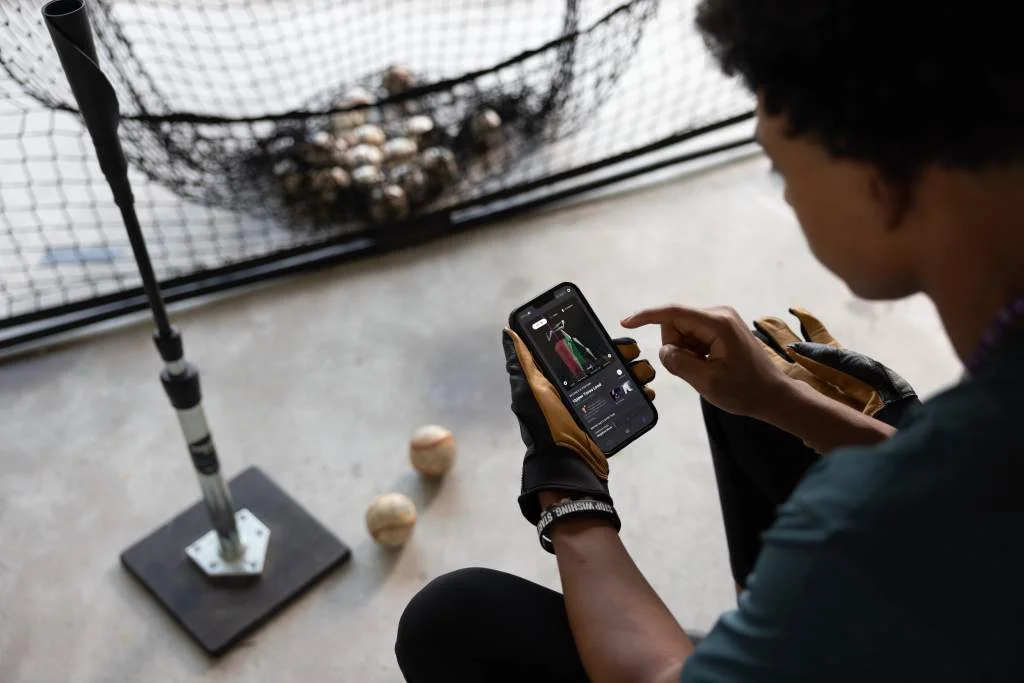
Your hitter films a few swings at the cage, uploads them to SwingAI, and gets an analysis back in minutes. No extra hardware. No coach required on-site.
The AI analyzes video frame-by-frame across the four-phase swing sequence, scoring your swing dimensions and flagging priority flaws by name, like Casting, Sway, or Early Extension.
What phone-only AI can measure accurately:
– Swing sequence and timing through the Load, Stride, Swing, and Finish phases
– Body position at key checkpoints: stance, toe touch, contact, extension
– Kinetic chain breakdowns from pelvis through bat
– Presence of common swing flaws from the Big 13
What it cannot replace:
– A live coach who can physically guide body positioning in real time
– Bat speed data from a sensor
– Game-speed pitch-recognition training
Use your score as a directional indicator and pair it with your coach’s feedback. AI confirms what to look at. Your coach tells you how to feel it. Film from the catcher’s view or the pitcher’s view for the most accurate biomechanical read.
Method 2: Sensor-Based Swing Metrics
Bat sensors like the Blast Motion sensor attach to the knob of your bat and measure pre-contact swing data in real time. Every rep gives you bat speed, attack angle, On-Plane Efficiency (OPE), and rotational acceleration.
Key metrics and target ranges:
– Bat Speed: Pro average is 66-78 mph; high school varsity is 60-70 mph; middle school is 46-62 mph
– On-Plane Efficiency (OPE): Target 70%+; MLB average is 68.6%
– Early Connection: Target 90 degrees (optimal window: 80-105 degrees)
– Rotational Acceleration (RA): The “0-60 time” of the swing; higher RA drives more game power
Sensors fill the data gap that video alone can’t cover, but as hitting coaches consistently note, a sensor is no replacement for a qualified instructor. Think of it as a training aid, like a tee or hitting net. Watch for syncing issues and interpret numbers in context.
Method 3: VR, Video Coaching, and Practice Planning
VR Pitch Recognition (WIN Reality TrainVR):
Pitch recognition is the most undertrained skill in baseball at every level. TrainVR puts you in the box against 600+ virtual pitchers at game-speed, with drills built for breaking ball recognition, fastball/curveball tunneling, 2-strike approach, and 0-2 situations. League average drops to .165 with two strikes. Better pitch recognition is the equivalent of 15-20 more hits per season.
Video Coaching (V1 Baseball):
Best used when you already have an established coach relationship and need a clean video-sharing workflow between lessons. Athletes can review voice-over video lessons on their own at home and on the practice field, which reinforces retention between sessions.
Practice Planning:
The most effective workflow right now is SwingAI for in-session feedback, your coaching staff for drill prescription, and TrainVR for game-speed pitch-recognition volume.
How WIN Reality Helps
You now know what every major baseball training app in 2026 can and can’t do. Here’s how WIN Reality’s product ecosystem fits into a complete development plan.
SwingAI: Your At-Home Hitting Coach
SwingAI is built for the 72 hours between lessons. That’s when most development actually happens, or doesn’t. Without feedback, cage reps just cement whatever pattern you already have.
Upload your swing video after every session. SwingAI scores you across 12 biomechanical dimensions, identifies your priority flaw by name, and delivers a personalized cue and drill tied directly to that flaw. If your swing shows Casting, you won’t get a generic “stay connected” note. You’ll get the cue “Short to it, long through it” paired with a specific drill prescription.
SwingAI tracks unlimited analyses per subscription, with swing scores and priority flaws updated as your mechanics improve. Parents use it to stay informed between sessions. High school players use it to self-correct between practice days. Private instructors use it to monitor remote athletes and flag regressions before they become habits.
TrainVR: Game-Speed Reps at Home
Mechanics without timing are useless at the plate. Once SwingAI confirms your swing sequence is clean, TrainVR adds the game-speed rep volume your swing needs to transfer from cage to at-bat.
The Ultimate Hitter Pack
If you want everything, the Ultimate Hitter Pack bundles TrainVR and SwingAI into one annual subscription, with optional hardware add-ons including the Meta Quest 3S headset.
Who SwingAI is built for:
– Youth players (ages 8-12): Score-based feedback that parents can track and share with coaches
– Middle school (ages 13-14): Identify and eliminate the Big 13 flaws before they become patterns
– High school and college (ages 15+): Measurable benchmarks tied to recruiting and performance goals
– Private instructors: Remote analysis and accountability between in-person sessions
SwingAI handles the mechanics. TrainVR handles the timing. Together, they’re the most complete phone-and-VR training system available in 2026.
Internal resources:
– SwingAI product page
– TrainVR product page
– Ultimate Hitter Pack bundle
– WIN Reality homepage
GET STARTED WITH WIN REALITY
The cage work you’re already putting in deserves better feedback. Upload your first swing to SwingAI today and find out exactly what your mechanics are doing, and what to fix before your next rep.