Your 10-year-old made a travel team. The fees hit your inbox, the schedule swallows every weekend from March to August, and someone at the field just mentioned a $600 showcase for “exposure.” You want him to get better and love the game, but you also want a straight answer on whether this grind actually moves the needle.
Travel baseball is worth it for the right player, in the right program, at the right age, with a family that can absorb the time and cost without resentment. It is not automatically worth it for “exposure,” status, or a scholarship you’re hoping shows up later. This guide gives you that answer without the sales pitch or the panic. We’ll weigh cost, time, development, enjoyment, and family fit by your player’s age and goals. Then we’ll show you how to measure real progress and where smarter reps fit in. No hype. Just a coach’s take on what pays off.
Here’s the honest framing. For most players ages 8 to 12, travel ball is worth it only when the coaching is strong, the schedule leaves room to be a kid, and your player genuinely wants to be there. From 13U on, competitive travel starts to matter more for high school preparation and, for a small percentage of players, recruiting.
The trap is assuming more games equals more development. It doesn’t. A player can log 70 games a summer and barely improve if the reps aren’t intentional. Worth it comes down to development ROI, not the size of the tournament trophy.
How to Decide If Travel Baseball Is Worth It for Your Player
Stop asking “is travel ball good?” and start asking “is it the best use of this player’s time, this family’s money, and this summer?” That’s a decision, not a debate. Run it through three filters: age and goal fit, development ROI, and family fit.
A. Age and Goal Fit: 8U–12U vs. 13U+
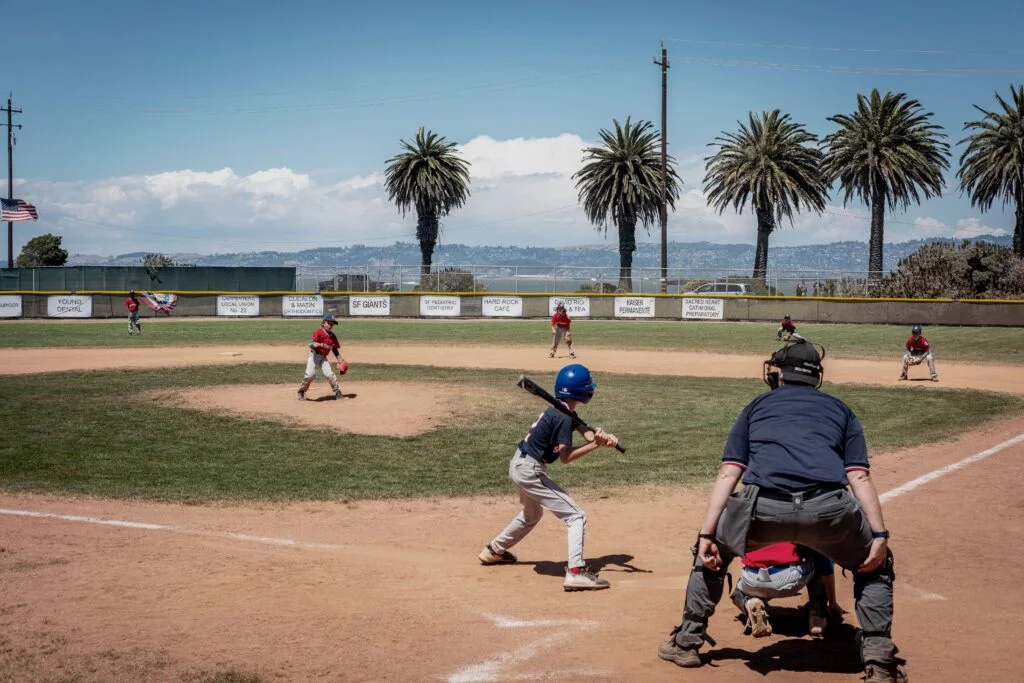
At 8U to 10U, the goal is simple: fall in love with the game and build a repeatable swing. Players this age need reps and fun, not four-hour drives for pool play. Local rec plus focused skill work often beats a national schedule at these ages.
At 11U to 12U, competitive travel becomes more meaningful. Players can handle real practice design, pitch recognition, and a two-strike approach, so better coaching starts to pay off. This is the window where a strong program can accelerate development.
At 13U and up, the calculus shifts toward high school preparation and, for some, recruiting. Here’s the reality check most parents miss: travel ball only helps recruiting if the player is old enough, good enough, and playing in events college coaches actually attend.
Match the level to the goal:
- Fun and skill growth (8U–12U): Local or regional travel, heavy on practice
- High school preparation (13U–14U): Regional select, quality competition
- Recruiting (15U+): Targeted showcases and events where coaches show up
Pick the level that fits your player’s current age and honest goal, not the flashiest logo in the parking lot.
B. Development ROI: Are They Getting Better or Just Playing More Games?
Watch a travel weekend closely and you’ll see the problem. A player might get 8 to 12 plate appearances across five games and receive almost zero individual feedback between at-bats. That’s volume, not development.
Real improvement runs through the Three Pillars of Good Hitting: Bat Speed, Bat-to-Ball, and Swing Decisions. Games test those pillars. They rarely build them. Building happens in practice with feedback, and it shows up in specific, observable checkpoints.
Ask whether your player is actually improving on things that matter:
- Quality reps over total reps: 40 focused swings with a plan beat 200 mindless cuts
- Feedback loop: Is a coach correcting the load phase, stride, or swing decisions, or just yelling “good eye”?
- Practice-to-game ratio: Strong programs run at least 1 practice for every 1 to 2 game days
- Swing decisions: League average drops to about .165 with two strikes, so a hitter who cuts swing-and-miss can add 15 to 20 hits a season
- Confidence after failure: Does your hitter bounce back the next at-bat, or spiral?
If your player is swinging at pitches out of the zone, drifting forward early, or thinking about mechanics in the box, more games won’t fix it. Targeted work on pitch recognition and the load-to-contact sequence will.
If you can’t name one specific thing your player got better at this month, the ROI isn’t there yet, and the schedule isn’t the solution.
C. Family Fit: Money, Weekends, Siblings, School, and Burnout Risk
Cost gets all the attention, and it’s real. Between team fees, uniforms, hotels, gas, and lessons, competitive travel commonly runs $3,000 to $8,000+ per season once every cost is counted, according to multiple 2026 travel baseball cost breakdowns — with some elite programs in hotbed states running well past $10,000 once private coaching and national tournaments are added. But time is the cost parents underestimate.
A serious travel schedule can eat 3 to 5 weekends a month for 5 months straight. Map that against siblings’ activities, school demands, camps, and a parent’s work calendar before you commit. If one kid’s baseball erases everyone else’s summer, that’s a family cost with a real bill.
Watch for burnout warning signs, which look different from normal challenge:
- Dreading practice or “forgetting” gear 2+ times in a stretch
- Flat body language and no joy after a good game
- Sleep, mood, or school slipping during the season
- Asking to skip, or saying the game “isn’t fun anymore”
A frustrated player who still wants to be at the field is competing. A player who’s checked out is burning out. Protect at least 2 to 3 months off the competitive grind each year to keep the love for the game alive.
If the schedule creates resentment or your player stops enjoying it, the answer is no for now, and that’s a smart no.
Before you write another check for a tournament weekend, see how much your hitter can improve with focused, game-speed reps at home.
Tools and Methods: Smarter Ways to Evaluate and Support Travel Baseball
You don’t have to choose between “all-in travel” and “nothing.” The best player-development plans mix the right reps from the right places. Use these three tools to decide, supplement, or replace.
Method 1: Cost Per Meaningful Rep Calculator
Stop comparing options by price tag. Compare them by quality reps delivered. A “meaningful rep” is one with a plan, feedback, or game-speed decision attached.
Run the math on each option per month:
- Tournament weekend: ~$150–$400 for roughly 8–12 plate appearances, little to no feedback
- Private lesson: ~$60–$100 for 30–50 focused swings with correction
- Cage session: ~$20–$40 for 100+ swings, but often no live pitch recognition
- Local select or rec: Lower cost, more playing time, more actual at-bats
- At-home VR training: A VR hitting session can deliver 50+ game-speed pitch-recognition reps against real pitchers
Divide dollars by meaningful reps. When you do, big tournament weekends often score worst, and that reframes the whole “worth it” question.
Fund the reps that build skills, not just the ones that fill a schedule.
Method 2: Coach Questions Checklist
Before you commit to any program, interview the coach like you’re hiring one. You are. A strong program answers these clearly and specifically.
Ask directly:
- Playing time: “What’s your philosophy on innings and at-bats at this age?”
- Practice plan: “What does a typical practice look like, and what’s your practice-to-game ratio?”
- Hitting instruction: “How do you teach the load, stride, and swing decisions?”
- All-in cost: “What’s the true annual total including tournaments, travel, and extras?”
- Communication: “How and when do you talk to parents and players about role and progress?”
- Role clarity: “Where does my player fit, and how does that change through the season?”
Vague answers like “we’ll see how it goes” are a red flag. Specific answers signal real player development.
A coach who can’t explain how kids get better is selling games, not development.
Method 3: Travel Ball Alternative Plan
If travel ball isn’t worth it right now, build a development plan that still gets your player better. Plenty of big leaguers came up on modest schedules with heavy skill work.
A strong alternative stack:
- Rec or one local select team: Real at-bats and playing time without the national grind
- Targeted lessons: 2 to 4 per month aimed at one specific flaw
- Clinics and camps: Short, focused blocks 1 to 2 times per season
- Seasonal ramp-up: 6 to 8 weeks of build-up before competition, not year-round
- Home reps: Daily 15- to 20-minute sessions on swing and pitch recognition
You can replace 60% of the travel grind with focused reps and still develop a better hitter.
How WIN Reality Helps
Here’s the gap travel ball leaves: your hitter sees maybe 10 to 15 live pitches a weekend, and almost none of them are the exact pitch that’s getting him out. WIN Reality closes that gap with reps you control from home.
TrainVR puts your hitter in the box against 600+ virtual pitchers at game speed. Instead of hoping he faces a good curveball this weekend, he can train breaking ball recognition, 0–2 and 3–2 counts, and a true two-strike approach on demand. That’s direct work on Swing Decisions, the pillar games can’t build on their own.
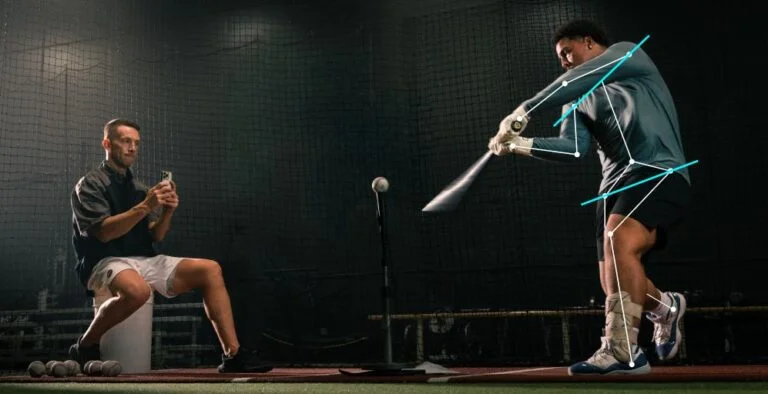
SwingAI handles mechanics. Upload a swing video and the SwingAI app analyzes 12 biomechanical dimensions, from Negative Move and Pelvis Load to Hip Shoulder Separation at Contact, then hands back personalized cues. If your hitter is drifting or casting, you’ll get a fix like “short to it, long through it” instead of a guess.
For the full plan, the Ultimate Hitter Pack bundles TrainVR, SwingAI, and the bat attachment in one package. Use it to supplement travel ball or to develop a better hitter without adding a single tournament weekend.
Combine game-speed pitch recognition with objective swing feedback and your hitter improves on a schedule that fits your family.
Give your player more of the reps that actually build skills, without another 5-hour drive.