Your hitter just took 80 swings off the machine, squared up most of them, and went 0-for-4 the next VR Training vs Batting Cage Baseball: What the Data Says
Your hitter just took 80 swings off the machine, squared up most of them, and went 0-for-4 the next day chasing sliders in the dirt. That gap between cage performance and game performance is the whole debate. So let’s settle it with data, not opinion: when does VR beat the cage, when does the cage still win, and how should you combine them?
VR and Batting Cages Train Different Parts of Hitting
VR training and batting cage work are not competitors. VR builds your eyes and decisions, the cage builds your hands and swing, and the hitters who improve fastest use both.
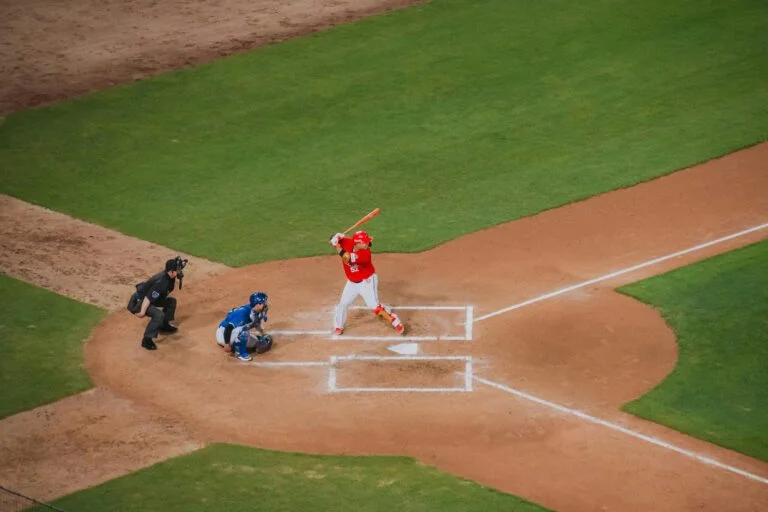
Here’s the line that matters. A batting cage delivers real bat-ball contact, real barrel feedback, and high-volume physical reps, but most machine reps are predictable and look nothing like live pitching. Hitters who train with WIN Reality’s VR program see an average increase in on-base percentage.
TrainVR attacks the part of hitting cages can’t touch: reading the pitch. Players using WIN Reality develop up to 7x faster than traditional training methods, with a 9% increase in plate discipline.
Use each tool for its job:
- Batting cage: swing mechanics, barrel control, contact quality, 50-100 physical swings per session
- TrainVR: pitch recognition, timing, swing decisions, 100+ game-speed reps in 15 minutes
- Combined: read it in VR, then go drive it in the cage
The hitters who treat these as a single system, not an either/or, post the biggest jumps in batting average and OPS. Keep reading to see exactly how the numbers break down.
VR Training vs Batting Cage Baseball by Skill Outcome
Stop comparing VR and cages by format. Compare them by what shows up in the box score. Below is the side-by-side on the three things that actually move your slash line.
A. Pitch Recognition, Timing, and Swing Decisions
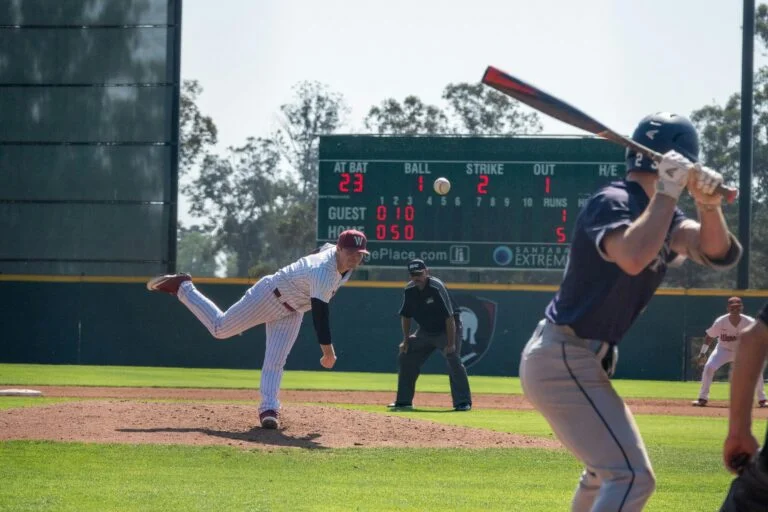
Your hitter can’t drive a pitch they read late. This is where the cage falls short and TrainVR takes over. With 600+ pitchers to choose from, you can face velocities from 40-100+ mph, see any pitch type you can imagine, and train against righties and lefties from any arm angle.
That volume matters because recognition is a reps game. In just 15 minutes, a batter can see over 100 game-speed pitches. A machine throws the same pitch from the same spot; a real arm doesn’t.
TrainVR trains the read at the source. Pitch recognition training in TrainVR teaches your eyes to pick up spin, shape, and velocity early at the release point, not when the pitch is halfway to the plate.
Run it like a coach with clear checkpoints:
- Pick one pitcher, one pitch type per session. Depth of exposure beats variety in the early stages of recognition training.
- Use Release Point mode to lock your eyes where the ball leaves the hand.
- Use Disappearing Pitch and Recognition Window drills to test whether the read is real.
- Grade it honestly. Calling pitch type correctly 70%+ of the time before the halfway point means the read is transferring.
This is the Swing Decisions pillar of good hitting, and it’s the one a cage can’t build. League average drops to around .165 with two strikes, and cutting swing-and-miss is worth 15-20 extra hits a season. Train the read first, and the swing has something worth swinging at.
B. Swing Mechanics, Contact Feel, and Bat-Ball Feedback
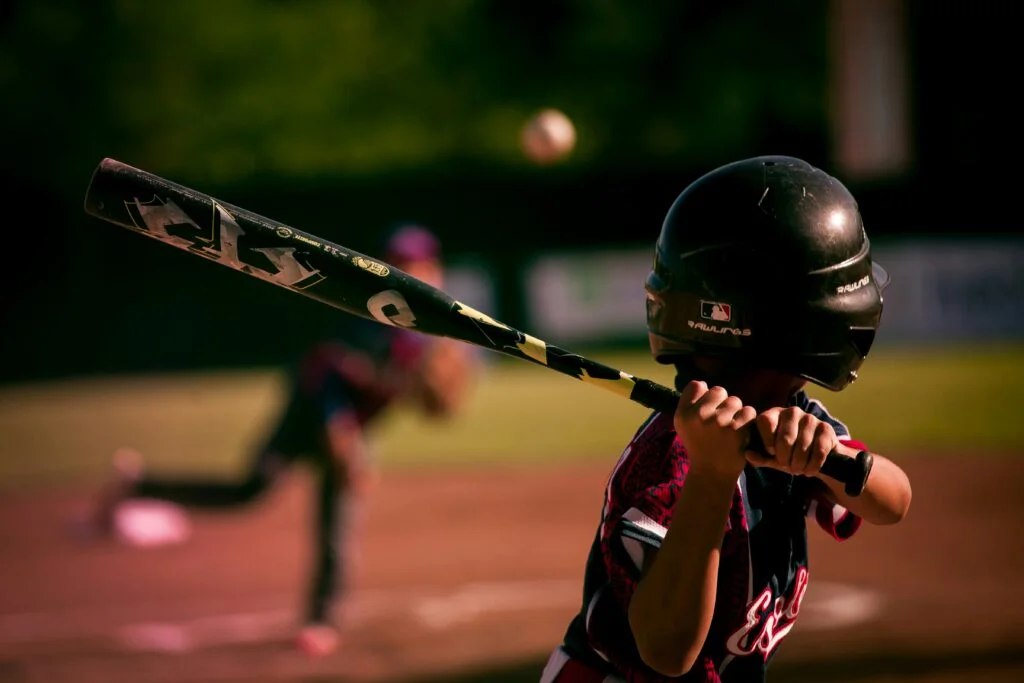
No headset replaces the feeling of barreling a ball, and the cage owns that feedback loop. When your hitter mishits one off the machine, the hands, the sting, and the flight tell the truth instantly.
The cage is where you build and groove your swing mechanics. It’s where the kinetic chain gets reps under real bat weight. You need physical swings to clean up mechanical flaws like casting, barrel dump, or early extension.
Run cage rounds with mechanics intent, not just hacks:
- Casting fix: cue “short to it, long through it” and check barrel path on tee work
- Forward move fix: cue “land firm, turn behind your front hip” against the machine
- Pelvis load: cue “back pocket down the line” to feel hip-shoulder separation
- Volume target: 40-60 quality swings beats 100 sloppy ones
The cage also gives you something VR can’t: a coach standing five feet away, watching your front side, calling out what your body actually did. Pair that with SwingAI to score the swing on video and you close the loop on mechanics. The cage builds the swing. Just don’t expect it to teach your hitter what to swing at.
C. What the Data Says: Batting Average and OPS Gains
Coaches argue VR versus cage in the abstract. WIN’s player data settles it in the stat line. In a WIN Reality case study, hitters’ Z/O swing ratio improved from roughly 2.55 to 2.90, batting average increased by roughly 35 points, and OPS rose by roughly 50 points (source).
That’s not a small bump. Thirty-five points of average and fifty points of OPS is the difference between a bench bat and a middle-of-the-order hitter, and it traces directly back to better swing decisions, not better contact.
GET STARTED WITH WIN REALITY and train game-speed pitch recognition and swing decisions at home, then carry better reads into every cage round and live at-bat. Start with TrainVR.
Tools and Methods: How to Use VR and Cage Work Together
You’ve got the data. Now here’s the structure. These three methods tell you exactly when to replace cage time and when to stack VR on top of it.
Method 1: VR Before the Cage — Recognition First
Most hitters walk into the cage cold and start hacking. Flip it. Run a 15-minute TrainVR block first so the eyes and the plan are sharp before a single physical swing.
Build the session like this:
- 5 minutes Pitch Recognition: one pitcher, identify pitch type out of the hand
- 5 minutes Release Point: lock the visual anchor and sharpen timing
- 5 minutes zone work: swing only at strikes, track your Z/O
Players who face a pitcher in TrainVR before stepping into the box show the same performance gains you’d expect from a second or third at-bat against that pitcher in a real game. Walk into the cage already on time, already reading spin, and the physical reps land cleaner.
Method 2: Cage After VR — Mechanics and Contact Transfer
Now cash in the read with real swings. Once the eyes are dialed, the cage becomes the place to transfer that timing into the kinetic chain and clean barrel path.
Run 40-60 swings with intent:
- Rounds 1-2: tee and soft toss, cue “short to it, long through it” for barrel path
- Rounds 3-4: machine reps at game velocity, hunt the same pitch you tracked in VR
- Film one round with SwingAI to score your mechanics and flag the top flaw
Seeing the improvements based on data just shows that whatever you’re doing is working. Read it in VR, drive it in the cage, score it on video. That’s the loop.
Method 3: VR When Cage Access Is Limited
Real talk: cages get rained out, booked up, and expensive, and live arms aren’t always available. This is where VR stops being a supplement and becomes the rep. WIN memberships include unlimited use of both baseball and softball, so you can train when you want, as often as you want, from wherever you want.
Use TrainVR to hold your edge when the cage is out of reach:
- Rained out or traveling: a 15-minute recognition block keeps the eyes sharp
- No live arm: face 600+ real pitchers from your living room
- Managing workload: get decision reps without the physical pounding of 100 swings
- In-season maintenance: a daily read session keeps timing from drifting
WIN Reality played a crucial role for one player in maintaining confidence during a one-month injury, allowing seamless continued practice of live at-bats before a quick return to form. When the cage isn’t an option, VR keeps your hitter in rhythm instead of starting cold.
How WIN Reality Helps
Your development plan needs two things working together: a tool that trains the eyes and decisions, and a tool that trains the swing. WIN Reality builds both, and the product line maps directly to the methods above.
TrainVR is your game-speed pitch lab on a Meta Quest headset. WIN uses actual pitch data and pitcher windups to provide a challenging and realistic hitting experience. The drill library covers the full read-and-decide stack:
- Pitch Recognition and Release Point for reading spin and shape out of the hand
- Disappearing Pitch and Recognition Window to test whether the read is internalized
- Batting Practice and Exhibition Mode for live at-bat rhythm
- Scenario workouts: 3-2 counts, two-strike approach, breaking ball recognition, fastball/curveball tunneling, and opposite-field power
- Multi-week Training Tracks that build skills in sequence
Every session feeds a performance dashboard so you track your streaks and improvement over time with detailed swing insights. And it covers both sports: TrainVR includes both baseball and softball pitching, with accurate speeds, spins, and release points for softball players training against real softball pitchers.
For the swing itself, pair TrainVR with SwingAI. SwingAI is WIN Reality’s AI-powered mobile swing analysis app that records your swing on your phone and breaks it down with instant coaching feedback, scoring your mechanics and showing you exactly what to work on. Film a cage round, get scored on your biomechanics, and know the exact flaw to fix before your next round.
Want the whole system? The Ultimate Hitter Pack bundles TrainVR, SwingAI, and the bat attachment with an optional Meta Quest headset (Quest 2, Quest 3, or Quest 3S). The bat attachment is optional but recommended, clipping onto your Meta Quest controller so you can swing with a more natural bat feel in VR. Most serious hitters prefer it for realistic training reps.
Still weighing the evidence? Read the full breakdown of whether VR baseball training works and see TrainVR in action.
Start Training Smarter
The data is clear: VR and the cage aren’t rivals, they’re a system. Train your eyes and swing decisions in TrainVR, transfer that timing into real swings in the cage, and watch your batting average and OPS climb across the season. Build the read first, then go drive it.
GET STARTED WITH WIN REALITY and start training pitch recognition, timing, and plate discipline today at winreality.com/choose-your-plan.