You have 14 hitters, one cage, and 75 minutes. Half the roster rolls over to second base, you can only stand behind one kid at a time, and the parents in the bleachers each have a different theory about little Jake’s swing. AI youth baseball training exists to fix exactly that problem. The shift happening right now is that AI has moved from a novelty swing score into real training infrastructure, and the best coaches are using it across mechanics, timing, pitch recognition, and swing decisions, not just a single number on a phone screen.
AI youth baseball training means using sport-specific AI to give objective feedback, assign one focus area per hitter, and track progress over weeks, so your coaching eye is confirmed instead of replaced. Used well, it should support all three pillars of good hitting: Bat Speed, Bat-to-Ball, and Swing Decisions.
Here is why you should care as a coach:
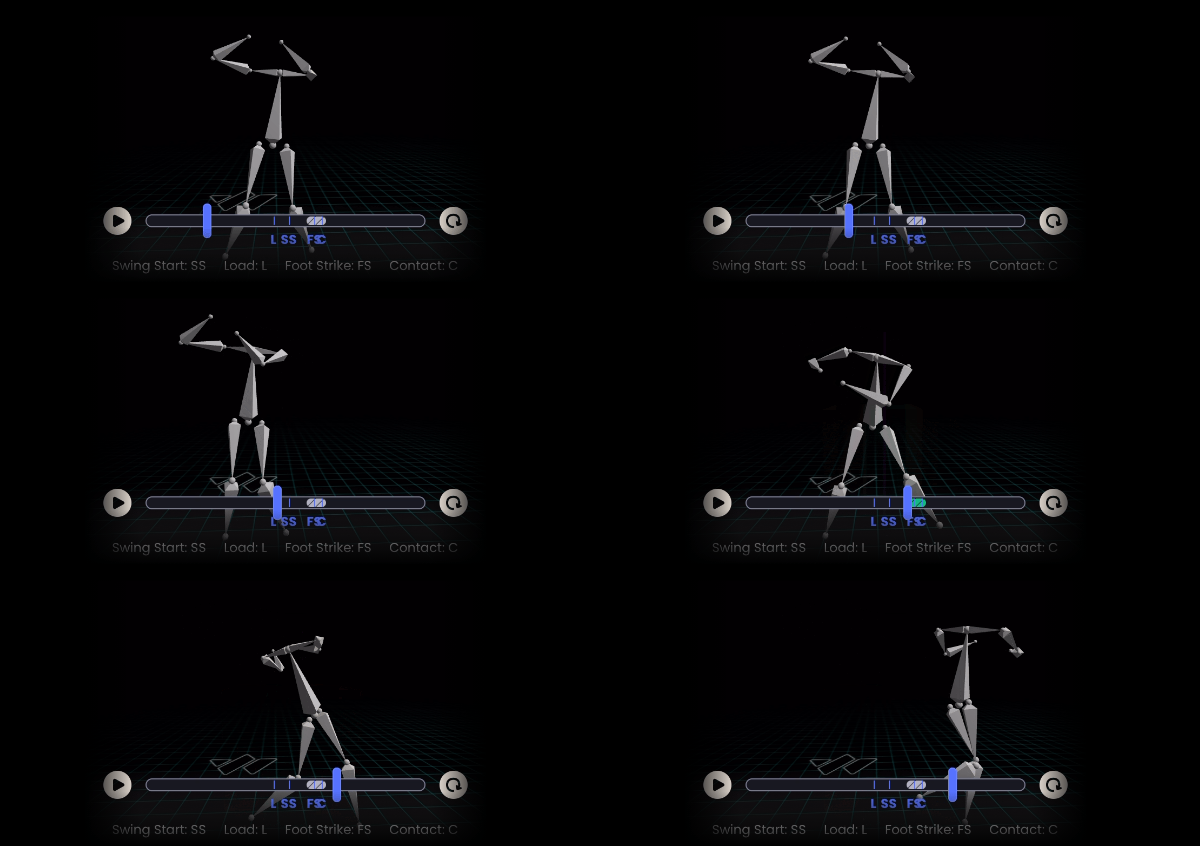
- Mechanics: Tools like SwingAI score the swing across 12 biomechanical dimensions, giving you an objective read on the 4-phase sequence (Load, Stride, Swing, Finish).
- Timing and recognition: VR reps let a hitter see live-speed pitches without needing a live arm every day.
- Swing decisions: Two-strike discipline is teachable.
- Progress tracking: Retesting every 2 to 3 weeks turns gut feel into a measurable development plan.
The rule that holds all of it together: AI is decision support. You still own the plan.
AI Is Moving Youth Baseball From Guesswork to Guided Development
A 10U coach recently asked online for an objective tool to upload swings to, just to fact-check the feedback he was already giving 12 different kids. That request is the whole story. Coaches do not want to be replaced. They want their eye verified so they stop guessing.
That is the real change. AI is best understood as a decision-support layer for coaches. As the American Baseball Coaches Association puts it in its coach-facing overview, AI will have a much more difficult time replacing a coach than it will a doctor or lawyer, because a coach’s relationship with an athlete can make or break confidence, can impact an athlete’s dedication to the sport, and humans connect with humans.
A. Better Feedback Without More Noise
Picture the kid who pops up to the left side every third swing. Your eye says “he’s pulling off.” AI tells you where in the chain it starts, which is the part you cannot always catch in real time at full speed.
Sport-specific AI detects patterns across the Kinetic Chain (Pelvis → Torso → Arms → Hands → Bat) and flags the earliest fault, not every fault. That matters, because a youth hitter who hears five corrections hears none of them.
Follow one rule here: one cue per hitter, per 2 to 3 week block.
- Pull the earliest fault in the chain from the report.
- Translate it to a single cue from the library, like “Back pocket down the line” for pelvis load.
- Filter hard before you talk to the player. More info than a 10-year-old can use is noise, not coaching.
Let AI find the pattern, then say one thing.
B. Beyond Mechanics: Timing, Recognition, and Swing Decisions
Here is the trap most AI content falls into: it treats “AI training” as a synonym for swing analysis. A perfect swing on a tee means nothing if your hitter cannot recognize a curveball out of the hand at game speed.
Swing mechanics and game performance are two different problems that need two different tools:
- Mechanics (what the body does): best trained off a tee and front toss, then analyzed on video.
- Timing and recognition (when and whether to swing): only trained against live-speed pitches with real release points, tunneling, and break.
- Swing decisions (the strike zone and the count): trained through scenario reps like 0-2 and 3-2 counts.
A hitter who is thinking about mechanics in the batter’s box usually freezes. That is why you separate the mechanical work from the game-speed work. Build the swing in one environment, then let it play in another.
Fix the swing off the tee. Win the at-bat against live speed.
C. The Coach Still Owns the Development Plan
A travel-ball dad texts you a screenshot of his son’s “swing score” and wants to know why it is not higher. This is the moment AI either helps you or runs your program for you.
AI is the input. You are the authority. You decide the practice priority, the age-appropriate message, and whether to override the report because you know the kid had a growth spurt and lost his timing.
Match the message to the age group:
- Youth (8 to 12): one simple feel cue, lots of confidence, no scores in the conversation.
- Middle School (13 to 14): introduce one metric and why it matters.
- Advanced (15 to College): full data, counts, and approach work.
Report effort and one measurable win to parents, like “firmer front side on 4 of 5 swings,” instead of a raw number.
The data informs the plan. Your judgment makes it.
Ready to build a coach-led system instead of chasing swing scores?
Three Ways Coaches Can Use AI Youth Baseball Training
Do not pick a tool by its feature list. Pick it by the training problem in front of you. Here are three, matched to the problem each one actually solves.
Method 1: AI Swing Analysis for Mechanics
Use this when the problem is the swing itself: casting, drifting, a weak forward move. Film 3 to 5 quality swings per hitter (about 90 seconds each) and run them through SwingAI.
SwingAI scores 12 biomechanical dimensions across the swing, so you get objective feedback that fact-checks your eye instead of replacing it, as detailed in our guide to using AI swing analysis without overcoaching. It does not measure Blast metrics like on-plane efficiency, so do not expect bat-path numbers here. It reads the body.
Match the flagged flaw to the right fix:
- Casting / barrel leaking away → Stop at Contact Drill, cue “Short to it, long through it.”
- Weak forward move, Sway, or Hanging Back → Walk Through Drill, cue “Land firm, turn behind your front hip.”
- Low bat speed from poor hip-shoulder separation → Torque Drill plus Knob to Knee Drill.
Guard your video quality: side angle, good light, full swing in frame. Then give it 30 to 50 focused reps per practice and retest in 2 to 3 weeks. The full workflow lives in our youth AI swing analysis guide.
One flaw, one drill, one retest window.
Method 2: Bat Sensor Data for Movement and Feel
Use this when you want to measure the swing on every rep, not just the ones you film. A Blast-style bat sensor clips to the knob and reads swing metrics live. Inside WIN Reality’s Teams Hub, Coach Chat turns your players’ Blast data into plain-English answers in seconds, because coaches have more swing data than ever and never enough hours to make sense of it.
Where sensor data earns its keep:
- Tracking consistency rep to rep, not just one highlight swing.
- Spotting trends over a season instead of a single session.
- Confirming that a mechanical fix actually changed the output.
Avoid metric overload. For a 12U hitter, pick one metric to watch for the block and ignore the rest until it moves. For the full landscape of how sensor data fits with everything else, see our breakdown of the best baseball analytics tools for coaches.
Measure every rep, but coach to one number at a time.
Method 3: VR Reps for Recognition, Timing, and Decisions
Use this when the swing looks fine in the cage but falls apart against a live arm. You cannot throw 100 game-speed curveballs to a 13-year-old safely, and you do not have a different pitcher’s release point on demand. VR solves that.
WIN Reality TrainVR gives your hitter 600+ virtual pitchers and game-speed reps at home, so recognition and timing get trained the way mechanics already do. [NEEDS VERIFICATION: Confirm the current pitcher count against product specs before publishing.] Build at-bats around:
- Pitch Recognition and Recognition Window drills for seeing spin early.
- Scenario workouts like 0-2 approach, 3-2 counts, 2-strike approach, and fastball/curveball tunneling.
- Zone discipline so swing decisions improve where it counts, in the box.
Reps against live speed, no live arm required.
How WIN Reality Helps
Most AI tools in this space do one thing: analyze a phone video. The next generation of youth development connects the pieces, and that is where WIN Reality is built differently. You get one coach-led workflow instead of three disconnected apps.
The connected system
- WIN Reality TrainVR for game-speed pitch recognition, timing, and swing decisions.
- SwingAI for AI swing analysis across 12 biomechanical dimensions.
- Blast data inside Teams Hub, read for you by Coach Chat.
The Ultimate Hitter Pack bundles TrainVR, a SwingAI annual subscription, and the WIN bat attachment, with a significant first-year discount when purchased with hardware add-ons. [NEEDS VERIFICATION: Confirm a discount is currently active and accurately described for the coach audience before publishing.] Confirm the current coach rate on the page before you quote it.
Specific features you will actually use
- VR pitch recognition and game-speed at-bats across 600+ pitchers.
- Strike-zone and count-based decision training (0-2, 3-2, 2-strike).
- SwingAI video feedback with personalized cues and an improvement plan.
- Bat metrics and progress tracking over 2 to 3 week blocks.
- Coach-friendly practice planning that fits a 75-minute session.
This separation of mechanics from recognition is what phone-video-only competitors cannot match. WIN Reality is a leader in VR and AI-driven training, and as detailed in the WIN Reality and Perfect Game strategic partnership announcement, TrainVR helps hitters improve pitch recognition, timing, swing decisions, and confidence, while SwingAI provides personalized AI-powered swing analysis.
Explore more
- The SwingAI app page and TrainVR page for product details.
- 30 hitting drills to build better youth hitters to pair with your AI reports.
- The best baseball training apps of 2026 for how the tools stack up.
Your coach workflow
Run this loop every block and it will not fail you:
- Baseline every hitter with 3 to 5 filmed swings and a VR recognition session.
- Assign one focus area per player from the report.
- Train with VR reps and/or sensor work, 30 to 50 focused reps per practice.
- Retest every 2 to 3 weeks to confirm the change.
- Communicate effort and one measurable win to players and parents.
Build your coach-led AI youth baseball training system today.