For our younger hitters, see here for the best drills to help 9-10 year olds. Click here for the best drills for 7-8 year olds. Click here for an overview of WIN Reality’s age-by-age curriculum.
At 11 and 12 years old, hitters are transitioning out of Little League and start to encounter new challenges at the plate. Pitchers gain better command and are learning how to incorporate curveballs into their arsenals. For young hitters this introduces a whole new dynamic, as curveballs not only change speeds, but they break and change planes both vertically and horizontally. This is a significant adjustment for young athletes compared to the generally straight fastballs they’ve faced. While they likely have seen some changeups before, learning to handle breaking balls requires major adjustments in both mindset and swing mechanics.
The Short Answer: Our favorite hitting drills for 11-12 year olds are:
Hitting Skills for 11-12 Year Olds to Focus On
At ages 11-12, young hitters are building on the key skills and hand-eye coordination they’ve developed over the past few years. This is when players start to separate themselves from the pack, as the game becomes more competitive with travel ball and the chance to compete in large regional and national tournaments. While winning isn’t the primary focus, it certainly starts to matter more. Learning how to compete becomes a crucial part of player development. It is also crucial to remember that if a hitter is falling behind or staying in the middle of the pack, it’s not an extreme cause for concern. Some players mature physically quicker than others and the focus should remain on becoming a well-rounded hitter while controlling what can be controlled.
At this age, getting consistent batting practice becomes most important. Incorporating game-like situations and competitive elements into baseball practice encourages better on-field results. However, we must also remember that these players are still just 11 and 12 years old, so it’s essential to keep practice sessions fun and engaging. When players have fun and enjoy practice, they stay engaged and are more likely to put in the effort needed for consistent practice and long-term growth.
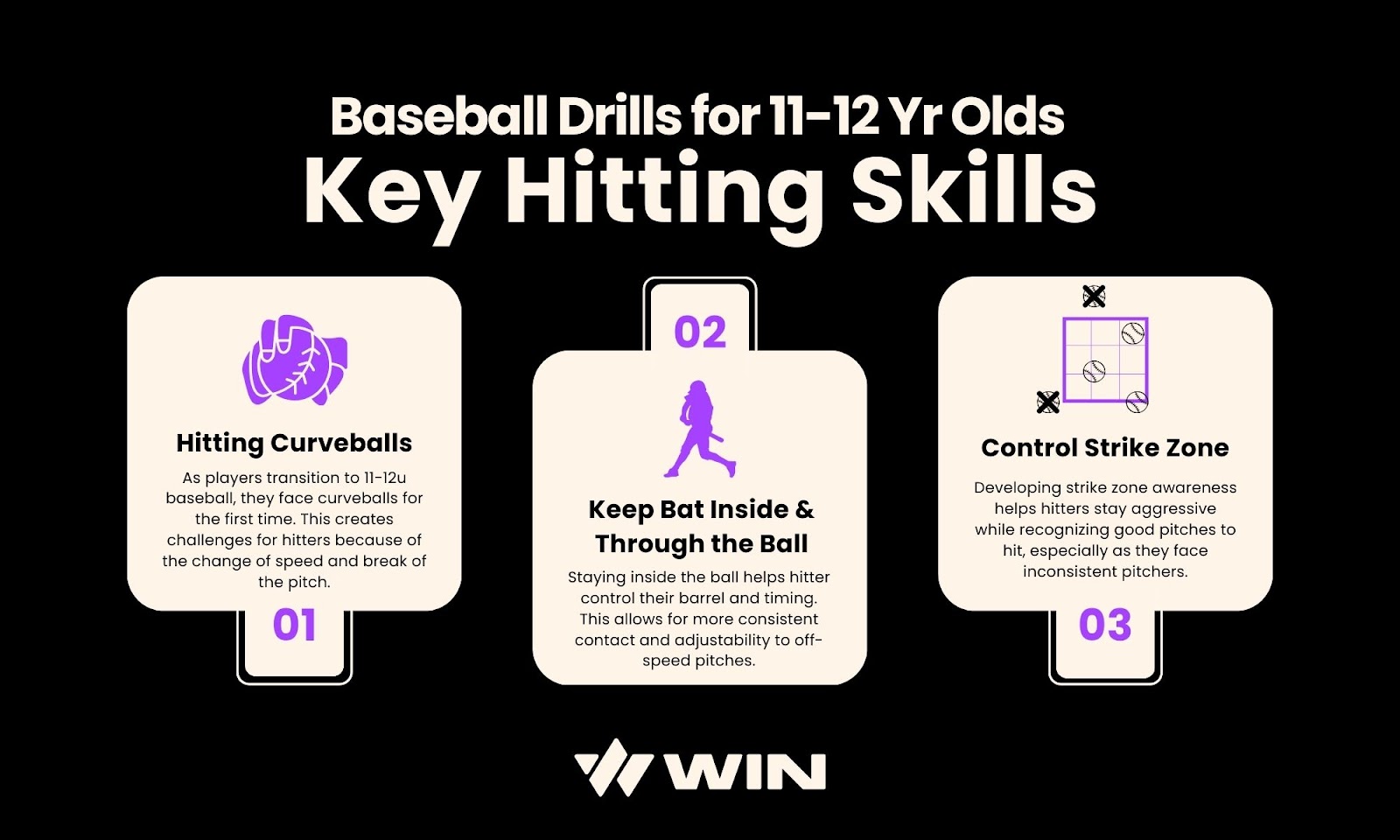
With that in mind, here are the key skills to focus on for young hitters:
Learning the Curveball
A major shift in the game during the jump to 11-12u baseball is the introduction of curveballs. For the first time, hitters face a pitch that not only changes speeds, but also breaks both vertically and horizontally, presenting a new set of challenges. Young hitters must train to recognize curveballs, make good swing decisions, and then train to put quality swings on them to drive the ball.
Keeping the Bat Inside and Through the Ball
A key to handling curveballs and developing adjustability in the swing is learning to stay inside and through the ball. By staying inside the ball, the hitter stays tighter to their body and more direct to the ball, which helps them maintain control of the barrel and create deeper contact points with better direction throughout the swing. This allows hitters to commit later to pitches, staying in control of their timing on offspeed pitches, and improving their ability to make better swing decisions. Staying through the ball also gives hitters a larger window for contact when they’re fooled by the pitch or their timing is off. This creates a safety net, enabling hitters to remain aggressive while still being capable of success when their timing isn’t perfect.
Controlling the Strike Zone
While we still want to encourage aggressiveness in 11-12u hitters, it’s also important to start developing an awareness of the strike zone. Over-aggressiveness, especially by chasing pitches out of the zone, can limit a hitter’s success at this age. Additionally, since pitchers at this level often lack consistent command, hitters need to be able to take advantage of good pitches to hit by recognizing them early and driving them. At this point they start to become few and far between, especially for dangerous hitters. Control of the strike zone allows hitters to lay the foundation for an approach as they continue to develop and progress in the game.
Coach & Parent Guide for 11-12 Year Old Baseball Players
While your youth baseball players are developing these foundational skills, here’s a guide for parents and coaches on what to look for in hitters at this age and what not to be concerned by:
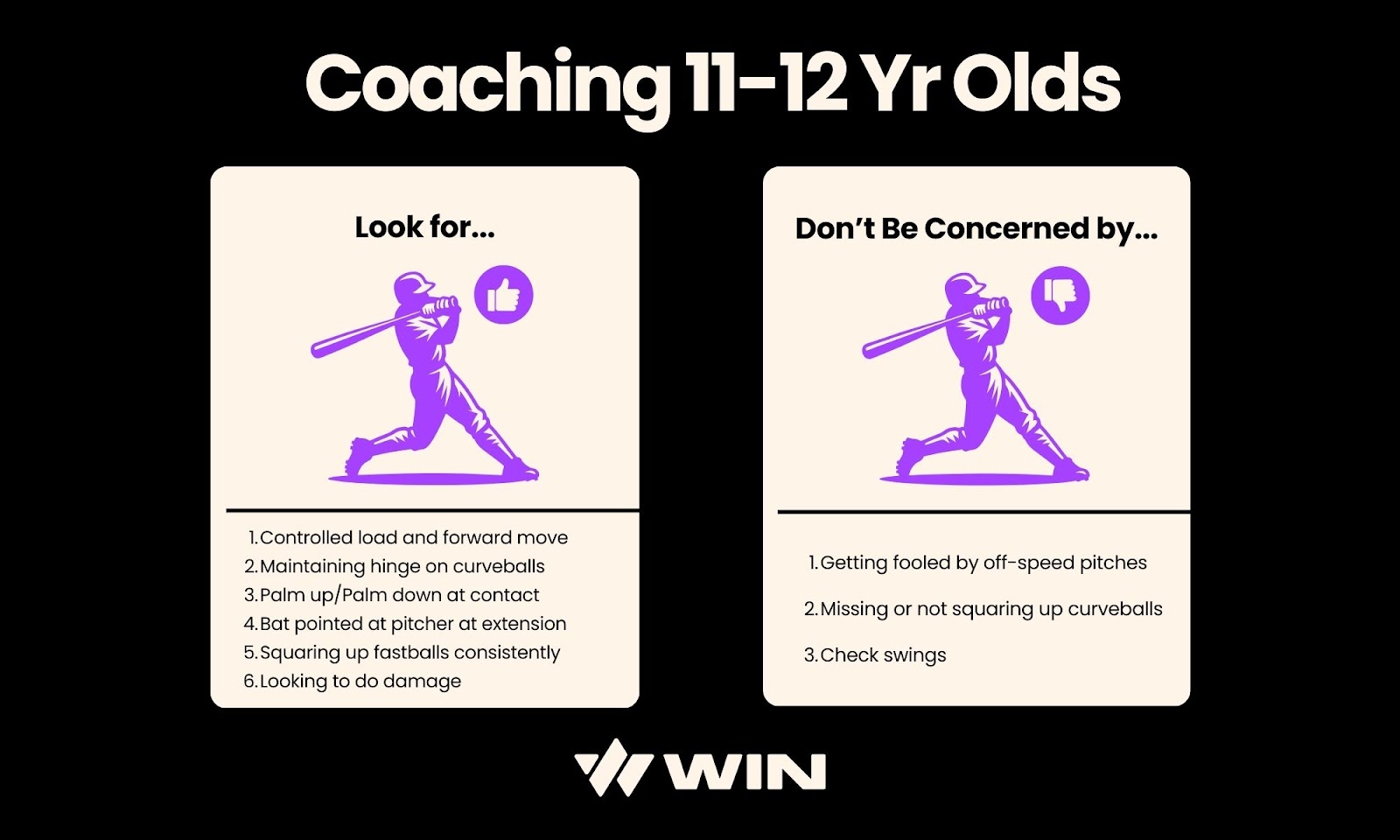
What to look for in 11-12 year old baseball players:
- The hitter is under control as they load and make their forward move
- That the hitter doesn’t lose their hinge and come up with the pitch because they see a curveball
- The hitter’s top hand palm is up and the bottom hand palm is down at contact with their chin going from shoulder to shoulder.
- At extension, the end of the bat is pointed at the pitcher
- Hitters are still able to square up the fastball, this should not suffer with curveballs being part of the mix
- The hitter should be taking confident swings and looking to do damage
What not to be concerned by with 11-12 year old baseball players:
- If the hitter is getting fooled or their timing is off on offspeed pitches. We want control with the load and forward move, but if the hitter starts to break down with the actual swing the hitter probably just needs more reps.
- If the hitter is missing or not squaring up curveballs. Or if the hitter goes a little bit out of the zone to hit a curveball, as long as they are putting a good swing on it.
- Check swings, this is encouraging because they are being aggressive but also recognizing the pitch isn’t a good pitch to hit.
Again, the key focus for developing 11-12 year-old hitters is learning to handle curveballs, staying inside and through the ball, and controlling the strike zone. By emphasizing these skills while learning to compete, and incorporating fun, engaging drills, young players can develop the skills needed for success while keeping their passion for the game alive.
GET STARTED WITH WIN REALITYThe Best Hitting Drills for 11-12 Year Olds
The best drills for 11-12 year olds are ones that encourage hitters to be athletic while using environments to teach hitters how to solve problems. These types of drills will teach hitters to be their own coach and self correct, while keeping practice both fun and engaging, setting young hitters on a path to success.
Here are our some of our favorite drills for 11 and 12 year olds:
Deep Tee Drill
Just because you are stepping up in skill level does not mean you have outgrown the batting tee. The Deep Tee Drill helps hitters develop confidence in letting the ball travel and deep in the zone. This will help establish a bat path that enters the hitting zone early and tight, getting the hitter on plane which allows for cleaner, more consistent contact.
Step Back Drill
The Step Back Drill is a fun drill for hitters that struggle to gain control and coil into their back hip creating a good negative and forward move. It will help hitters create rhythm and time up their moves at the plate
Stop at Contact Drill
The Stop at Contact Drill teaches hitters to stay connected and avoid releasing the barrel away from their body. The drill will help hitters learn to control their effort level, stay inside and behind the ball, and match the plane of the pitch.
Power V Drill
Great for hitters that over-rotate their torso and need to keep their swing direction through the ball. Hitters will learn how to control their effort level and swing from the center of their body–staying inside & behind the ball and being able to decelerate.
Hard/Soft Drill
This drill is great for hitters who struggle with their timing and adjusting to offspeed pitches or get sped up by fastballs that follow an offspeed pitch. The environment will teach hitters how to coil properly and create a good forward move.
Simulated At-Bats
Simulated At-Bats are a great way to train timing, swing decisions, and even start getting hitters exposed to having a simple approach at the plate by implementing counts. This can be done by going full distance from the mound, or by short-boxing it at half the distance. At this age, if hitters are afraid of getting hit you can use Incredi-balls to encourage aggressiveness and minimize fear. Limit to five to seven, high-focus at-bats per session.
How WIN Reality Can Help With Hitting Development
For 11-12 year-olds, the most valuable thing is to take plenty of swings and see as many pitches as possible. This exposure helps hitters develop their timing, improve swing decisions on curveballs, and develop their understanding of the strike zone.
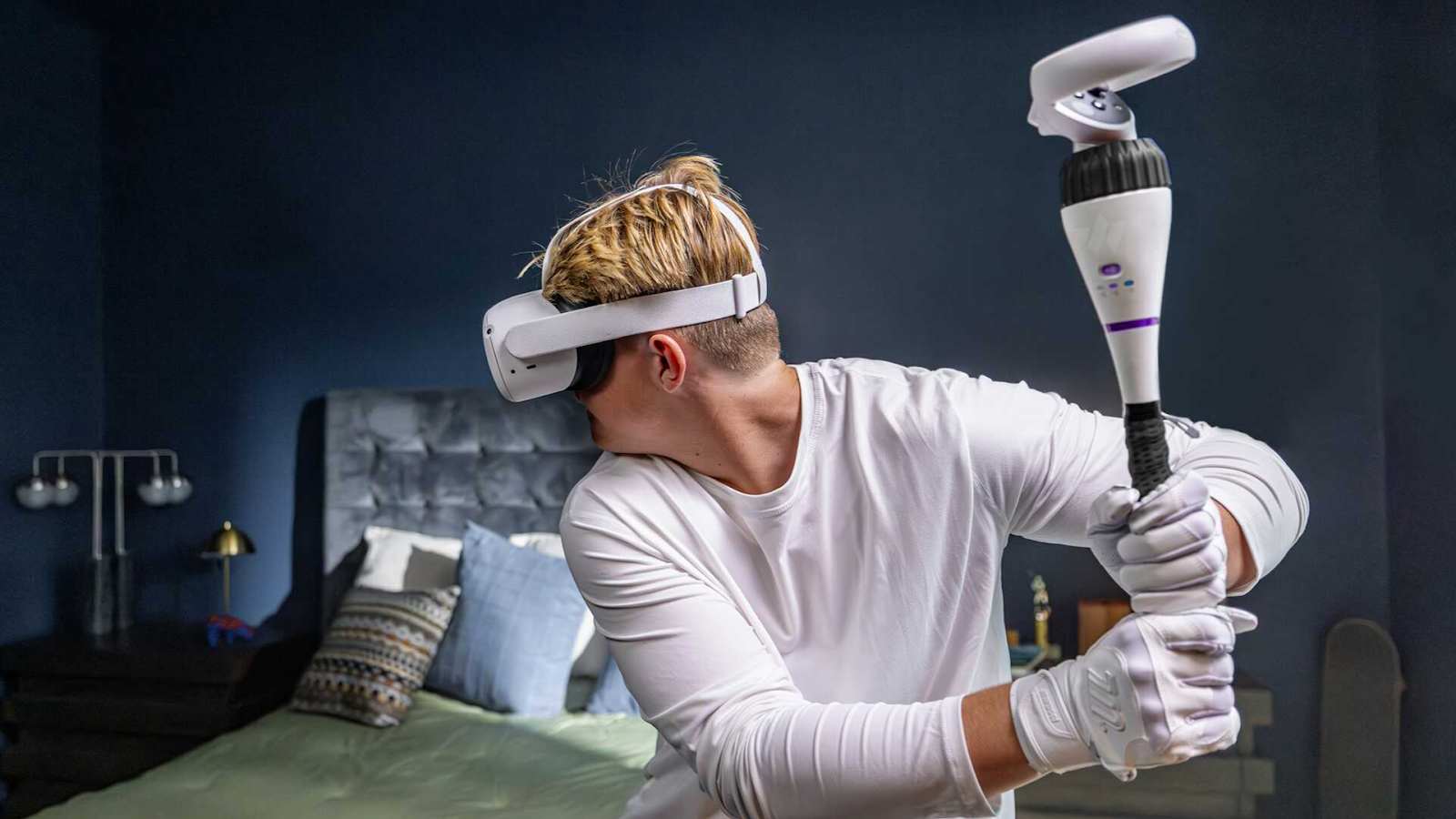
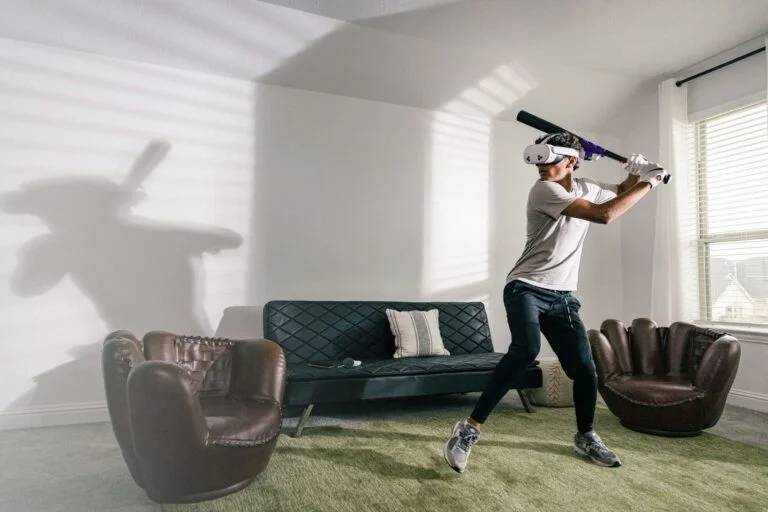
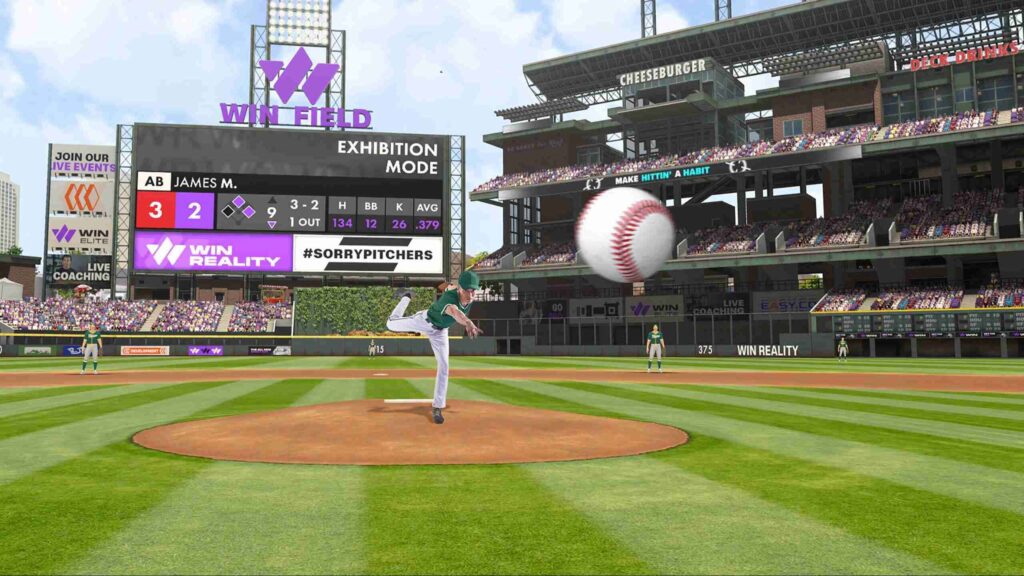
To accelerate your young hitters’ development, integrate WIN Reality’s virtual reality training into your routine. WIN Reality offers a cutting-edge platform where players can see pitches and take swings in a virtual environment, simulating real baseball game scenarios and different styles of pitching. This immersive experience helps expedite their development in timing, pitch recognition, and gain valuable in-game experience in a controlled setting. Explore WIN Reality’s pricing options to find the perfect fit for your training needs and elevate your hitting practice. Embrace this innovative tool to support your players’ development, build their confidence, and watch them thrive at the plate.
GET STARTED