Introducing baseball to 5-6 year olds is about building a foundation of skills while keeping the experience fun. At this stage, it’s less about competition and more about creating a love for the game. The right drills develop hand-eye coordination, reaction time, and basic hitting mechanics, all while feeling like play.
For more experienced hitters, see our guides for 7-8 year olds, 9-10 year olds, and 11-12 year olds. Check out WIN Reality’s age-by-age curriculum for a complete development path.
Our favorite baseball drills for 5-6 year olds include:
- Hitting Off the Tee
- Soft Toss
- Tennis Ball Reaction Drill
- Line Drive Competitions
- Skinny Bat
- Distance Competitions
- Short Bat Drills
Key Skills for 5-6 Year Olds
In this age group, players are just grasping the basics. Focus on these foundational areas:
Hand-Eye Coordination
Tracking and making contact with the ball is the building block for everything else. Drills that encourage swinging at a moving or stationary target build this skill fastest. Hand-eye coordination at this stage translates into both batting and fielding success.
Proper Swing Mechanics
Keep it simple: teach how to hold the bat, where to stand, and how to follow through. A balanced stance and smooth swing path are the only mechanics that matter at 5-6.
Bat-to-Ball Contact
The ability to square up consistently builds confidence. Tee work and soft toss let kids get hundreds of contact reps in a short session.
Reaction Time
Simple drills like soft toss or tennis ball drops build reaction time in a way that feels like play.
Building Confidence
Repetition, success, and positive reinforcement. Drills that allow for small wins make players feel accomplished and eager to keep going.
Making Practice Fun
At this age, practice should feel like playtime. Games, challenges, and races keep kids engaged throughout their baseball journey.
The Best Hitting Drills for 5-6 Year Olds
1. Tee Drill
Set up a batting tee at home plate and place a ball on it. Have the player stand in a batting stance and take swings, moving the tee to different positions (inside, outside, up, down).
Benefits: Builds proper contact points and hitting mechanics with immediate feedback.
2. Soft Toss
A coach or parent stands to the front or side and lightly tosses a ball underhand into the zone. The player works on hitting the moving ball.
Benefits: Improves hand-eye coordination and timing while transitioning from tee work to coach pitch.
3. Tennis Ball Reaction Drill
Stand 10 feet away and drop a tennis ball unexpectedly. The player reacts to catch it before the second bounce.
Benefits: Sharpens reaction time and hand-eye coordination. The unpredictability keeps kids fully engaged.
4. Line Drive Competition
Using a tee or soft toss, challenge the player to hit line drives. Count consecutive line drives and try to beat their personal best.
Benefits: Adds competitive energy while training proper bat speed and contact.
5. Skinny Bat Drill
Use a skinny bat during soft toss. The smaller barrel forces precision and concentration on clean contact.
Benefits: Enhances bat-to-ball skills and sharpens hand-eye coordination through a fun challenge.
6. Distance Competition
Set up a marker. The hitter tries to hit the ball as far as possible using a tee or soft toss. Each player gets several attempts.
Benefits: Encourages generating power while keeping practice competitive and exciting.
7. Short Bat Drill
Use a shorter bat or choke up on a regular bat. Throw soft toss and focus on making contact.
Benefits: Encourages the hitter to let the ball travel to them. Develops quick hands and direct barrel path.
Fielding Drills for 5-6 Year Olds
Young players need fielding reps alongside hitting. These drills are simple enough for beginners:
Rolling Ground Balls
- Kneel 10 feet from the player
- Roll a ball gently toward them
- They field it with two hands and roll or toss it back
Start slow and increase speed as they get comfortable. This builds the “ready position” habit early.
Underhand Catch
- Stand 5-8 feet apart
- Toss a tennis ball or soft ball underhand in a gentle arc
- The player catches with two hands
Use a tennis ball or safety ball to reduce fear. Catching is as important as hitting at this age — build comfort early.
Bucket Toss
- Place a bucket 10 feet away
- The player tries to toss a ball into the bucket
- Track how many they make out of 10 tries
Builds throwing accuracy in a game-like format that 5-6 year olds love.
Baseball Games for Young Players
Drills build skills. Games build love for the sport. Mix these into every practice:
- Base Race: Time players running the bases. They compete against their own best time.
- Simon Says Baseball: Commands include “fielding position,” “batting stance,” “throw to first.” Teaches positions through play.
- Home Run Derby: Each player gets 10 swings off a tee. Count how many clear a line 30 feet away.
- Pickle (Rundown): Two bases, two fielders, one runner. Teaches baserunning instincts and fielding under pressure.
Parent Coaching Guide
Many parents coaching at this age are doing it for the first time. Here’s how to make it work:
- Keep sessions to 30-45 minutes. Attention spans are short. End before they’re bored — leave them wanting more.
- Rotate activities every 5-7 minutes. Quick transitions keep energy high.
- Praise effort, not results. “Great swing!” matters more than “Nice hit!” at this age.
- Demonstrate, don’t lecture. Show them the drill, then let them try. Minimal verbal instruction.
- Use soft equipment. Safety balls, tennis balls, and wiffle balls reduce fear and increase willingness to try.
Indoor Drill Modifications
When weather keeps you inside, these drills work in a garage, basement, or living room:
- Soft toss with wiffle balls: Safe for indoor spaces. Use a soft net or hang a sheet as a backstop.
- Rolled-up sock hitting: Place a rolled-up sock on a tee and let them swing. Zero damage risk.
- Tennis ball reaction drill: Works perfectly indoors on any surface.
- Balance and coordination games: Have players stand on one foot, walk a line, or do cross-body movements to build athletic foundations.
Developmental Milestones at Ages 5-6
Every kid develops differently, but here’s what’s typical:
- Throwing distance: 15-30 feet with reasonable accuracy
- Catching: Can catch a gently tossed ball from 5-10 feet about 50% of the time
- Hitting: Makes contact off a tee consistently; hit rate off soft toss improves throughout the season
- Running: Can run the bases (40-foot base paths) in 14-18 seconds
- Attention span: 15-20 minutes of focused activity before needing a break
Don’t compare your player to these benchmarks, use them to understand what’s developmentally normal and set realistic expectations.
How WIN Reality Can Help
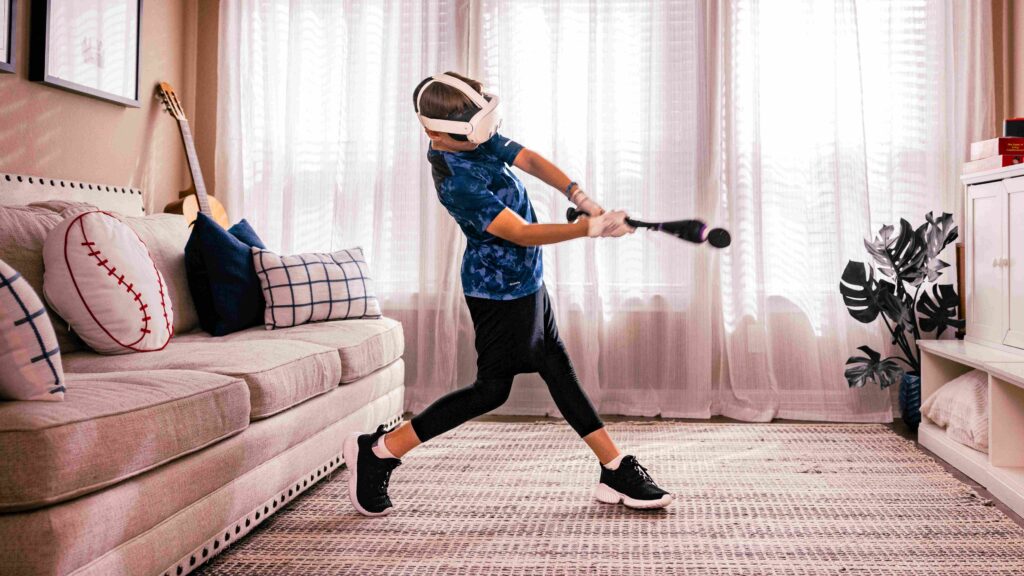
Even at 5-6, building pitch recognition early creates a lasting advantage. WIN Reality’s VR platform lets young players see pitches in a virtual environment, building familiarity with ball flight and timing without the pressure of live pitching.
Combined with the SwingAI mobile app, parents can record swings and get feedback on mechanic, no coaching experience required. It’s like having a personal hitting coach at home.
Explore WIN Reality’s pricing options to find the right fit for your young player.